Alarms/Errors
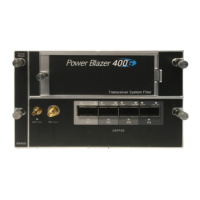
Power Blazer 919
Alarms
Exc. Skew (Excessive Skew) for FlexO, indicates that the skew
exceeds the defined threshold.
Skew Alarm Threshold (ns), coupled for all ports in the FlexO group,
allows setting the threshold value that will be used to declare a skew
alarm: 0 to 1000 ns (180 ns by default). Default restores the default
alarm threshold value.
Excessive Instance Skew for FlexO, indicates that the current skew is
above the configured Instance Skew Alarm Threshold. Available with
multiple instances on multiple ports. The Excessive Instance Skew
condition corresponds to a Loss of lane alignment defect (LOL) as
mentioned in the standard.
Instance Skew Alarm Threshold (ns) for FlexO with multiple
instances on multiple ports, allows setting the threshold value that will
be used to declare a skew alarm: 50 to 1000 ns (300 ns by default).
Default restores the default alarm threshold value.
Excessive PHY Skew for FlexE multiple PHYs, indicates that the skew
is above the configured PHY Skew Alarm Threshold.
PHY Skew Alarm Threshold (ns), available with multiple PHY, allows
setting the threshold value that will be used to declare an excessive
PHY skew alarm: 50 ns to 1000 ns, default is 300 ns. The Default
button restores the default PHY skew alarm threshold value.
FDD (FEC Detected Degrade) for DCO when the FDD check box is
selected, indicates that the BER is greater to the FDD activate
threshold. The FDD alarm is clear when the BER is below to the
deactivate threshold.
FEC-LOA (FEC-Loss Of Alignment) for Ethernet, indicates that the
deskew process is not complete meaning that not all lanes are
synchronized (Alignment Marker locked) and aligned. Not available
with 100GE (1 Lane)/100GE (2 Lanes) interface.


 To Next Page
 Loading...