4 - 8
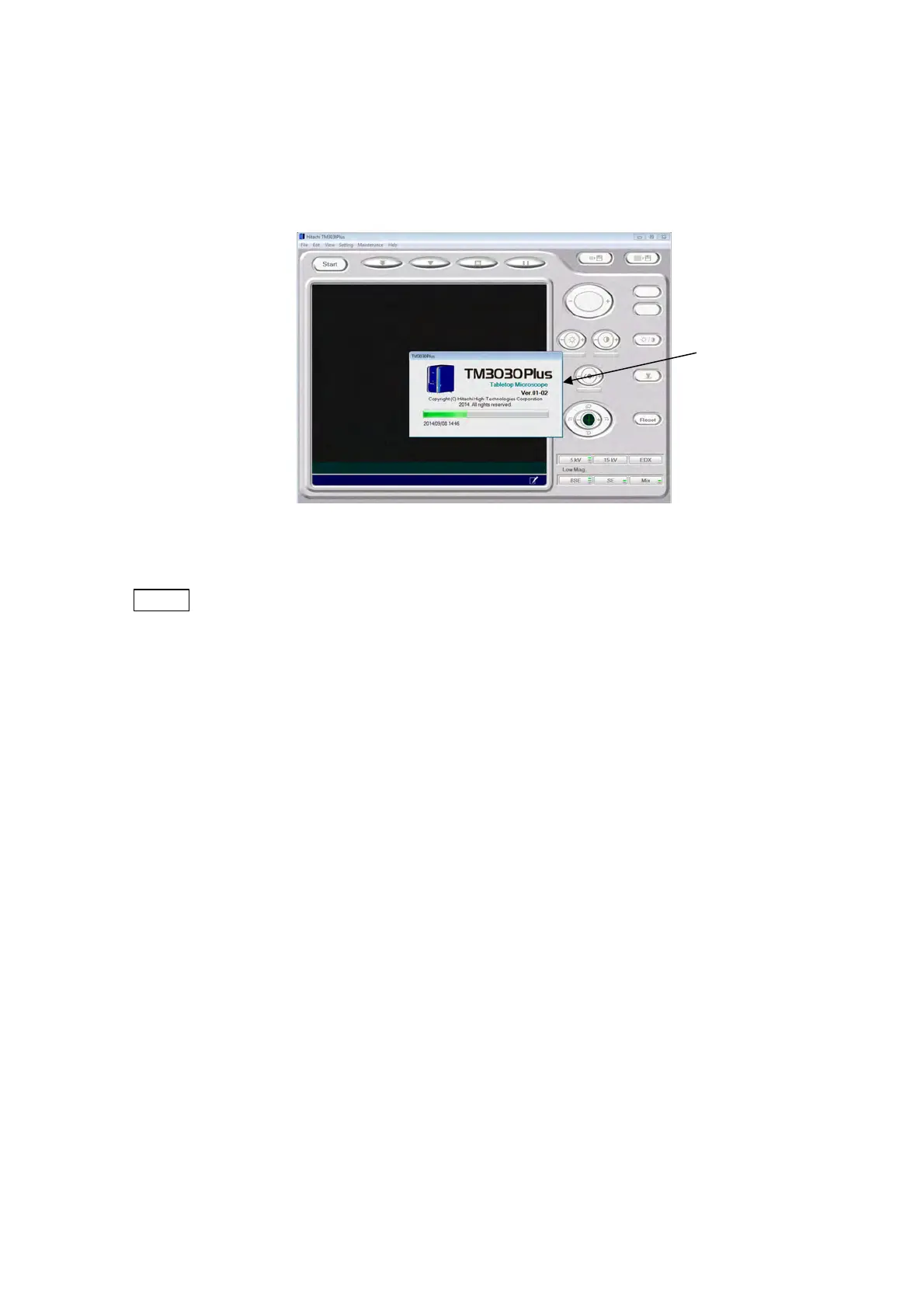
7b. Once the application starts, the operation window appears along with the application
startup dialog.
After the application startup is completed correctly, the dialog will automatically
disappear.
Figure 4.2.1-7 Application Startup Screen
NOTE
: Verify that the main unit is connected to the PC with a USB cable. Otherwise, the
application will not start. Also, it will not start if the main unit is turned off.
4.2.2 Loading a Specimen and Adjusting its Height
1. Precautions Before Loading a Specimen
When setting a specimen, pay attention to the following items:
1a. Specimens that can Blow Up When Placed in a Vacuum
An object filled with gas or liquid, such as a balloon, can blow up when placed in a
vacuum to damage internal components. These specimens can be observed by
breaking the outer surface in advance.
Examples: Balloons (inflated and sealed), eggs (of any size or type), cherry tomatoes,
citrus fruits, and living things such as insects and fish, etc.
1b. Liquid and Liquid-State Materials
When observing liquid or liquid-state materials in a vacuum, water evaporates. The
remaining substance can scatter in the specimen chamber, potentially contaminating
and damaging internal components. These specimens can be observed by removing
water in advance.
Examples: Milk and pen ink, etc.
Dialog


 To Next Page