7 - 80
7.25 Height Calibration Using a 30-degree Tilted Specimen Stub
This describes example of the calibration method of using a 30-degree tilted specimen stub.
Prepare a flat specimen (as flat as possible) that has the same composition as the specimen
that is actually measured for the calibration.
NOTE
: 3D-VIEW measures height based on contrast difference among the four BSE
images observed from different directions. The contrast of each BSE image is
different depending on the material of the observed specimen, distance from the
BSE detector to the specimen, and the magnification, etc. Therefore, the specimen
and observation condition for Z calibration should be the same as those under actual
situation as much as possible.
7.25.1 Example of Procedure for Flat Calibration by 30-degree Tilted Specimen Stub
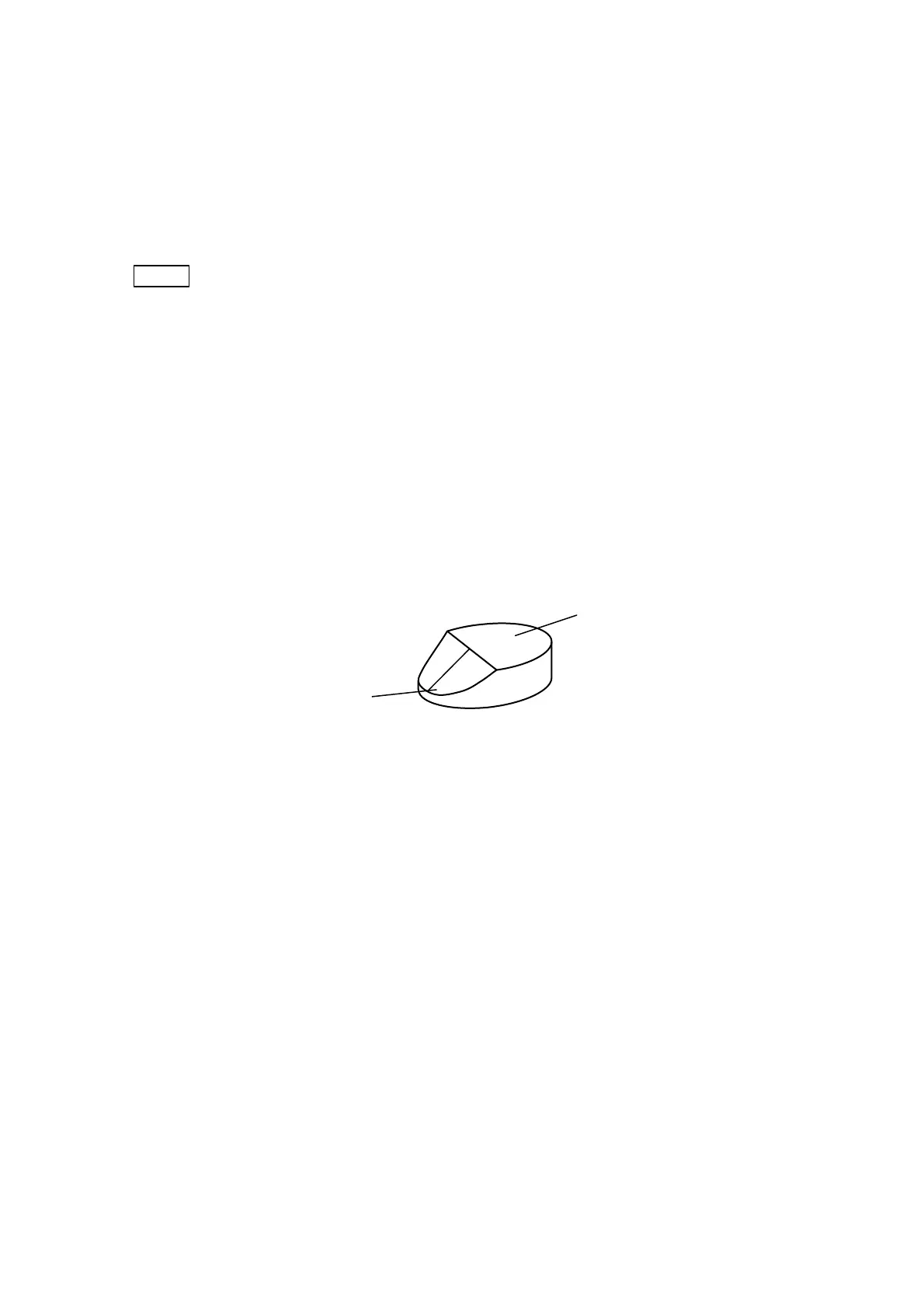
1. Attach flat specimens on the top side (a flat surface) and on a tilted side of a 30-degree
tilted specimen stub. As the line marked on the tilted specimen stub indicating the
direction of slope will be verified on the screen, make sure a part of the line is visible.
Figure 7.25.1-1 Tilted Specimen Stub
Flat part
30-degree tilted part


 To Next Page