CEAST 9340 - Instructions for Use and Maintenance 7510.000MN1r ed. 1 rev. 1 - Page 11
1.1 EQUIPMENT DESCRIPTION
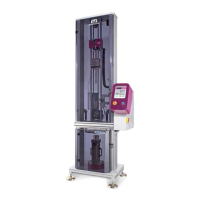
CEAST 9340 is a droptower impact system used for instrumented and not instrumented
test on plates, films specimens and tridimensional parts, according to the requirements
prescribed in the standards: ISO 179-2, ISO 180, ISO 3127, ISO 6603-1, ISO 6603-2,
ISO 7765-2, ASTM D 256, ASTM D 2444, ASTM D 3763, ASTM D 5628, ASTM D 6110,
ASTM D 7136, ASTM D 7192, ASTM E 23, PR-EN 6038, AIRBUS AITM 1.0010 and
other equivalent standards.
1.1.3 DIFFERENCE BETWEEN INSTRUMENTS
••
••
• CEAST 9340 code 7515.000: it is equipped with a standard chamber for tests at
ambient temperature;
••
••
• CEAST 9340 code 7516.000: it is equipped with an environmental chamber for speci-
mens conditioning at temperatures: - 50 °C to 100 °C.
The environmental chamber is cooled through the expansion of liquid nitrogen taken
from an external tank or from the laboratory's nitrogen line (N
2
) if available. The nitro-
gen flows inside the chamber through pipes endowed with capillary holes.
The chamber is heated by means of heating resistances.
The uniformity of the temperature is assured through an electric fan which recircu-
lates air and nitrogen inside the chamber.
The temperature sets by the operator is automatically controlled by a temperature
regulator. This device receives the signal from a temperature probe located inside
the chamber and, depending on whether the requirement is for cold or hot, it enable
a solenoid valve to open the nitrogen inlet or the electric heating resistance.
1.1.2 MODULARITY
1.1.1 INTRODUCTION
CEAST 9340 has been designed and manufactured with a concept of modularity. In fact
the instruments is pre-arranged for an easy and quick addition and connection of all
options at a later date.
1.1.4 MAIN PARTS OF INSTRUMENT
Instrument consists of the following parts:
••
••
• Turret: it is the upper part of the instrument, secured to the test chamber by screws.
Inside the turret is housed:
- Automatic striker recovery/releasing system: it is used to moves the striker at
the correct height and to release it for impact test on the specimen.
- Striker holder: it joints mechanically the striker to the recovery/releasing sys-
tem. Moreover it can contains one or more weights used to increase the impact
mass.
The striker holder can be of two different types: light (for masses 1 to 3.5 kg,
striker included) or standard (for masses: 3 to 37 kg, striker included).


 To Next Page