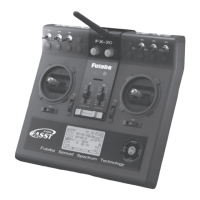
Order No.
3
5 MHz: F 8042
40 MHz: F 8043
41 MHz: F 8044
FX-30
Section...........................................................................Page
14.11 Crow (Butterfly) mixer..............................................54
14.12 Trim mixer 1 and 2...................................................55
14.13 Brake flap mixer ......................................................57
14.14 Gyro settings ...........................................................58
14.15 V-tail mixer...............................................................58
14.16 Elevators with aileron function ................................59
14.17 Winglet rudder settings ...........................................59
14.18 Electric motor settings ............................................60
14.19 Rudder -> elevator mixer ........................................60
14.20 Snap roll function ...................................................61
15. Model menu (model helicopter) .............................62
15.1 Collective pitch curve settings ................................62
15.2 Throttle curve settings.............................................64
15.3 Acceleration function ..............................................65
15.4 Auto-rotation settings..............................................65
15.5 Swashplate mixer....................................................66
15.6 Throttle / motor mixer..............................................67
15.7 Collective pitch -> needle valve mixer ....................68
15.8 Collective pitch -> tail rotor (Revolution) mixer .......68
15.9 Gyro settings ...........................................................69
15.10 Speed governor (regulator) settings........................70
15.11 Flight mode hold (CND HOLD) ................................70
16. Transmitter control / switch select menu ..............71
17. Updating the transmitter software.........................72
18. Tips for installing the receiving system .................73
18.1 Receiver aerial.........................................................74
18.2 Switch harness........................................................74
18.3 Servo leads..............................................................74
18.4 Servo suppressor filters ..........................................74
18.5 Installing servos.......................................................75
18.6 Servo travel / servo output levers ...........................75
18.7 Installing linkages ...................................................75
19. The system in use ..................................................76
19.1 Power-on sequence ................................................76
19.2 Electrical noise interference ....................................76
19.3 Electric motors ........................................................76
19.4 Electronic ignition systems......................................76
19.5 Receiver battery capacity / operating times ...........76
20. Guarantee ...............................................................77
21. Liability exclusion...................................................77
22. Post Office regulations...........................................77
23. Conformity declaration ..........................................77
24. Recommended accessories ..................................78
25. Programming sequence - fixed-wing
model aircraft ..........................................................79
26. Programming sequence - model helicopters ..........80
27. Disposal ..................................................................82
28. Service Centre addresses......................................82
SAFETY NOTES: OBSERVE AT ALL TIMES
Please take the trouble to read right through these instructions
before attempting to use the equipment for the first time, pay-
ing particular attention to the Safety Notes. If you are a begin-
ner to radio-controlled model aircraft or helicopters, we
recommend that you ask an experienced modeller for help, as
you are bound to need support and advice initially.
This radio control system is designed and approved exclusi-
vely for use with radio-controlled models. If you use the equip-
ment for any other purpose, Robbe Modellsport will accept no
liability for the consequences.
SAFETY NOTES
Radio-controlled models are not toys or playthings in the usual
meaning of the term, and they should not be operated by
young people under fourteen years of age unless an experien-
ced adult is available to supervise them. Building and opera-
ting these models requires technical expertise, manual skills, a
cautious attitude and safety-conscious behaviour. Errors,
negligence and omissions in building or flying these models
can result in serious personal injury and damage to property.
The manufacturer and vendor of the equipment have no
means of checking that your models are built and operated
correctly, and for this reason we can do no more than bring
these hazards expressly to your attention. We deny all further
liability.
Technical faults, whether electrical or mechanical, can result in
electric motors bursting into life unexpectedly, causing other
parts to come loose and fly around at high speed. Switching
on the receiving system when the transmitter is not active can
also have the same effect.
In either case there is a serious risk of injury. Propellers, heli-
copter rotors and all other rotating objects which are driven by
motors or engines represent a constant hazard and a potenti-
al source of injury. Avoid touching such parts at all costs. It
is a sobering thought that a propeller revolving at high speed
could cut off your finger.
Do not stand in or close to the primary danger area around the
propeller or other rotating parts whenever the electric motor is
connected to a drive battery. Take care to keep all other
objects from making contact with revolving parts.
Protect your radio control system from heat, dust, dirt and
damp, and do not subject your equipment to excessive heat,
cold or vibration. Radio control systems should only be used
in “normal” conditions, i.e. within a temperature range of -
15°C to +55°C.
Use only the recommended battery chargers, and supervise
the procedure when charging batteries. Please read and
observe our safety notes regarding charging the batteries.
Overcharging, or incorrect charging methods can result in the
batteries exploding or bursting into flames.
Always maintain correct polarity.
Avoid subjecting this equipment to undue shock or pressure.
Check your system regularly for damage to cases and wiring.
If a unit gets wet or is damaged in a crash, it should not be
used again even after you have dried it out and checked it tho-
roughly. The only safe course of action is to replace damaged
items, or at least have them checked by a robbe Service
Centre.
3


 To Next Page