EasyManua.ls Logo

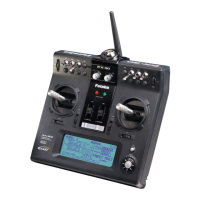
ROBBE Futaba FX-30 - User Manual

ROBBE Futaba FX-30
84 pages
Print Icon
To Next Page IconTo Next Page
Loading...
OPERATING INSTRUCTIONS
No. F 8042 35 MHz
No. F 8043 40 MHz
No. F 8044 41 MHz
FX-30

Table of Contents

Question and Answer IconNeed help?

Do you have a question about the ROBBE Futaba FX-30 and is the answer not in the manual?

Summary

SAFETY NOTES: OBSERVE AT ALL TIMES

SAFETY NOTES

General warnings and precautions for safe handling and use of equipment.

1. SET CONTENTS

ROUTINE PRE-FLIGHT CHECKS

OPERATING THE MODEL

2. GENERAL DESCRIPTION

2.1 FX-30 TRANSMITTER

Details on the advanced features of the FX-30 transmitter system.

4. FX-30 TRANSMITTER CONTROLS

REMOVING; CHANGING THE TRANSMITTER BATTERY

Step-by-step instructions for safely removing and replacing the transmitter battery.

4.2 RC charger, charging the transmitter battery

Notes on handling and charging the transmitter battery

Important safety and operational notes for charging the LiPo transmitter battery.

4.4 STICK ADJUSTMENTS

ADJUSTING THE STICK LENGTH

Procedure to adjust the physical length of the transmitter's stick tops.

4.5 CONVERTING THE THROTTLE FUNCTION

4.6 SD CARD MEMORY MODULE

INSERTING THE SD CARD

Instructions for correctly inserting and removing the SD card from the transmitter.

NOTES ON HANDLING SD CARDS

Important guidelines for proper care and handling of SD memory cards.

4.7 TRAINER MODE

4.8 DSC MODE, USE WITH FLIGHT SIMULATOR

4.9 INPUT ELEMENTS

3-D HOT-KEY; EDIT BUTTON

Explanation of the primary programming control and its functions.

S1 input button

Details on the function and operation of the S1 navigation and lock button.

4.11 ROTARY TRIMS

4.12 ROTARY KNOBS

5. CONNECTING THE SERVOS

Servo output sequence with previous PCM 1024 system

Table showing the standard servo output sequence for PCM 1024 compatibility.

5.1 CONNECTING SERVOS - PCM 1024 AND PCM 2048 (G3)

NEW SYSTEM FOR FUNCTION SEQUENCE

Explanation of the new function sequence for PCM-G3 systems and compatibility.

5.2 Airplanes, Motorglider and Glider with standard T-, Cross- and V-tail

5.5 Function sequence for Helicopter use

6. SWITCHING THE TRANSMITTER ON; OFF

7. CHANGING THE SPOT FREQUENCY

8. CHANGING THE FREQUENCY BAND AND MODULATION

SELECTING THE MODULATION (PCM-G3, PCM-1024, PPM8 - 12)

How to select the modulation type (PCM-G3, PCM-1024, PPM8) for the transmitter.

9. DESCRIPTION OF THE START SCREEN

9.1 START SCREEN FOR FIXED-WING MODEL AIRCRAFT

Layout and elements of the start screen for fixed-wing models.

10. MENU STRUCTURE, METHOD OF NAVIGATING

11. SYSTEM MENU

TRAINER

Settings for the trainer mode, including teacher/pupil setup and channel assignments.

11.1 TRAINER MODE

Detailed setup for trainer mode, covering teacher/pupil roles and connection.

TRAINER MODE: TEACHER TRANSMITTER

TRAINER MODE: PUPIL TRANSMITTER

11.2 SCREEN (DISPLAY) SETTINGS

ADJUSTING SCREEN CONTRAST

Procedure to modify the screen contrast level using the 3-D hot-key.

11.3 SYSTEM TIME

11.4 USER NAME

11.5 TRANSMITTER CONTROL SETTINGS

Hardware transmitter control reverse

Reversing the direction of primary transmitter controls (sticks, switches).

STICK MODE

Selecting one of four modes for primary stick operation and feel.

12. BASE MENU

SERVO MONITOR

Displaying servo travel and positions for diagnostics and adjustment.

MODEL SELECT

Selecting, creating, copying, renaming, or erasing model memories.

MODEL TYPE

Setting the aircraft type (airplane, helicopter) and configuration (wing, tail).

FREQUENCY

Selecting the operating frequency band and spot frequency.

Function

Assigning transmitter controls and trims to model functions and flight modes.

Servo centre

Adjusting the neutral position for individual servos.

Servo reverse

Electronically reversing the direction of servo rotation.

Fail-Safe

Configuring fail-safe positions for loss of signal or low battery.

End-point ATV

Setting servo travel limits (ATV) and transit speeds.

12.1 SERVO MONITOR

CALLING UP A MODEL MEMORY

Procedure to load an existing model memory for use.

12.2 SELECTING A MODEL MEMORY

SETTING UP A NEW MODEL MEMORY

Step-by-step guide to creating and saving a new model memory.

12.3 SELECTING THE MODEL TYPE

SELECTING THE WING AND TAIL TYPE

Choosing the appropriate wing and tail configurations for fixed-wing models.

SELECTING THE SWASHPLATE TYPE

12.4 SELECTING THE FREQUENCY AND MODULATION

12.5 FUNCTION

ASSIGNING TRANSMITTER CONTROLS

Mapping physical controls to specific model functions and channels.

SELECTING THE TRIM CONTROLS

Assigning rotary trimmers to specific functions for fine adjustment.

12.7 SERVO REVERSE

12.8 FAIL-SAFE SETTINGS

3. An additional feature - the Battery Fail-Safe function:

Setting up a warning for low battery voltage to prevent accidental motor activation.

12.10 MOTOR CUT FUNCTION

12.13 SWASHPLATE SETTINGS

Setting the mixer rates

Adjusting mixer rates to eliminate interactions between swashplate functions.

12.14 TIMER SETTINGS (stopwatch)

Select mode of operation (count-up; count-down)

Choosing between count-up or count-down modes for the timers.

12.17 FLIGHT MODE HOLD (CND HOLD)

13. MODEL MENU

13.1 FLIGHT MODE

Setting up and managing multiple flight modes for optimized model performance.

Adding a new flight mode

Procedure to create and configure a new flight mode.

Erasing flight modes

Renaming flight modes

Copying flight modes

Switch function SINGLE; LOGIC

13.2 TRANSMITTER CONTROL TRAVEL SETTINGS (AFR)

Programming curves

Creating and editing custom curves for transmitter control response.

13.3 DUAL RATE SETTINGS

13.4 PROGRAMMABLE MIXERS (PROG MIX)

Activating the mixer

Steps to enable a programmable mixer function.

Defining the mixer switch

Assigning a switch to control the activation of a mixer.

OFFSET MIXER AS MOTOR-CUT SWITCH

14. MODEL MENU (FIXED-WING MODEL AIRCRAFT)

14.1 AILERON DIFFERENTIAL

Adjusting aileron travel to compensate for adverse yaw in turns.

14.2 FLAP SETTINGS

14.5 AILERON -> RUDDER MIXER

14.6 AIRBRAKE -> ELEVATOR MIXER

14.11 CROW (BUTTERFLY) MIXER

14.14 GYRO SETTINGS

14.15 V-TAIL MIXER

14.16 ELEVATORS WITH AILERON FUNCTION

14.19 RUDDER -> ELEVATOR MIXER

14.20 SNAP ROLL FUNCTION

15. MODEL MENU (MODEL HELICOPTER)

15.1 COLLECTIVE PITCH CURVE SETTINGS

Adjusting collective pitch curves for different flight modes to optimize motor speed and response.

Trimming the collective pitch function

15.2 THROTTLE CURVE SETTINGS

15.4 AUTO-ROTATION SETTINGS

15.5 SWASHPLATE MIXER

15.6 THROTTLE; MOTOR MIXER

15.8 COLLECTIVE PITCH -> TAIL ROTOR (REVOLUTION) MIXER

15.9 GYRO SETTINGS

15.10 SPEED GOVERNOR (REGULATOR) SETTINGS

15.11 FLIGHT MODE HOLD (CND HOLD)

16. TRANSMITTER CONTROL; SWITCH SELECT MENU

Logic functions

Using logic links (AND, OR, EX-OR) between switches for complex control.

17. UPDATING THE TRANSMITTER SOFTWARE

18. TIPS ON INSTALLING THE RECEIVING SYSTEM

Receiver aerial:

Guidance on positioning and deploying the receiver aerial for best reception.

Range checking:

Procedure for performing a range check to ensure reliable radio control.

18.1 RECEIVER AERIAL

18.4 SERVO SUPPRESSOR FILTERS

18.5 INSTALLING SERVOS

18.7 INSTALLING LINKAGES

19. THE SYSTEM IN USE

19.1 POWER-ON SEQUENCE

Correct procedure for switching the transmitter and receiver on and off.

19.2 ELECTRICAL NOISE INTERFERENCE

Methods to avoid electrical noise interference affecting radio control.

19.5 RECEIVER BATTERY CAPACITY; OPERATING TIMES

Factors affecting receiver battery life and tips for selection.

25. Programming sequence - fixed-wing model aircraft

26. Programming sequence - model helicopters

27. DISPOSAL

28. SERVICE CENTRE ADDRESSES

ROBBE Futaba FX-30 Specifications

General IconGeneral
BrandROBBE
ModelFutaba FX-30
CategoryRemote Control
LanguageEnglish

Related product manuals