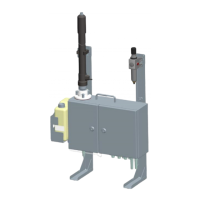
ULTRASAMPLER® sample collection system
151
Measuring System MAK TIGER 3003 Service manual, SA 131128, 10.03.2020
26.1.3 Additional information about the
ULTRASAMPLER
The sample collection is generally independent of the delivery quantity.
A minimum delivery quantity of between 20 and 40 l is required for the bot-
tling of a usable sample, however, depending on the throughput of the intake
system.
The MAK 3003 system can enable a pump output reduction on the collection
vehicle to ensure that samples are also taken in the case of smaller delivery
quantities.
The intake time will increase in proportion to the decrease in throughput.
The time for the sample to be taken by the ULTRASAMPLER will then also
be longer.
MAK 3003 decides on an appropriate reduction on the basis of the expected
delivery quantity (= input data).
How the system works in practice depends on the design of the collection
vehicle.
Efficient sample collection
A special rinsing process in the sampler before every sample collection pro-
cess largely prevents any residual milk in the sampling line from being car-
ried into the new sample bottle.
At the start of the milk intake process the sampler pumps milk out of the
branch pipe towards the sample bottle until the milk working point reaches
the sampler exit.
The sampler then reverses the pumping direction and pumps milk and rinse
residues back into the branch pipe.
Excess quantities in sample collection process
If the delivery quantity exceeds the specified amount by a set percentage
(e.g. 20 %), the sample collection process will be stopped.
The sample bottle will also contain, e.g. 20 %, more liquid at this time than
the configured nominal value (e.g. 35 ml).
MAK 3003 relays a message for the operator at the end of the milk intake
process reading "Full".
Overfilling can be avoided by comparing the expected delivery quantity with
the actual delivery quantity and, if there are major discrepancies, by adjust-
ing the delivery quantity manually on the MAK 3003 system before the milk
intake process starts.


 To Next Page