3/17
Chapter 3: Theory
Operators & Maintenance Manual GENIUS Compact Version UK 0.1 © BESTnv
BESTnv Industrial Research BV, Marinus van Meelweg 20, 5657 EN, EINDHOVEN, THE NETHERLANDS
General tel. +31 (40) 292 2622 - Service tel. +31 (40) 292 2620 - Fax. +31 (40) 292 2633 - Email: service.BESTnv@bestnv.com
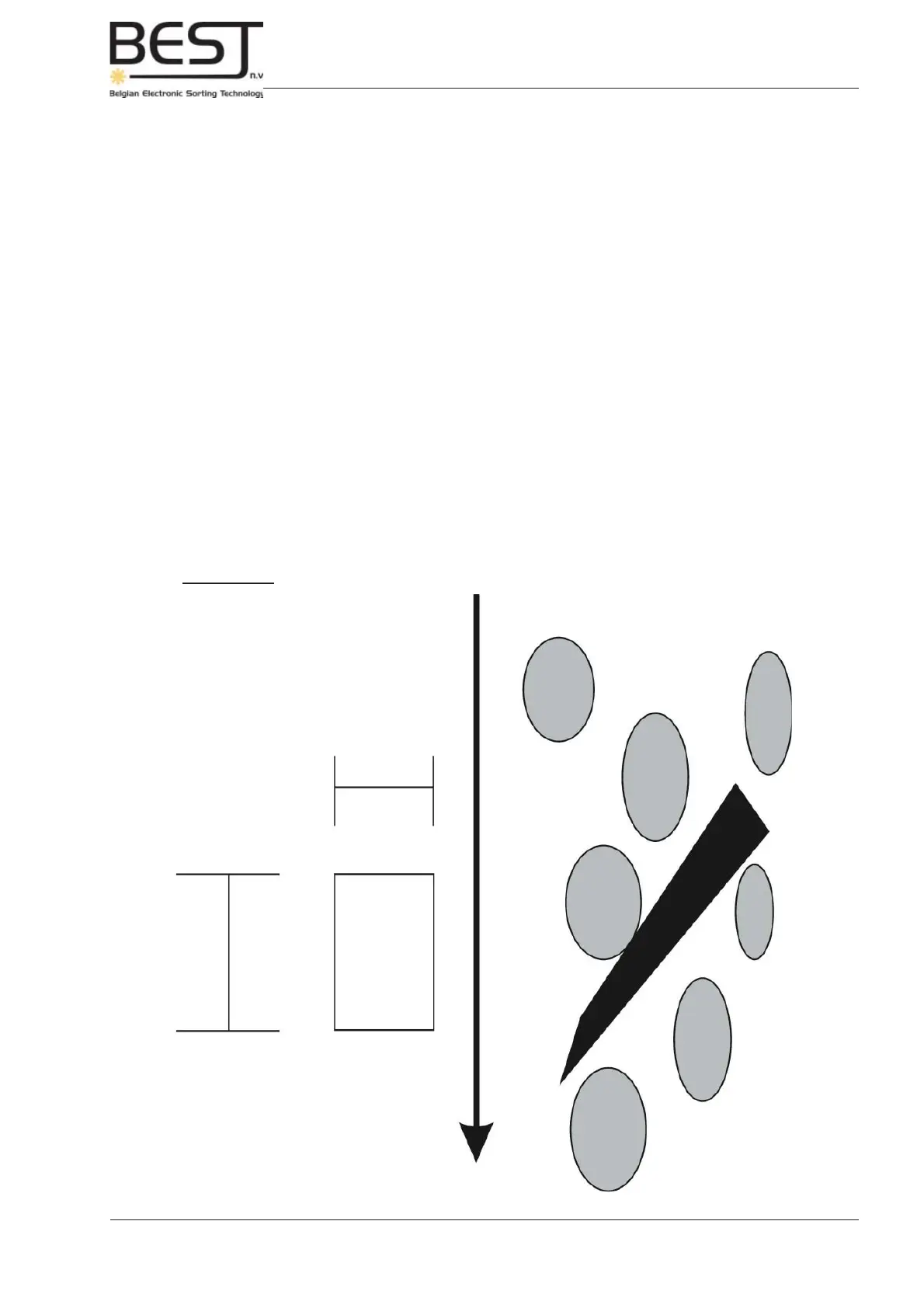
Picture 3.3.1: Bad product removal (dimensions blast zone at ideal distance: +/- 20 mm)
Normal product
fl ow with defect
7.5 mm to
10 mm
+/- 35 mm
Typical air
gun blast
zone
for GENIUS
Compact
Direction of
product fl ow
The GENIUS Compact 640 mm has 64 air gun valves and the GENIUS Compact 1200 mm has 146
air gun valves. Each air gun valve covers an area between approximately 7.5 mm and 10 mm when the
reject system is placed at +/- 20 mm from the product stream with a minimum of overlap.
The exact width of the blast zone is dependent on the height of the reject system with respect to the
product stream. The higher the reject system (the further away) from the product, the wider the blast
zone will be. This means that the higher the reject system is placed from the product stream, the more
overlap and the more false reject you will have.
Each detection is followed by an air gun blast of approximately 10 milliseconds (depending on product
and common defects), and the product passes at the speed of +/-3 meter/second (depending on belt
speed), which gives the blast zone a width of +/- 3 cm, plus the actual width of the blast zone.
It is clear that the dimensions of the blast zone are determined in major part by blast time, belt speed
and the distance between product fl ow and ejection unit. Increasing the belt speed, increasing the blast
time, or placing the ejection unit at a bigger than ideal distance from the product fl ow will unavoidably
increase the amount of good product in the reject.
With the settings mentioned above, a zone of 0.75 to 1 cm (at ideal distance) by +/- 3.5 cm will be blown
out for each detection. But even with these practically ideal circumstances and settings, this means that
there will always be a few good pieces which end up in the reject stream (see picture underneath). This
phenomenon is called “False reject”.



 To Next Page