Configuring Virtual LANs (VLANs)
December 2000 25 - 9
Virtual Interfaces
A virtual interface is a logical routing interface that Foundry Layer 3 Switches use to route Layer 3 protocol traffic
between protocol VLANs.
Foundry devices send Layer 3 traffic at Layer 2 within a protocol VLAN. However, Layer 3 traffic from one protocol
VLAN to another must be routed.
If you want the device to be able to send Layer 3 traffic from one protocol VLAN to another, you must configure a
virtual interface on each protocol VLAN, then configure routing parameters on the virtual interfaces. For example,
to enable a BigIron Layer 3 Switch to route IP traffic from one IP sub-net VLAN to another, you must configure a
virtual interface on each IP sub-net VLAN, then configure the appropriate IP routing parameters on each of the
virtual interfaces.
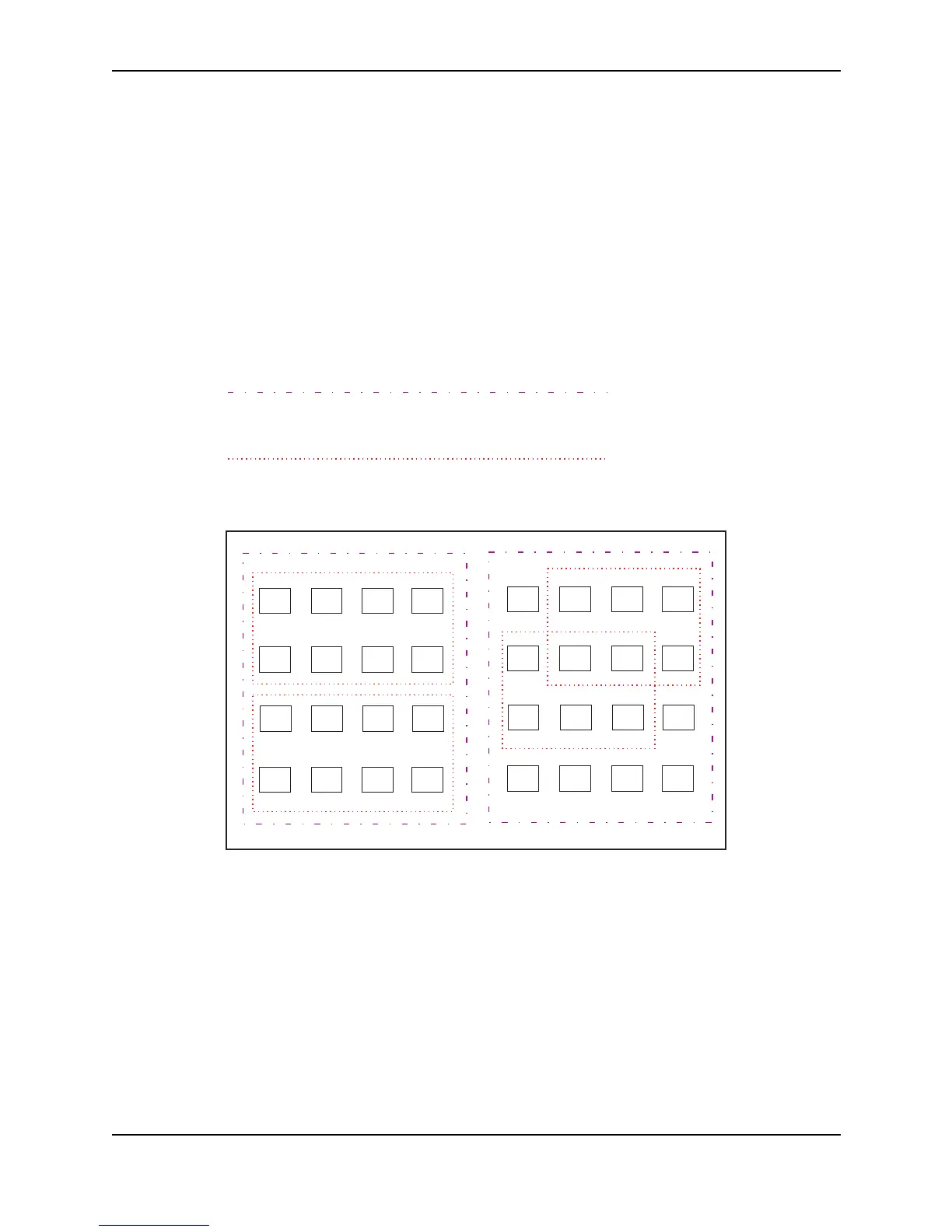
Figure 25.6 shows an example of Layer 3 protocol VLANs that use virtual interfaces for routing.
Figure 25.6 Use virtual interfaces for routing between Layer 3 protocol VLANs
VE 1
Layer 2 and Layer 3 traffic within a VLAN
is bridged at Layer 2.
Layer 3 traffic between protocol VLANs
is routed using virtual interfaces (VE).
To route to one another, each protocol
VLAN must have a virtual interface.
User-configured port-based VLAN
User-configured protocol VLAN, IP sub-net VLAN,
IPX network VLAN, or AppleTalk cable VLAN
VE 3
VE 4
VE 2
VE = virtual interface
(”VE” stands for “Virtual Ethernet”)



 To Next Page