10. Navigation and guidance system
MiR250 Hook User Guide (en) 01/2023 - v.1.2 ©Copyright 2021-2023: Mobile Industrial Robots A/S. 112
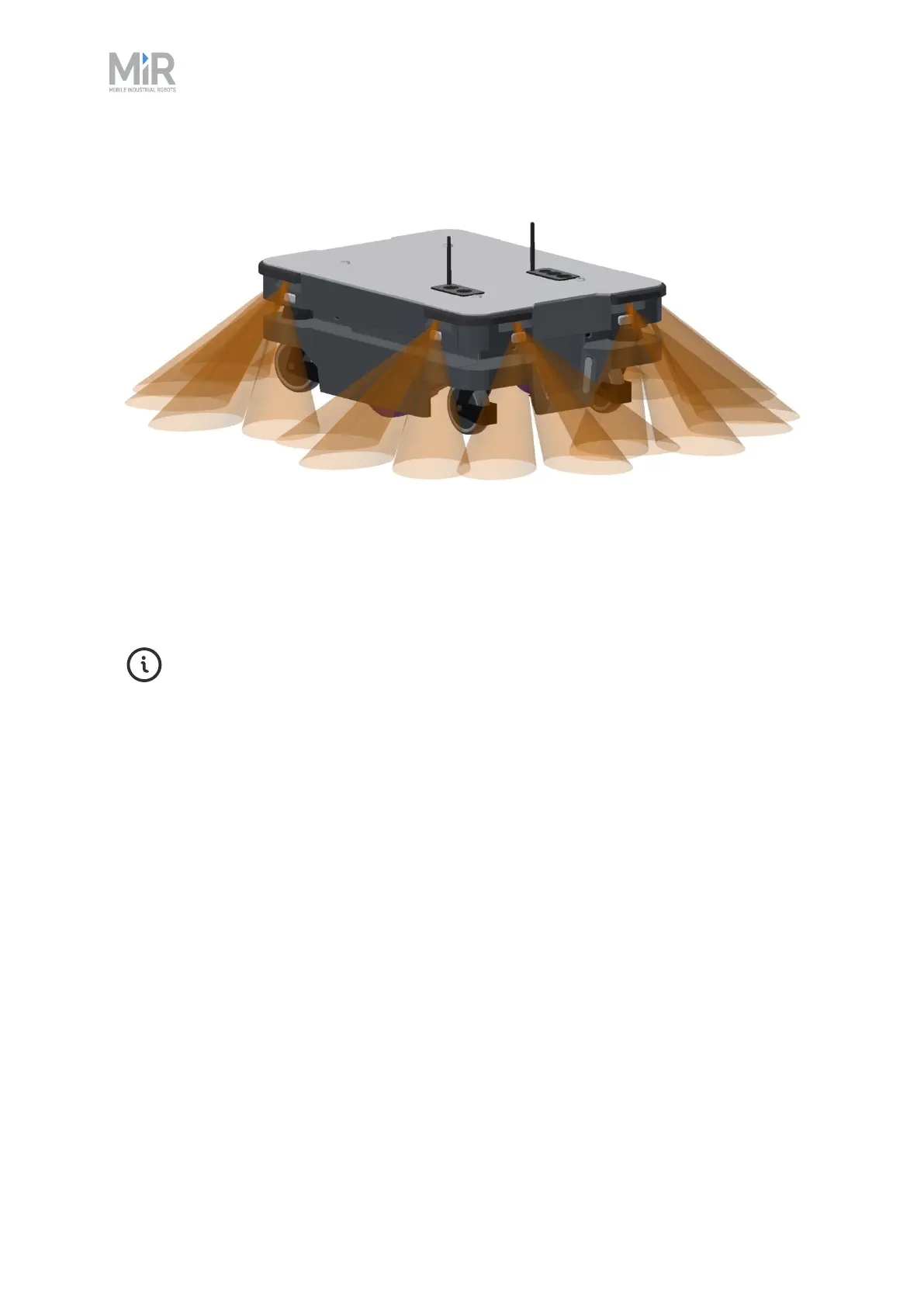
Figure 10.10 The proximity sensors in the corners of the robot detect objects below the safety laser
scanners' plane of view.
The main purpose of the proximity sensors is to detect low objects, such as pallets and forklift
forks, placed close to the robot while it is standing still.When the robot begins to drive, it plans a
path around the nearby detected obstacles.
The proximity sensors are disabled by default. To make the robot use the proximity
sensor data, you must enable the sensors and calibrate them.For more information,
contact your distributor for the guide How to calibrate the proximity sensors.
The following points describe the main features of the proximity sensors once they are enabled:
• The proximity sensors are constantly active.
• Because of the sensors' limited range, the data from them is only useful when the robot is
standing still or moving at low speeds.
• The proximity sensors are most reliable at detecting objects while standing still. The faster the
robot drives, the less reliable the sensor data becomes.
• The field of view of the proximity sensors does not span all the way around the robot. They are
mainly focused around the robot corners.
• The proximity sensors are used for navigation, not safety. The robot does not enter Protective
stop if the sensors detect an object. If the robot cannot navigate around an obstacle detected
by the sensors, the robot reports an error that it cannot find a free path.
• The proximity sensors mitigate the risk of collision but cannot fully prevent it in all scenarios.


 To Next Page