892 J006 MNAH | PGC5000 G EN 2 | 21
2.4.6 Sample
The methods used for transporting the sample from the process stream to the analyzer, or from the
calibration sample to the analyzer, are critical to the operation of the analyzer. Refer to the system
drawings in the Data Package for specific system connections.
2.4.7 Hydrogen gas
DANGER – Serious damage to health / risk to life. Hydrogen is highly explosive.
Follow applicable safety precautions and use extreme care in making connections.
The analyzer uses hydrogen gas as a burner fuel with flame cell detectors (FID or FPD) and
sometimes uses it as a carrier gas. Verify that the hydrogen gas meets the criteria of the gas
requirements listed in the Data Package. Also refer to the Data Package for specific connection
information.
2.4.8 Vents
All vent lines must be at atmospheric pressure unless otherwise specified in the Data Package. The
vent lines should slope down from the analyzer so that condensation will not collect in the analyzer or
cause backpressure in the external tubing. Refer to the Data Package for specific connection
information.
2.4.9 Liquid sample valve
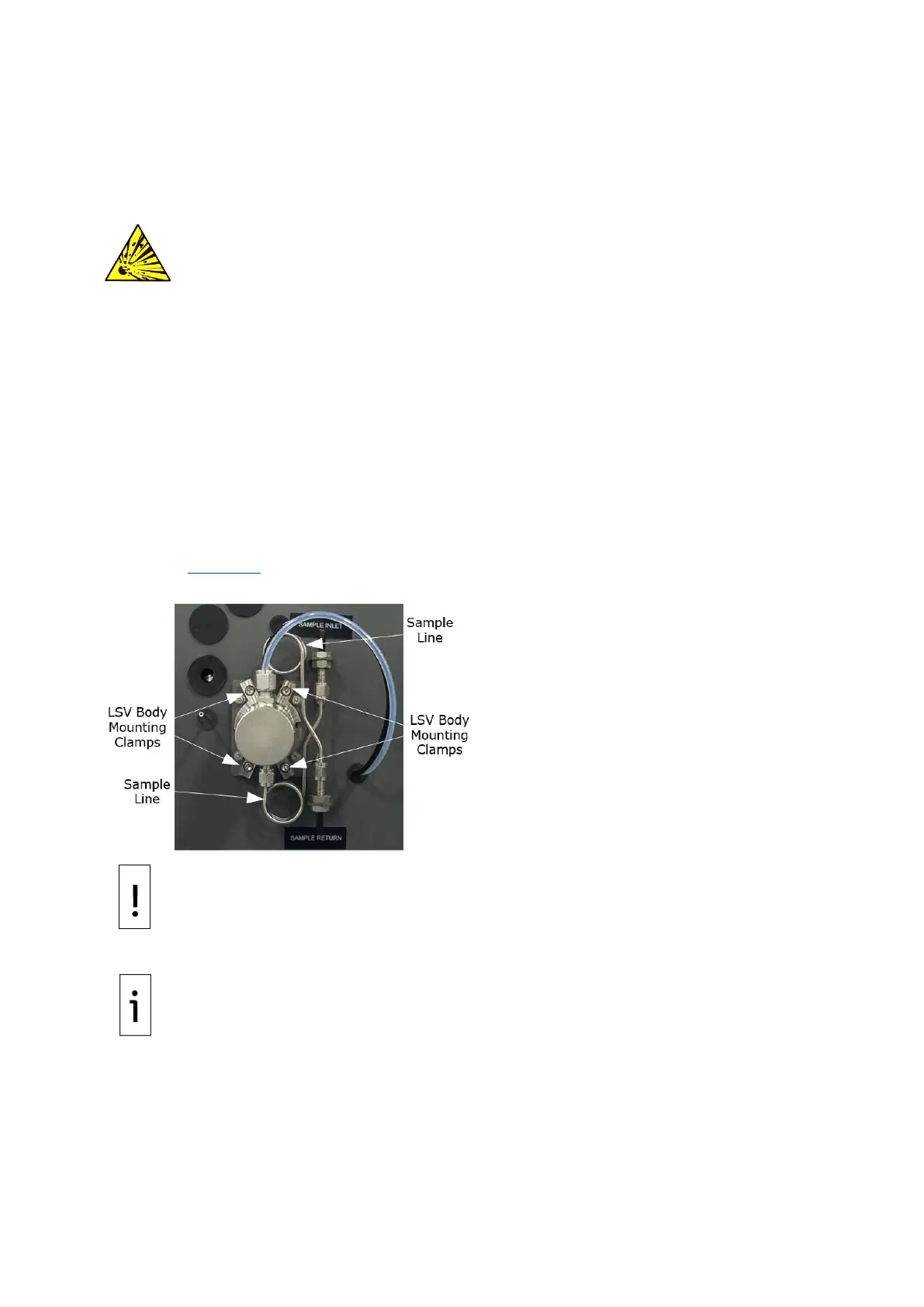
The Liquid Sample Valve (LSV) is used only with liquid applications. The Oven Enclosure has sample
lines connected to a mounting plate attached to the LSVs mounting flange.
The LSV has the sample lines connected to the mounting plate attached to the LSVs mounting flange,
as shown in Figure 2-1.
Figure 2-1: Liquid Sample Valve
NOTICE – Equipment damage. Use two wrenches when tightening the sample line
connections at the LSV sample chamber. One wrench must be used to back up the force
applied to tighten the fitting (direct wrench force may bend the stem or damage the valve
seals).
IMPORTANT NOTE: To ensure the integrity of the components within the Liquid Sample Valve, use
the tools in LSV Tool Kit 791K009-1 when assembling of disassembling the LSV.
2.5 Electrical
The analyzer must be installed according to all applicable codes. If it is in a hazardous area, the wiring
method must conform to the applicable requirements.
Install signal wiring and power wiring in separate conduit pipes or cable trays to reduce noise and
crosstalk.



 To Next Page