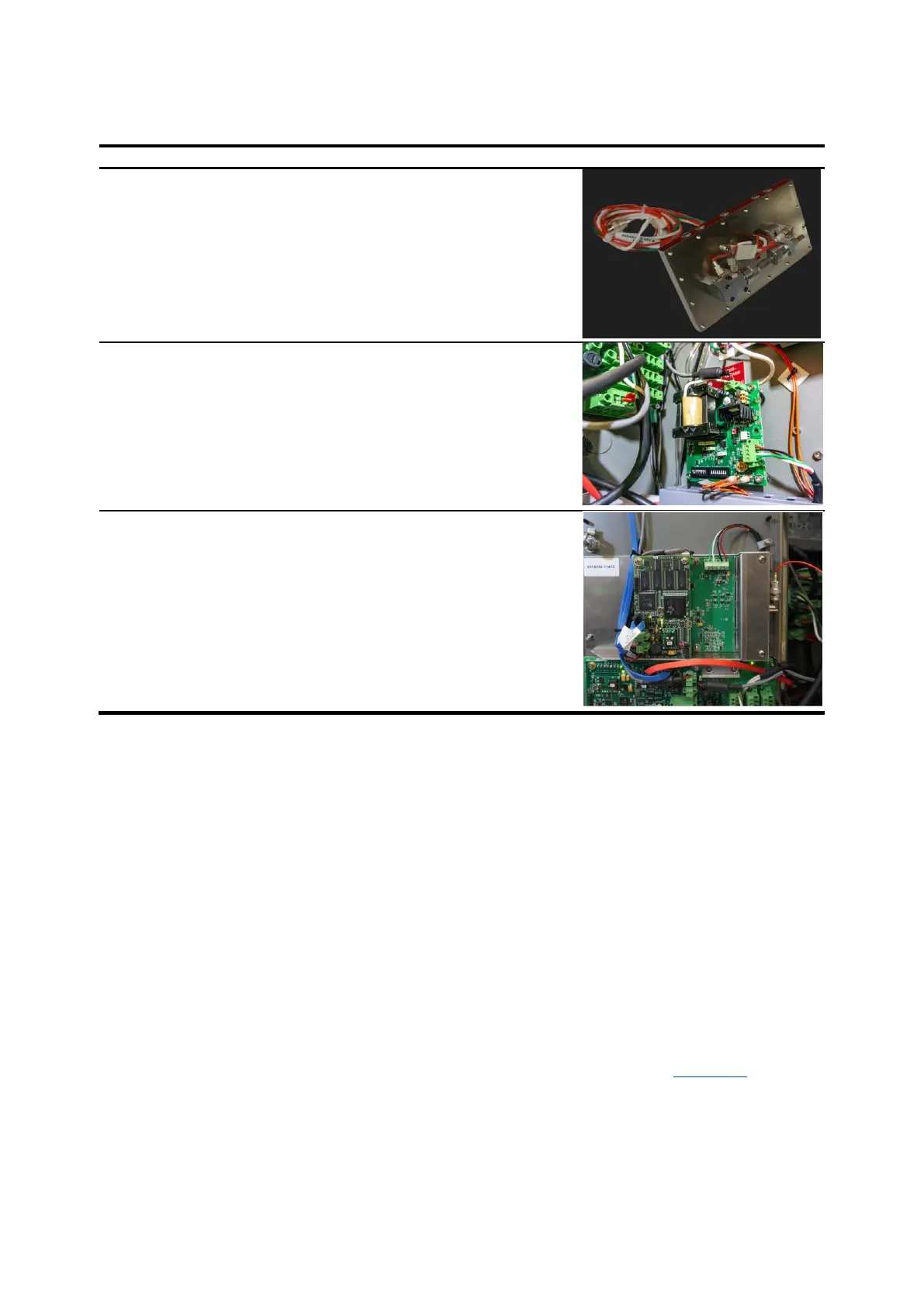
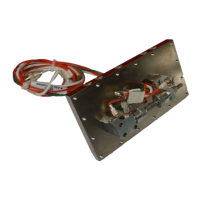
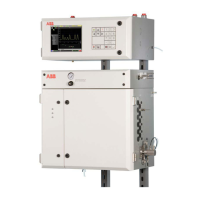
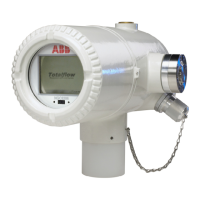
The DBDID is used in the ABB analytical process gas chromatograph for parts-per-billion (ppb) and
parts-per-million (ppm) measurements of the following:
⎯ Impurities in high purity gases
⎯ Halogenated hydrocarbons
⎯ Impurities in ethylene
⎯ Low levels of BTX
⎯ Arsine and phosgene
⎯ Ethylene oxide
⎯ Formaldehyde
⎯ Ammonia
A dielectric barrier discharge is a plasma discharge that is obtained using a high voltage alternating
current applied to a gas such as Helium or Argon as it flows through a dielectric material such as
quartz glass. Two electrodes are arranged within the detector so that when the high voltage is applied
to the gas, a breakdown occurs with a subsequent discharge from one electrode to the other.
However, the presence of the dielectric barrier behaves as a capacitor in the localized region of the
discharge. The dielectric barrier stores a substantial amount of energy for each discharge. This results
in the generation of highly excited state molecules and atoms of Helium or Argon, which is referred to
as the reaction gas. As the sample components elute from the column, they are ionized by the
reaction gas. A second set of electrodes in the detector measure the current generated from the
ionized components. The output is sent to an electrometer, where it is amplified. Figure 5-2 illustrates
this process.



 To Next Page