74
────────────────────────────────────────────────────
8.2 Operations
────────────────────────────────────────────────────
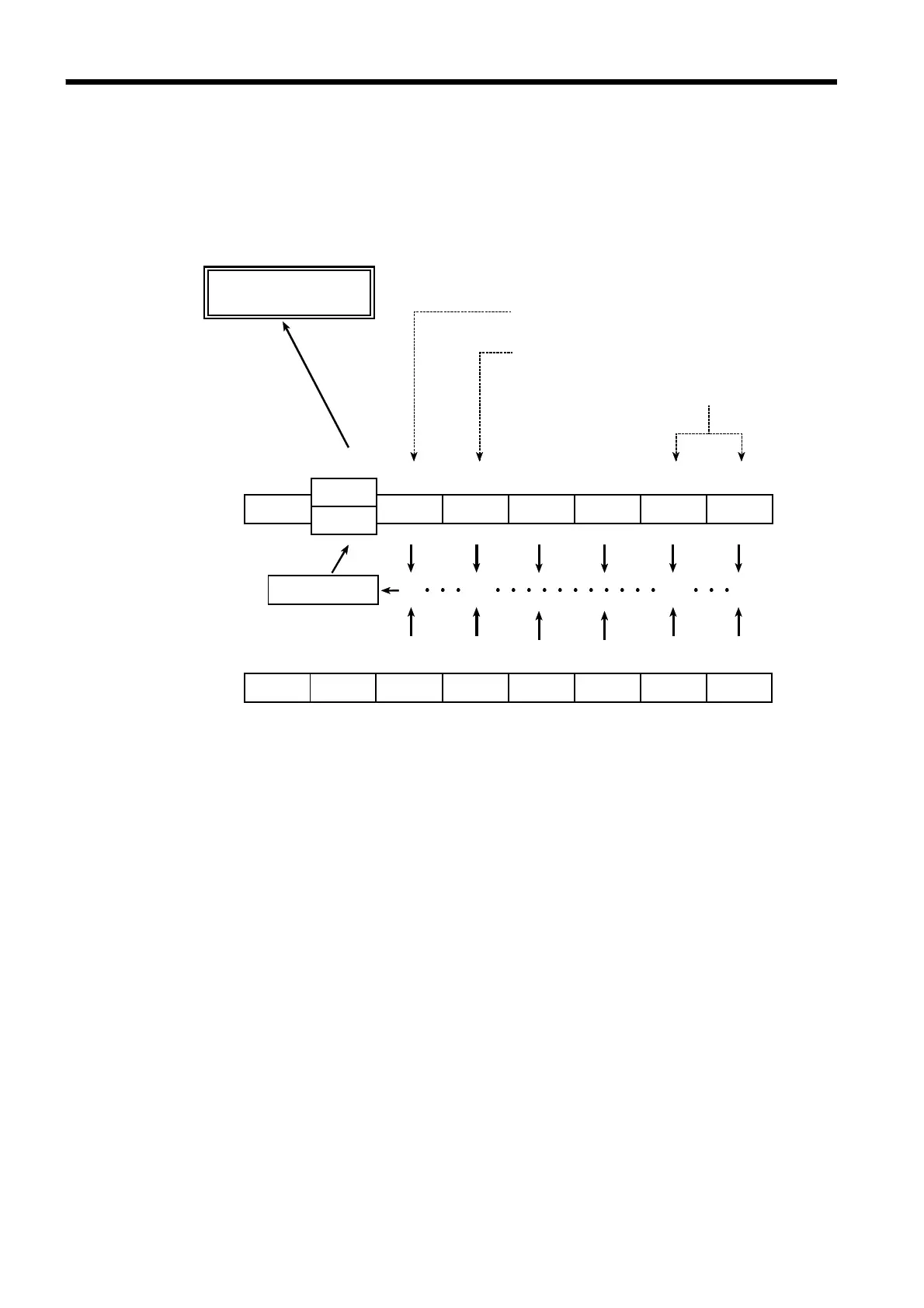
8.2.6 Status Model
Generation of service
request (SRQ)
Represents standard event register
Data is present in the output queue
bit 7
bit 5
bit 4 bit 3 bit 2 bit 1 bit 0
ESB MAV ESB1 ESB0
bit 6
RQS
MSS
Logical sum
&
& & &
Bits represent corresponding event registers
Status byte register (STB)
Service request enable register (SRER)
bit 7 bit 6
bit 5
bit 4 bit 3 bit 2 bit 1 bit 0
X ESB MAV ESB1 ESB0
In its implementation of the serial polling function using service requests, the
7075 employs the status model specified by IEEE 488.2.
The term "event" refers to any phenomenon which generates a service
request.
The status byte register holds information relating to the event registers and
the output queue. It is further possible to use the service request enable
register as a mask to select the items required. If any of the bits selected by
the mask becomes 1, bit 6 (the master summary status or MSS bit) is also
set to 1, an RQS message is generated, and this generates a service request.



 To Next Page