20. Glossary
MiR250 Hook User Guide (en) 01/2023 - v.1.2 ©Copyright 2021-2023: Mobile Industrial Robots A/S. 281
M
Manual mode
The mode in which you can drive the robot manually using the joystick in the robot interface.
Mapping
Mapping is the process of manually driving the robot around to create a new map. The robot
uses its sensors to detect walls and obstacles and generates a map of the area based on this
input.
Marker
A marker of a physical entity that the robot can dock to. This enables the robot to position
itself accurately relative to the marker.
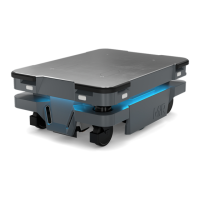
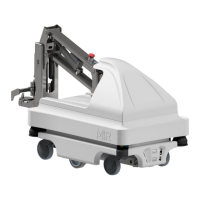
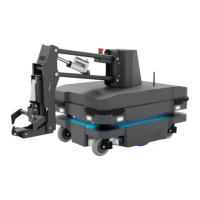
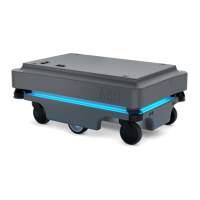
MiR application
A MiR application is either a single MiR product or a combination of MiR products that is able
to execute certain tasks. A MiR application is often a MiR base robot combined with a MiR top
module. If a custom top module is used, the CE mark on the nameplate of the base robot does
not extend to the top module.
MiR robot interface
The MiR robot interface is the web-based interface that enables you to control your MiR robot.
It is accessed by connecting to the same network as the robot and entering the robot's IP
address in a browser.
N
Nameplate
The label delivered with your MiR application that must be mounted before you commission
the robot. The nameplate identifies the MiR application model, application number,
mechanical and electrical specifications.
Noise
With MiR robots, noise in maps refers to recorded data that originates from interfering
elements. This can be physical obstacles that make the robot record walls where there are
none, or more subtle interferences that can make recorded walls appear pixelated.


 To Next Page