60 53 362 D3472
176 D3472.201.10.20.02 07.2016
8Operation DAC UNIVERSAL STANDARD Sirona Dental A/S
8.3Reprocessing with DAC UNIVERSAL STANDARD Operating Instructions DAC UNIVERSAL
13. Press the "Clear"-Key.
The STANDARD lid will open completely.
14. Remove the STANDARD lid from the holder on the DAC UNIVERSAL
at the end of the cycle to allow the instruments to cool down faster.
15. Place the STANDARD lid on the counter or put it in the optional lid
holder.
16. Check the instruments visually to make sure they are dry.
17. Check the instruments visually to make sure they have been cleaned.
18. Check the cycle number, properly conducted cycle on your
documentation (printer, software, etc.): For sterilization, "Sterilization,
time, ok" must be indicated.
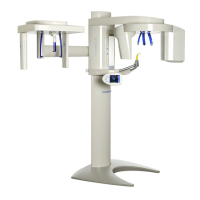
19. Check whether the dark status bar of the chemical indicator is in the
"ACCEPT" range.
If everything is correct, reprocessing was successful.
20. Document the cycle according to the work instructions applicable in
your practice.
21. Remove every instrument from the STANDARD lid. See "Attaching
instruments to the respective STANDARD lid adapters [ → 220]" for
detailed instructions on removing the individual instruments.
The instruments can now be used again.
Sterilization of unwrapped instruments is not sufficient for invasive
procedures. After packing the instruments, see "Pre- and post-
reprocessing of instruments [ → 153]". another sterilization must be
conducted in the DAC UNIVERSAL or a class B sterilizer (e.g. DAC
PROFESSIONAL). For sterilizing wrapped instruments in DAC
UNIVERSAL, see "Reprocessing with the WRAPPED lid DAC
UNIVERSAL STANDARD [ → 182]".
CAUTION
Danger of burning!
Even when the STANDARD lid is half or completely open, the
instruments are still hot. Allow the extremely hot instruments to cool
down after the process.
CAUTION
Danger of burning!
The metal part of the lid is very hot. Please touch only the plastic part of
the STANDARD lid at the end of the cycle.
IMPORTANT
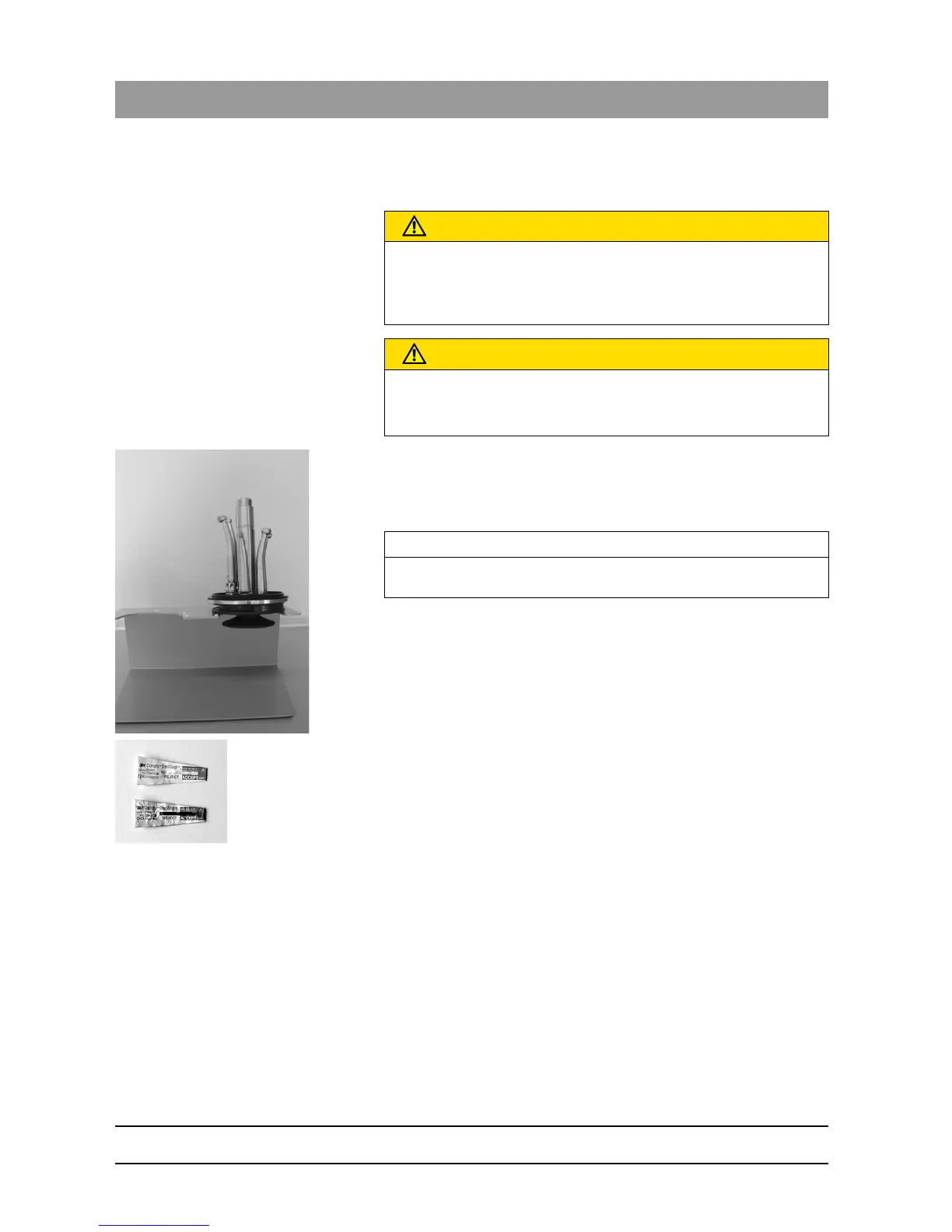
When they are cooling, the heads of the instruments should point
upwards to prevent corrosion.





 To Next Page