Need help?
Do you have a question about the Sunfar C300 Series and is the answer not in the manual?
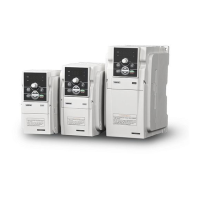
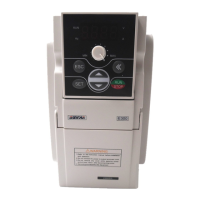
Information on using the C300 sensorless vector low-power inverter.
Instructions for inspecting the inverter upon receipt and checking nameplate data.
Explanation of safety symbols and regulations for inverter operation.
Instructions on where to install and what materials to avoid during installation.
Guidelines for safe and correct inverter wiring, including grounding.
Safety precautions during maintenance, like radiator temperature and earth connection.
Important notes regarding installation environment, motor operation, and altitude.
Guidelines for safe disposal of inverter components and the unit.
Decoding the inverter model designation and its components.
Diagram and labeling of the external parts of Model I inverter.
Diagram and labeling of the external parts of Model II inverter.
Table detailing inverter models, capacity, current, and motor power.
Description of V/F control and sensorless vector control systems.
Detailed characteristics of V/F and vector control, including torque boost and limiting.
Feature for maintaining operation during low voltage fluctuations.
Functions for multi-speed control and wobble frequency operation.
Embedded PID controller and RS485 communication capabilities.
Analog and digital inputs for setting inverter frequency.
Methods to ensure stable running through automatic voltage adjustment.
Information on regenerative and DC braking functions.
Settings for frequency limits, Acc/Dec control, and other operational features.
List of protection mechanisms and warning indicators for the inverter.
Specifies acceptable ambient temperature, humidity, and atmosphere.
Details on the inverter's installation method (hanging).
Guidelines for installing the inverter in a suitable, well-ventilated environment.
Diagrams and table showing the physical dimensions for inverter installation.
Essential safety and technical precautions for inverter wiring procedures.
Guidance on wiring components like power supply, contactors, and reactors.
Illustrates the fundamental wiring connections for the inverter.
Diagrams and descriptions of the inverter's main circuit connection terminals.
Diagrams and descriptions of the inverter's control circuit connection terminals.
Wiring models for connecting RS485 and remote panel interfaces.
Explanation of the function for each button on the inverter's operation panel.
Illustrates how to query states and edit parameters using the panel.
Table detailing monitor codes, their content, and units for status monitoring.
Steps for initialization and simple operation of the inverter.
Parameters covering control methods, frequency input, and digital setting.
Parameters for running command, steering control, and frequency limits.
Parameters for S-curve, carrier wave frequency, and parameter write-protection.
Parameters defining the type and characteristics of the V/F curve.
Parameters for torque boost, base frequency, and V/F settings.
Parameters for motor self-determination and pre-excitation settings.
Parameters for motor resistance, inductance, and speed drop compensation.
Parameters for setting analog input voltage and current ranges.
Parameters for external frequency set time and combination setting modes.
Parameters for configuring functions of input terminals 1 through 4.
Parameters for output terminals, relay contacts, and frequency checkout.
Parameters defining start mode, start frequency, and stop mode operations.
Parameters for automatic voltage regulation and dead time for direction changes.
Parameters for dynamic braking actions and various acceleration/deceleration times.
Parameters defining the multi-speed running mode and frequency settings.
Parameters for running time and direction control in multi-speed modes.
Parameters for fault self-recovery time and internal timer setup.
Parameters for password protection and wobble frequency running mode.
Parameters for inner PID control, including selection and regulating property.
Parameters for PID digital setting, fixed values, and proportion gain.
Parameters for allowable deviation limit and preset frequency for close-loop control.
Parameters for setting communication baud rate, data format, and local address.
Parameters for response time and communication auxiliary function settings.
Parameters for under-voltage protection and over-voltage limit settings.
Parameters for current amplitude limiting, running protection, and fan action selection.
Parameters for agency password, rotational speed coefficient, and program version.
Explanation of control methods (V/F and Sensorless Vector) and frequency input channels.
Details on RS485, panel potentiometer, and analog input for frequency setting.
Selection of operation channels and control methods using external terminals.
Configuration for steering control and motor direction modification.
Parameters for setting frequency limits and acceleration/deceleration times.
Parameters defining S-curve characteristics and carrier wave settings.
Explanation of V/F curve types: Constant torque, low-frequency torque, and user-defined.
Parameters for torque boost patterns and base running frequency settings.
Parameters for DC braking current and time when starting the motor.
Parameters for slip frequency compensation and setting motor nameplate data.
Parameters for automatic motor parameter determination and pre-excitation.
Parameters for self-adapting rectification of motor parameters.
Parameters for setting motor basic parameters and analog input channels.
Parameters for external frequency input time constant and combination setting modes.
Parameters for selecting analog output signals and setting output limits.
Parameters for configuring functions of input terminals for various controls.
Detailed functions for input terminals: multi-speed, wobble freq., jog, and PLC.
Description of output terminal functions: running, frequency reaching, and FDT signal.
Description of output terminal functions: over-loading alarm and frequency limits.
Parameters defining start mode, start frequency, and start frequency duration.
Parameters for stop mode, DC braking when stopping, and zero frequency settings.
Parameters for setting jog frequency and jog running operation.
Parameters for torque level, braking torque, and motor overload protection.
Parameters for automatic voltage regulation and dead time for direction changes.
Parameters for dynamic braking actions and various acceleration/deceleration times.
Parameters defining the multi-speed running mode and frequency settings.
Explanation of simple PLC running modes: single loop and continuous loop.
Explanation of PLC restart modes and power-off state saving.
Parameters for fault self-recovery time and interval time.
Parameters for internal counters, skip frequency, and linear speed settings.
Parameters for analog coefficient settings and monitor item selection.
Parameters for setting wobble frequency running mode and preset frequency.
Parameters for wobble frequency amplitude, jumping frequency, and rise/fall times.
Parameters for inner PID control, including selection and regulating property.
Details on monopole and ambipolar PID control modes for motor reversion.
Parameters for PID setting, feedback channels, and PID fixed values.
Parameters for allowable deviation limit and preset frequency for close-loop control.
Parameters for setting communication baud rate, data format, and local address.
Parameters for response time and communication auxiliary function settings.
Parameters for under-voltage protection and over-voltage limit settings.
Parameters for current amplitude limiting, running protection, and fan action selection.
Parameters for agency password, rotational speed coefficient, and program version.
Table listing faults, probable causes, and solutions for inverter operation.
Faults related to output grounding, interference, overloading, and overheat.
Faults related to motor parameters, temperature sensors, and data storage.
Procedure for inquiring about recorded faults and output parameters.
Methods for resetting the inverter after a fault occurs.
Maintenance points and criteria for environment, cooling, inverter, motor, and parameters.
Maintenance for filter capacitors and cooling fans, including replacement intervals.
Guidelines for storing the inverter when not in use for extended periods.
Details on warranty period, repair services, and conditions for service charges.
Example of using panel control with potentiometer for frequency setting and V/F control.
Example of using external terminals for control and frequency setting with V/F control.
Example of multi-speed running with external control and V/F method.
Example of panel control with potentiometer and linkage control between inverters.
Example of using PLC for inverter startup, stop, and multi-speed control.
Details on system configuration and hardware connection for PLC control.
Operation notes and master PLC trapezoidal chart for PLC control.
Overview of the RS485 protocol for monitoring and control of inverters.
Definition of the serial communication protocol, including format and content.
Application products and methods for the RS485 communication protocol.
Details on bus structure, interface modes, and transmission modes.
Description of the serial master-slave communication protocol.
Explanation of optional data transmission formats for RS485 communication.
List of available baud rates for serial communication.
Description of point-to-point and serial interface communication modes.
Rules for startup interval time between data frames in RS485 communication.
Details on the structure and length of communication messages.
Format specification for the master command frame in RS485 communication.
Format specification for the slave responding frame in RS485 communication.
Details on the header format for RS485 communication frames.
Information on the address range for slave machines in RS485 communication.
Classification of order types within master command frames.
Description of control orders given by the master to slaves.
Details on slave responding data and the format of responding frames.
Information on how slaves provide state feedback to the master.
Method for calculating the check sum in RS485 communication.
Information on the frame tail character in RS485 communication.
General description of frame format for different orders and data types.
Reading slave model, parameters, and state monitor parameters using frame format.
Modifying inverter parameters in RAM and EPROM using frame format.
Sending control orders and setting frequency using frame format.
Examples of RS485 commands for reading model, parameters, and modifying frequency.
Example of sending control orders via RS485.
Example of modifying Torque Boost setting via RS485.
Information regarding the optional operation panel and its installation.
Dimensions and appearance of the operation panel base.
Dimensions and appearance of the small operation panel base.
Instructions for installing the operation panel base into a cabinet.
Table detailing brake resistance specifications for various inverter models.
Further specifications and considerations for brake resistance.
 General
| Overload Capacity | 150% for 60 seconds |
|---|---|
| Cooling Method | Forced air cooling |
| Humidity | 5% to 95% (non-condensing) |
| Output Voltage | 0 to rated input voltage |
| Control Mode | V/F Control |
| Braking Unit | Built-in |
| Communication | RS485, Modbus |
| Protection Functions | Overcurrent, overvoltage, undervoltage, overheating |
| Frequency Range | 0Hz to 400Hz |
| Operating Temperature | -10°C to 40°C |
| Storage Temperature | -20°C to +60°C |
| Altitude | Up to 1000m without derating |


 To Next Page