12 REVERBERATION TIME MEASUREMENTS - RT60
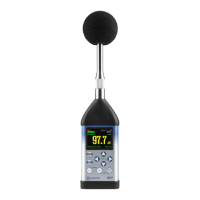
The RT60 analysis is an optional function of SVAN 977A, which provides reverberation time calculation for
1/1-octave bands (from 63 Hz to 16 kHz) or 1/3-octave bands (from 50 Hz to 20 kHz) and three total RMS levels
(A, C and Z weighted). Whole measurement process and calculations implemented in SVAN 977A fulfil the
ISO 3382 standard.
The reverberation time of the room can be obtained with the use of SVAN 977A by two measurement methods:
Impulse Response Method (Impulse) and Interrupted Noise Method (Decay). The selection of the method
depends on the type of the used sound source. The Impulse method is designed for measurements using the
impulse sound source (like pistol shot, petard explosion), whereas the Decay method is intended for
measurements when room is excited by broad or narrow band sound noise source (usually pink noise). For
more details about the measurement and calculation process see Appendix E.
The reverberation time analysis applied in the instrument consists of two parts:
1. The measurement part during which the acoustic response of the room is registered.
2. The calculation part during which the reverberation time (EDT, RT20, RT30 and RTUser) is calculated
for the measured room response.
Note: It is recommended to familiarize with Appendix E before proceeding.
This chapter describes only the navigation of the instruments, whereas Appendix E depicts
the definitions and describes reverberation time measurements.
12.1 SELECTING THE RT 60 FUNCTION
To activate the RT60 analysis function, select
the RT60 position in the
Measurement Function list and press
<ENTER>.
Note: The RT60 function is optional and should be unlocked by entering the activation code in the
text editor screen, which is opened after first attempt to select this function. Once unlocked this option
will be ready to use permanently.
Note: It is not possible to change the current function during running measurements.
In this case the instrument displays for about 2 seconds the warning: “Measurement in Progress”. To
change the current measurement function, the measurement must be stopped!
12.2 SETTINGS OF THE RT60 ANALYSIS
Execution of the RT60 analysis depends on a certain number of the parameters,
which can be set in the different screens of the Measurement section:
RT60 Settings, Compensation Filter and Range.
Positions Compensation Filter and Range are the same as for other
instrument’s functions (see Chapters 5.6 and 5.7).


 To Next Page