3.1.8.3.1 Cogging Torque Compensation
3.1.8.3.1.1 Overview
Cogging is an effect caused by magnetic interaction between the motor rotor and the stator. It results in
torque ripples over the motor revolution, which leads to uneven motion or generally unsatisfying
performance of the motor at low velocities. This phenomenon is of particular concern in low-cost motor
models but can be compensated on a software level.
Cogging torque compensation is a software feature that suppresses torque ripple of electric motors to
overcome vibration problems in high precision and low velocity applications. It can be found in OBLAC Drives
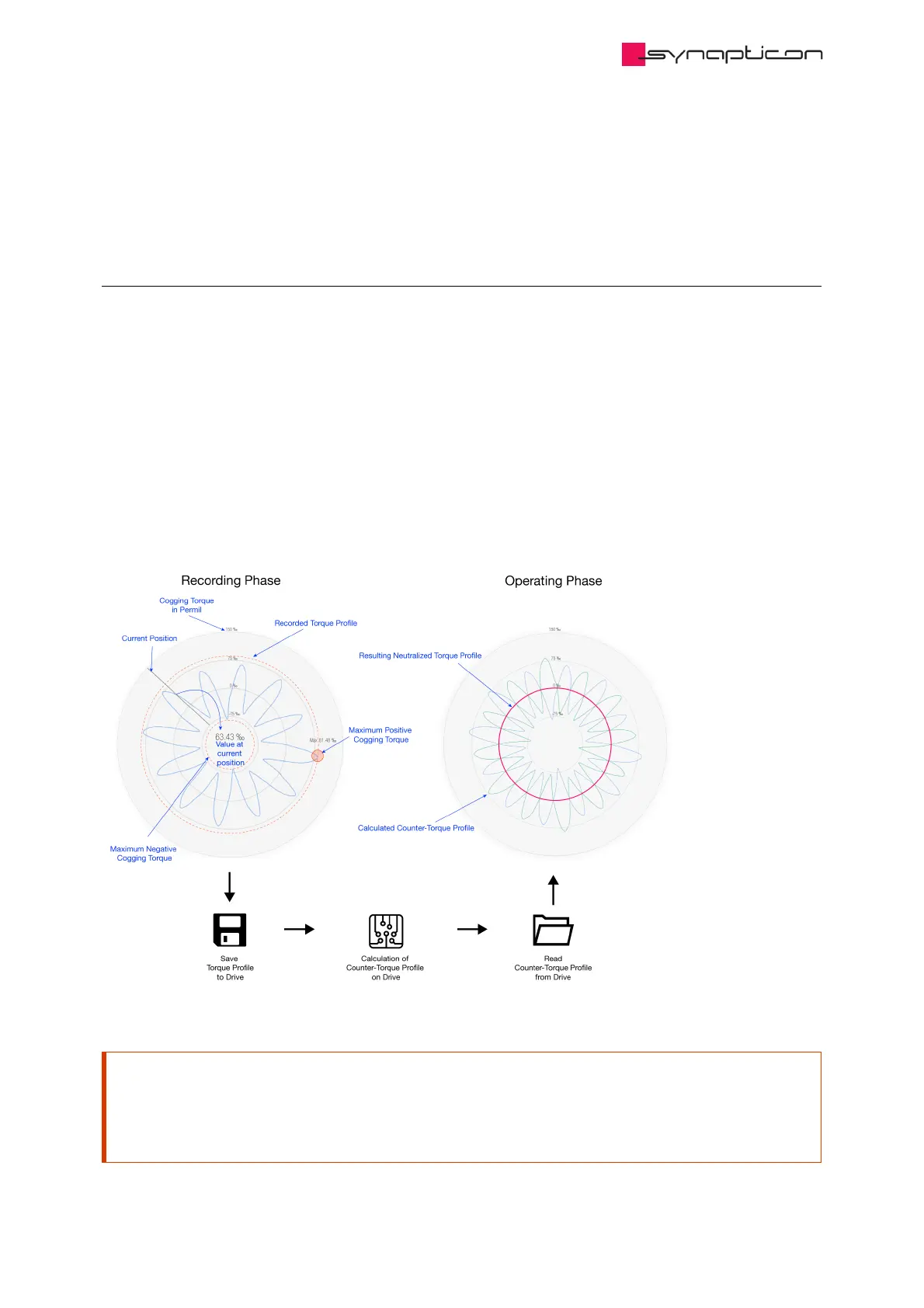
When cogging torque compensation is activated, an additional torque component is generated actively by
the motor in order to compensate for the cogging torque. The compensation feature makes use of the fact
that cogging torque is dependent on the single-turn motor position. To find the amount of compensation
torque needed at each motor position, a recording procedure has to be performed before the compensation
itself can be used.
Attention
During the recording phase, the motor will do several turns at low velocities. Since cogging is a
property of the motor and independent of attached loads it’s possible to perform the procedure
outside the actual setup.



 To Next Page