MACHINE OPERATIONS AND CONTROLS OPERATION
3-180
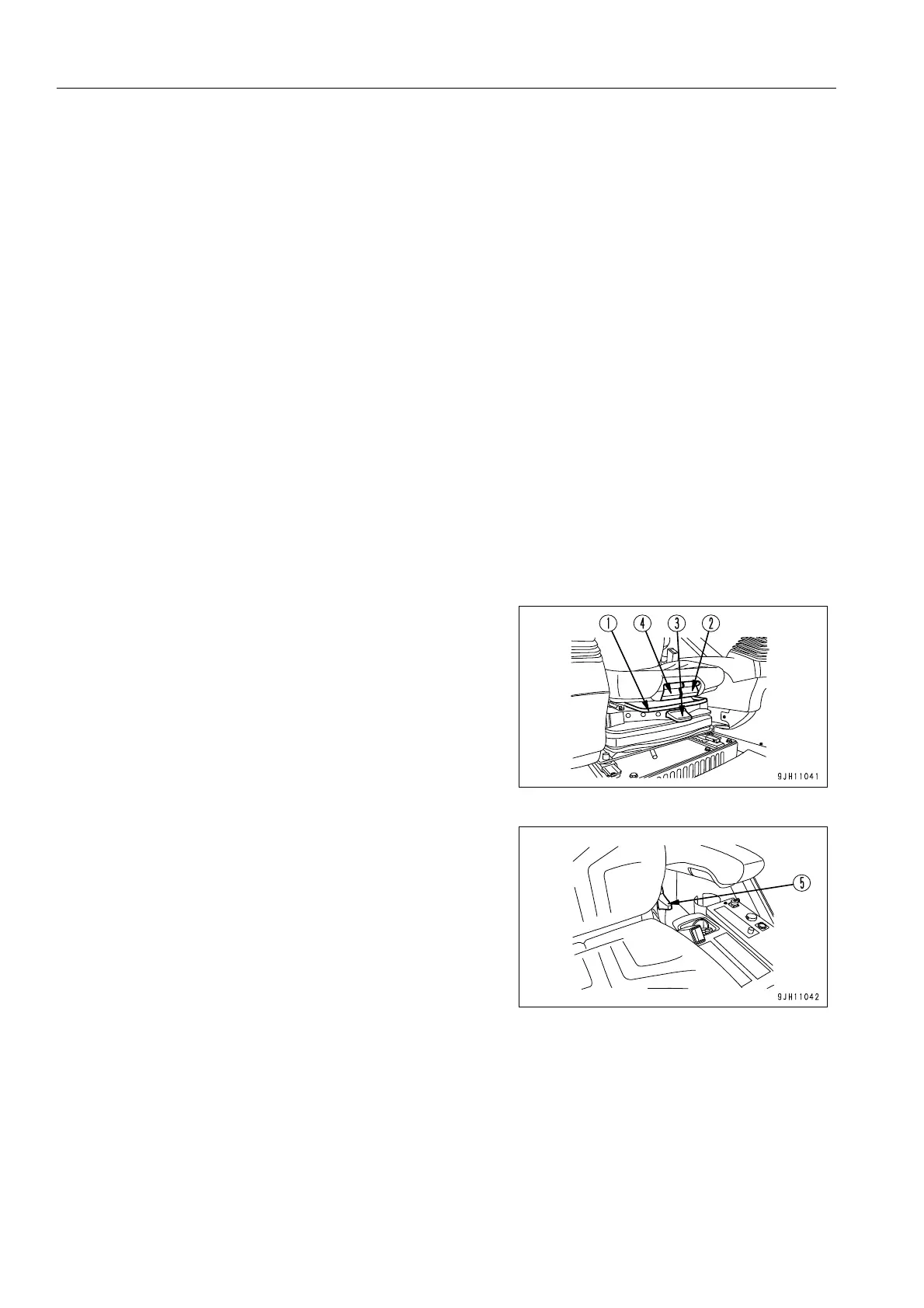
(D) Seat height adjustment
Carry out adjustment of the seat weight before adjusting the seat height. Adjustment of the seat height and adjust-
ment of the seat weight are both carried out with lever (3).
q The seat height adjustment uses an air system, and it can be adjusted steplessly. The range of adjustment is
80 mm.
q When adjusting the height, pull lever (3) up fully or push it down fully (when pulling it up, pull it until a click is
felt).
When the seat is set to the desired height, release the lever. If the lever is kept pulled up, the position where
the seat does not rise any further is the maximum height. When the seat reaches the maximum height, the
suspension automatically goes down slightly to secure the amount of movement of the lever. (Max 50 mm)
q To prevent the suspension from reaching the bottom, do not set to a seat height below the adjustment range.
When the seat is pushed down, the air is discharged. The air makes a sound when it is discharged, but this does
not indicate any failure.
When lever (3) is pushed down, the seat height may suddenly go down to the minimum adjustment height. This
occurs when the suspension reaction is smaller than the operator's weight, so it does not indicate any failure.
(E) Fore-and-aft adjustment of seat cushion
Operate lever (4) up, set the seat cushion to the desired posi-
tion, then release the lever.
Fore-and-aft adjustment: 60 mm
(F) Adjustment of reclining angle
Pull lever (5) up, adjust the seatback to a position where it is
easy to carry out operations, then release lever (5). Carry out
the operation with your back pressed against the seatback. If
you move your back away from the seatback, the seatback
may suddenly spring forward.
Amount of adjustment : Forward tilt 20° (free after 20°)
Rear tilt 60°
The seat can be reclined more when the seat is pushed to the
front. The amount of reclining decreases as the seat is pushed
back, so when moving the seat back, return the seatback to the
upright position.




 To Next Page