Mini-Crawler Crane M A E D A Section 4 – WORKING WITH CRANE
1/2019 MC405C-3 4-55
4. Measure after accident
After accident, do not reuse as is. Such
attempt may cause unexpected accidents
and enhances failures.
Ask us or our sales service agency for
repair.
Cautions When Working with Crane in
Location with High Output Microwave
Emission
Working with crane near a high output microwave
emission equipment such as a radar or TV/radio
broadcast antenna causes the crane construction
to be exposed to the microwave and generates
induced current, therefore is very dangerous. In
addition, the mechatronics may become haywire.
Establish grounding between the machine frame
and the ground when working in such location. In
addition, slingers are requested to wear rubber
boots and rubber gloves since risk of electrical
shock by contacting parts such as the hook or
wire exists.
Pay Attention to Weather Information
• In case of thunderstorm, risk of lightning exists,
so abort working with crane, immediately lower
the load and contain the boom.
• Exposing the hoisted load to wind causes the
load to waggle and causes the machine to be
unstable, thus is dangerous. Immediately lower
the load and contain the boom when the wind is
causing the load to waggle.
• If the maximum instantaneous wind speed is 10
m/s or greater, abort working with crane,
immediately lower the load and contain the
boom.
• Even when the maximum instantaneous wind
speed is below 10 m/s, bigger the hoisted load,
higher the hoisted load position, and longer the
boom, the wind effect increases accordingly.
Be fully careful during work.
• When a load such as a steel plate that has a
large area exposed to wind is being hoisted,
the wind arriving from front/rear/side of the
boom may cause the machine to trip or
damage the boom. Be fully careful when
working.
• When an earthquake occurs, abort working and
wait until the earthquake is over.
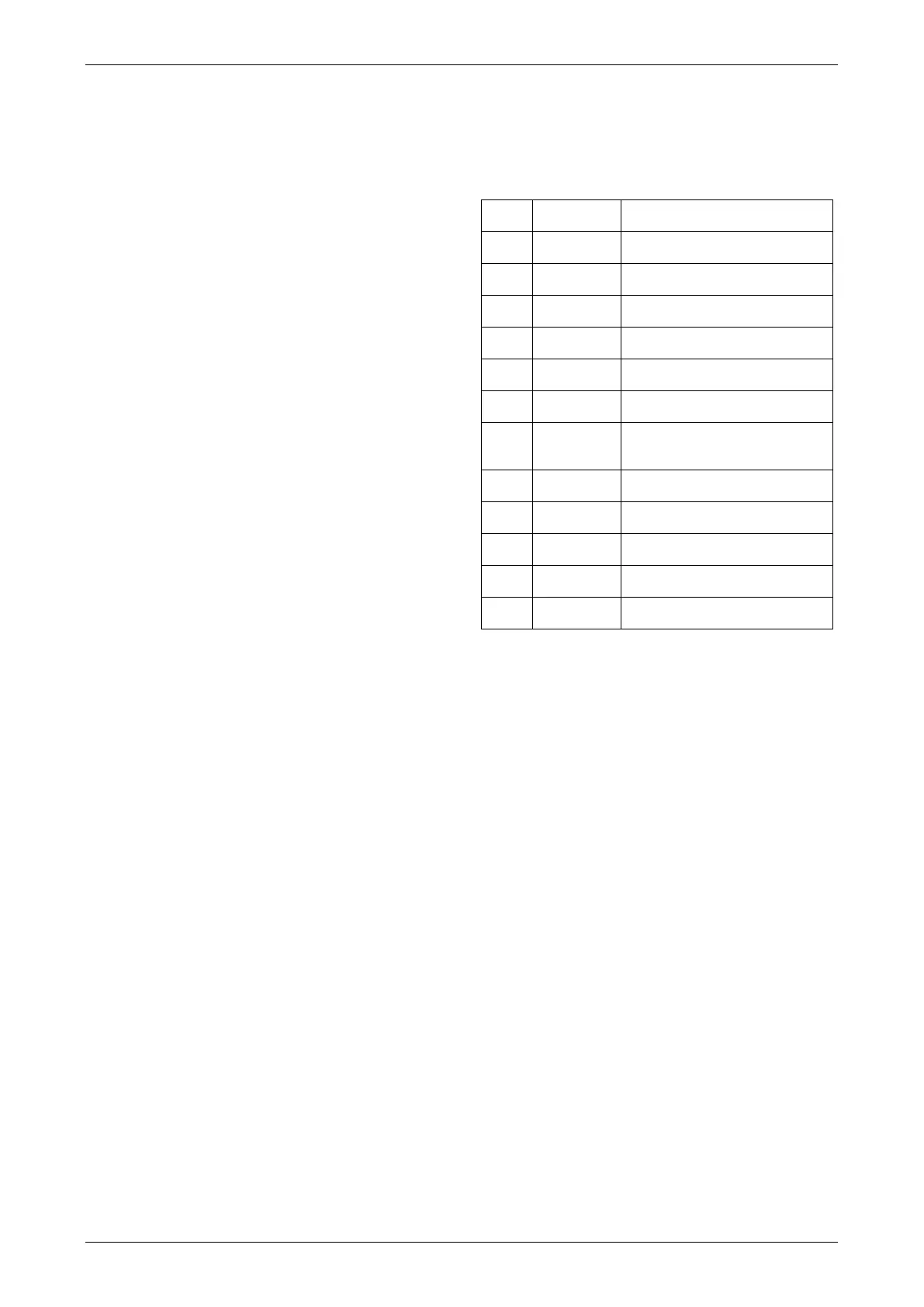
The following table indicates approximate
relation between the wind speed and wind
effect. The wind speed mentioned in the
weathercast is mean wind velocity (m/s) during
10 minutes at 10 m above the ground.
Force
Effect On Land
0
Smoke rises vertically.
1
Wind motion visible in smoke.
2
Wind felt on exposed skin.
3
Leaves and smaller twigs in
constant motion.
4
Dust and loose paper raised. Small
branches begin to move.
5
Smaller trees sway. Some foam
and spray.
6
10.8 - below
13.9
Large branches in motion.
Whistling heard in overhead wires.
Umbrella use becomes difficult.
7
Whole trees in motion. Effort
needed to walk against the wind.
8
Twigs broken from trees. Progress
impeded.
9
Light structure damage. Slates
blown off.
10
Trees uprooted. Considerable
structural damage.
11
Widespread structural damage.


 To Next Page