Mini-Crawler Crane M A E D A Section 5 – GENERAL MACHINE MAINTENANCE
1/2019 MC405C-3 5-61
Rubber Tracks
General Information and Precautions
Good Use
While the rubber tracks demonstrate many
advantages thanks to its performance
characteristic to the material, it has a weak point
in strength.
Therefore, we would like you to sufficiently
understand the characteristics of the rubber
tracks and to respect don’ts operations and
observe the cautions on handling so that the life
of the rubber tracks can be extended and its
advantages exercised.
Be sure to read "Dos and Don’ts" on page 5-61
and "Cautions in Using Rubber Tracks" on page
5-62 before using the machine.
Warranty
Verification of proper tension of the rubber tracks,
maintenance of rubber tracks, and damage
caused by the fault of customers such as not
respecting don’ts operation or not observing
cautions in working, for example, "worked at the
site where there were objects that may tear the
rubber blocks, such as steel plates, U-shaped
gutters, corners of bricks, corners of sheer
broken stones and rocks, reinforcing steels, and
iron scraps", are not covered by warranty.
Dos and Don’ts
The following operations are prohibited.
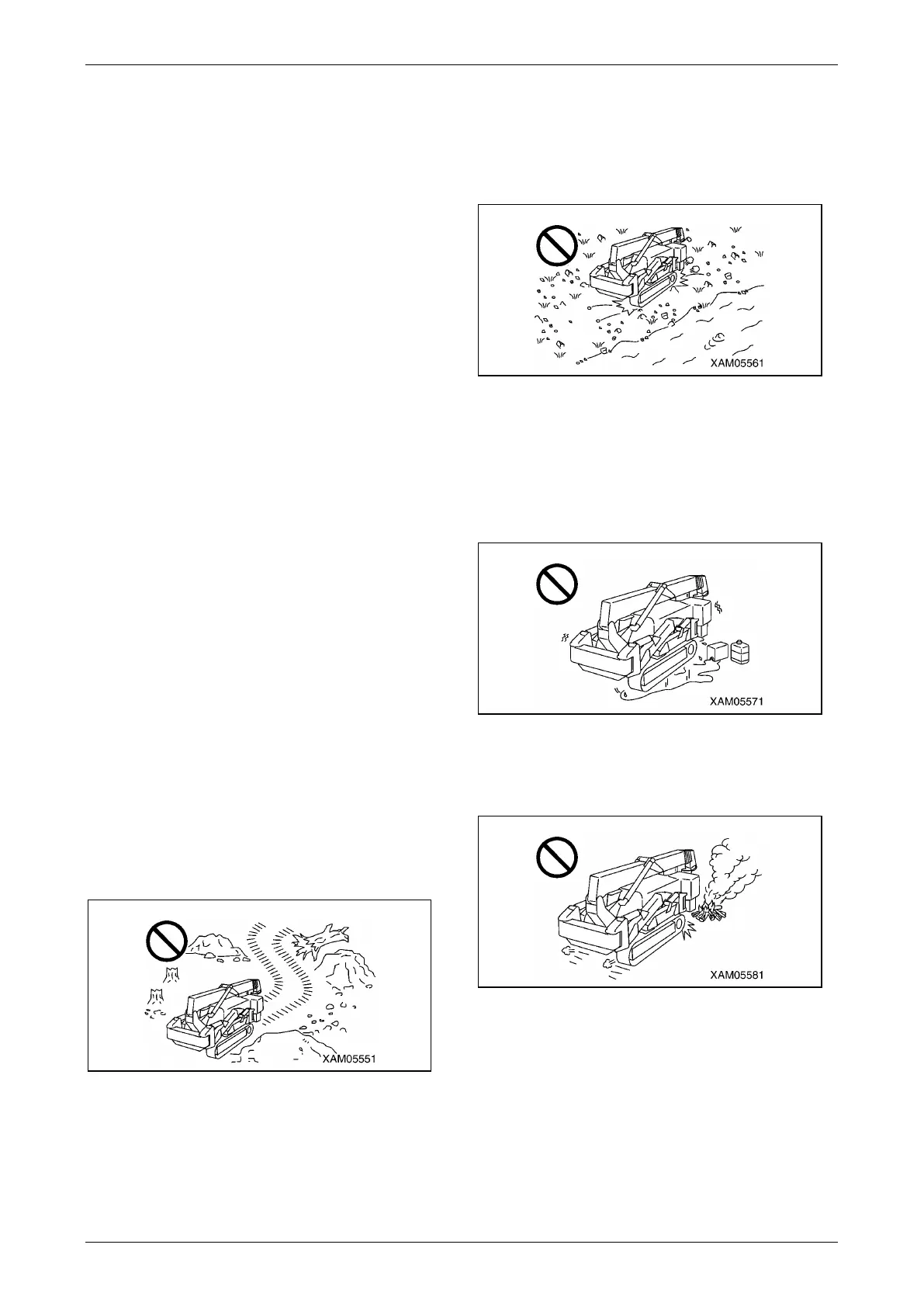
• Working and slewing on the ground with broken
stones, hard rock ground with great irregularity,
reinforcing steels, iron scraps, and near the
edge of the steel plates will damage the rubber
tracks.
Fig. 5-130
• At the location where there are great amount of
large and small boulder stones such as river
beds, the stones will go under the machine,
tending to damage the rubber tracks or the
rubber tracks tend to come off.
Fig. 5-131
• Keep the oil and chemical solvents away from
the rubber tracks.
If these materials come in contact with the
rubber tracks, wipe it off immediately.
Do not Travel over the road surface where the
oil has built up.
Fig. 5-132
• Do not go in the area where it is hot such as
with open fire, the steel plate left under the
burning sun, or newly poured asphalt.
Fig. 5-133
• Keep the rubber tracks indoor where there is no
direct sunlight or rain when storing them for
long time (three months or more).


 To Next Page