Chapter 16 Reference
16.2 Measuring mV (oxidation-reduction potential [ORP])
222 HORIBA
● ORP standard solution
There are two kinds of standards substances. Under normal circumstances, it is sufficient to
use only the one type of substance that is closest to the measured value.
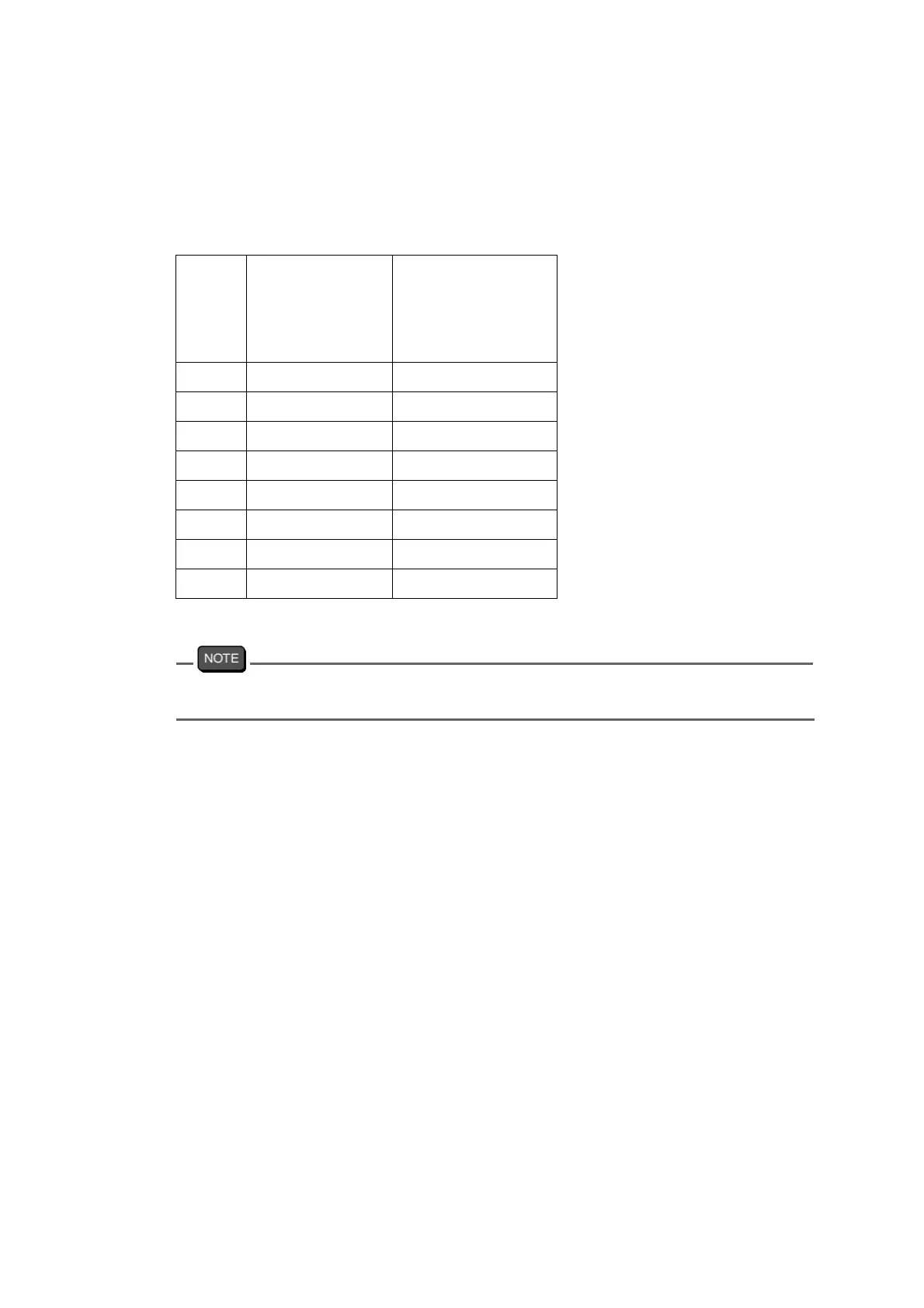
Indicated value of ORP standard solution at various temperatures (mV)
Operation check using standard solution
Standard solution is not used only for calibration of the meter, but to confirm whether or not
the condition of electrodes is good.
1. Add 250 mL pure (ion exchange) water to one packet of any of the above listed
standard solutions and mix well. (When mixing, the excess quinhydrone [a
black powder] will float to the surface of the solution.)
2. Immerse a washed and dried ORP electrode in the ORP standard solution and
measure the mV value.
3. If the electrode and the meter, itself, are working correctly, numerical values
within 15 mV or less of those listed in Table 1 should be obtained.
4. If measurements that fall within 15 mV of the values listed above are not
obtained using this method, measure the solution again after replacing the ref
-
erence electrode internal solution and removing the dirt from the surface of the
metal electrode by moistening a cotton swab with alcohol or a neutral cleaning
agent and lightly rubbing the electrode or by soaking the electrode in diluted
Nitrate (1:1 Nitrate).
5. If measurements within 15 mV of the values listed above are still not obtained
after re-measuring, the reference electrode or the meter may be faulty. Either
replace the electrode or have the meter inspected.
Temp.
(ºC)
160 - 22
Phthalic-acid
chloride +
quinhydrone
160 - 51
Neutral phosphate
+ quinhydrone
5 +274.2 +111.9
10 +270.9 +106.9
15 +266.8 +101.0
20 +262.5 +95.0
25 +257.6 +89.0
30 +253.5 +82.7
35 +248.6 +76.2
40 +243.6 +69.0



 To Next Page