Chapter 3 System Setup 35
ST-133: There is an internal fan located at the right side of the rear panel behind an
exhaust opening. Its purpose is simply to cool the controller electronics. This fan
runs continuously whenever the controller is powered. Air enters the unit through
ventilation openings on the side panels, flows past the warm electronic
components as it rises, and is drawn out the rear of the controller by the fan. It is
important that there be an adequate airflow for proper functioning. As long as
both the controller’s intake ventilation openings and the fan exhaust opening
aren’t obstructed, the controller will remain quite cool.
Power
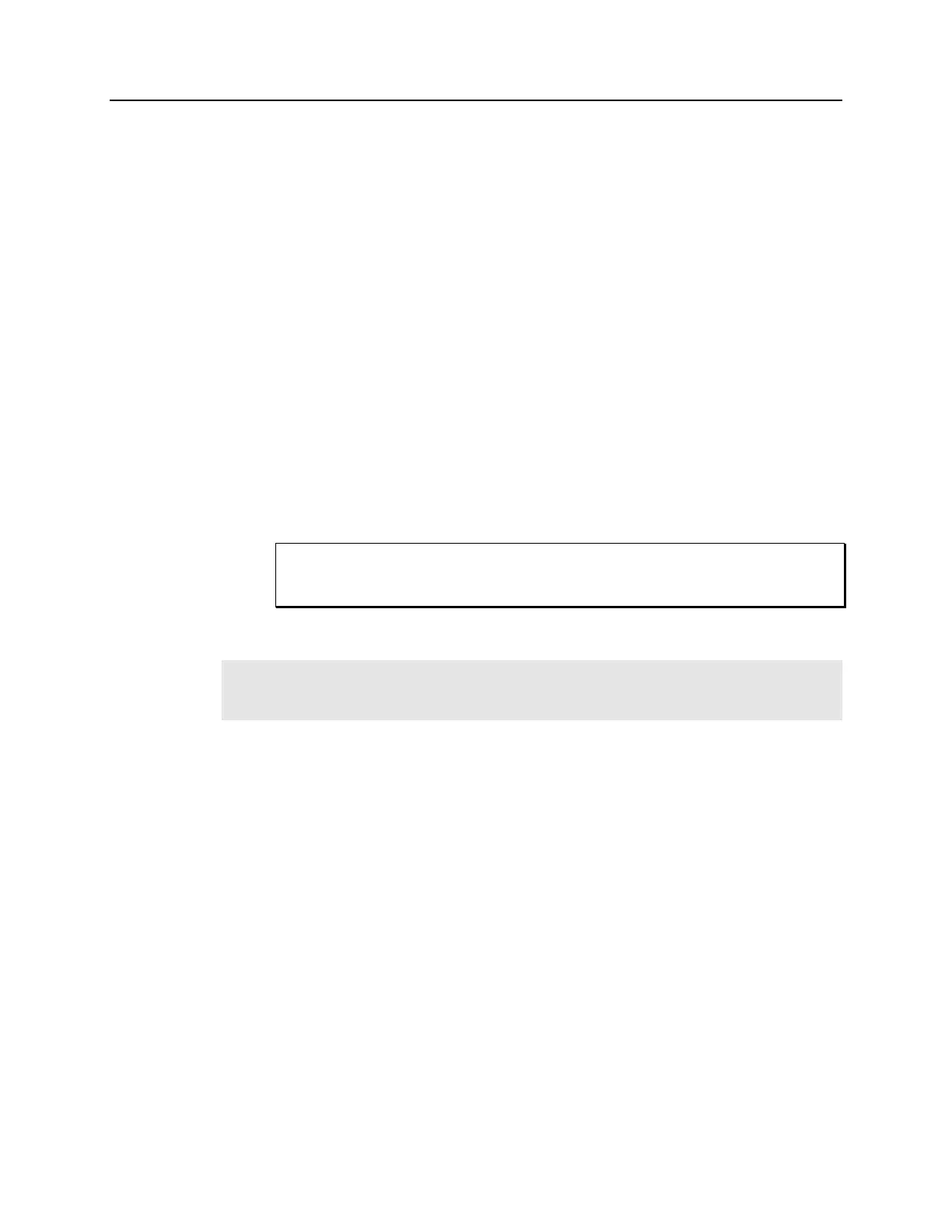
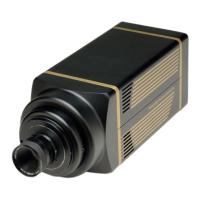
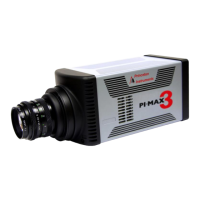
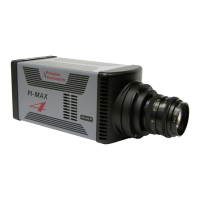
Camera: The PI-MAX camera receives its power from the ST-133, which in turn plugs
into a source of AC power.
ST-133: The ST-133 Controller can operate from any one of four different nominal line
voltages: 100, 120, 220, or 240 V AC. Refer to the Fuse/Voltage label on the
back of the ST-133 for fuse, voltage, and power consumption information.
The plug on the power cord supplied with the system should be compatible with
the line-voltage outlets in common use in the region to which the system is
shipped. If the power cord plug is incompatible, a compatible plug should be
installed, taking care to maintain the proper polarity to protect the equipment and
assure user safety.
Whenever you turn the ST-133 power OFF, be sure to leave it OFF for at least 30
seconds before switching it back ON. If you switch it ON too soon, a fault logic
state is established that causes the overload alarm to sound continuously.
Host Computer
Note: Computers and operating systems all undergo frequent revision. The following
information is only intended to give an approximate indication of the computer
requirements. Please contact the factory to determine your specific needs.
Requirements for the host computer depend on the type of interface, TAXI or USB 2.0,
that will be used for communication between the ST-133 and the host computer. Those
requirements are a listed below according to protocol.
TAXI Protocol:
AT-compatible computer with 200 MHz Pentium
®
II (or better).
Windows
®
95, Windows
®
98SE, Windows
®
ME, Windows NT
®
, Windows
®
2000, or Windows
®
XP operating system.
High speed PCI serial card (or an unused PCI card slot). Computers purchased
from Princeton Instruments are shipped with the PCI card installed if High speed
PCI was ordered.
Minimum of 32 Mbytes of RAM for CCDs up to 1.4 million pixels. Collecting
multiple spectra at full frame or high speed may require 128 Mbytes or more of
RAM.
CD-ROM drive.
Hard disk with a minimum of 80 Mbytes available. A complete installation of the
program files takes about 17 Mbytes and the remainder is required for data



 To Next Page