Acuity Virtual Panel
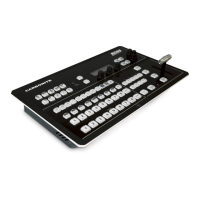
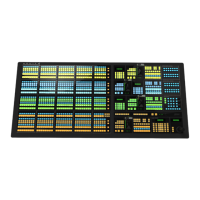
The Acuity Virtual Panel is a browser based virtual
representation of an Acuity
®
control panel with menu
system. The virtual panel is hosted either from the Acuity
Rack Panel (ARP) server or a physical Acuity
®
control
panel. The Acuity Rack Panel replaces the need for the
control panel, with the exception of not having any of
the ports (Remote and Tally) that are present on the back
of the control panel, and is upgraded in the same way as
a normal panel.
Important: Refer to the documentation that came
with your Acuity Rack Panel for information on cabling
and powering on the server.
To Launch the Acuity Virtual Panel
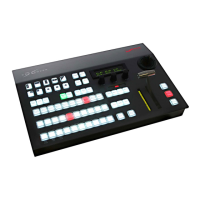
The Acuity Virtual Panel provides a virtual representation
of an Acuity
®
control panel, Shot Box, or auxiliary
control panel, as well as the menu interface.
Note: If you are connecting to a physical control panel, the
Virtual Panel Enable Personality option must be set to On.
Note: The Acuity Rack Panel ships in DHCP mode by default.
The IP address that it has been assigned by your network is
shown on the diagnostic display on the front of the server.
1. Open a web browser and navigate to the IP address
of the Acuity Rack Panel, physical control panel, or
SoftPanel.
Tip: Click Logout to close the Acuity Virtual Panel. Click
About > Acuity User Guide to launch the Acuity webhelp
in a new tab.
2. Point to Panel and select the size of control panel
you want to use.
3. Click Open Panel VNC to open a window with
the menu system.
a) At Login: type user and press Enter.
b) At Password type password and press
Enter.
Tip: Click Close Panel VNC to close the menu system
window.
4. Point to Add-On Modules and select the Shot Box
or Aux Panel that you would like to use instead of
the panel.
5. Point to Options to congure the Acuity Virtual
Panel interface.
• Background Off — turns off the background
image on the page.
• Block Multiple Users — prevent multiple
users form logging in to the same Acuity Rack
Panel.
• Transparency Off — turns off the
transparency effect applied to the panel and the
border of the menu.
• Position Lock — lock the panel and menu in
their current positions.
• Zoom Lock — lock the panel and menu at their
current zoom level.
• Smaller Zoom Steps — reduce the rate for
zooming in/out from the panel.
• White Button Labels — switches the labels
on the panel buttons to white. This does not
change the color of the mnemonic text.
• Swap to Top Lock — locks to panel and menu
to their current order. If the panel is covering the
menu the menu does not jump to the top when
you hover over it or click on it.
• Follow Browser Resize — the virtual panel
resizes with the size of the browser window.
• Open VNC in New Window — opens the
menu system in a new browser tab.
• Set Page as Default — sets the current virtual
panel as the default panel.
• Reset Position — resets the panel and menu
to their default positions.
• Save Position — saves the current position
and size of the panel and menu, as well as the
setting on the Options menu.
• Restore Position — recalls the settings stored
using the Save Position.
The AVP Interface
An overview of the interface of the Acuity Virtual Panel.
Tip: You can use the virtual panel with a touchscreen monitor
if required. Touch events are treated as mouse clicks and
multi-touch and drag events are also supported.
108 • Acuity Virtual Panel — Acuity Operation Manual (v9.2)


 To Next Page