Thermo Fisher Scientific Micro-Tech 9101/9201 Reference Manual, Rev J C-71
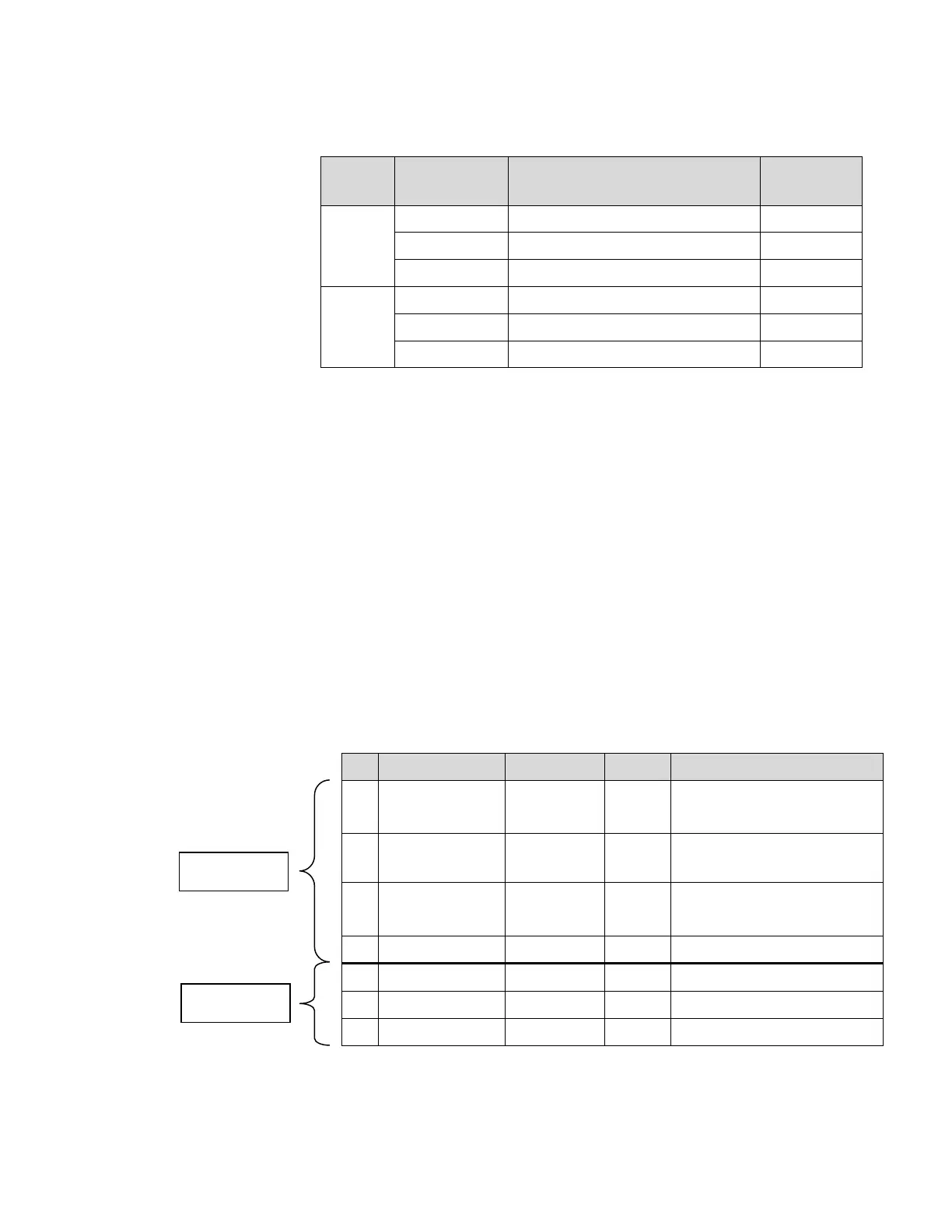
Table C–4. Data Organization
In the PROFIBUS protocol, the master continuously reads data from the
slave. Since the Micro-Tech has a large number of registers that can be
sent to the master, as previously said registers are collected in blocks.
Therefore, the master should have the possibility to tell the Micro-Tech
which block and which register of the block it needs to read. This is
performed by a write operation as described in the next chapter.
After the Micro-Tech receives and interprets this write request, it starts to
fill the read buffer with the requested data.
The Micro-Tech will remember which registers have been required the last
time and it will continue to update the read buffer with their actual values.
What the Master receives after a read operation is a buffer of data having
the following structure:
Table C–5. Read Buffer
ID Register Data Type Offset Remark
1 Block Identifier Integer 1 Identification Number of
Block Type (0,1,2,3)
2 1
Register Integer 2 Number of the first register
within the block
3 N° of Registers Integer 3 Numbers of register
to read within the block
4 Stamp Integer 4 See explanation below
5 Data #1 May vary 5 Value of the first register
…. ……….. ….
n Data #n May vary …. Value of the last register
Block
Type
Identification
Number
Description of Data
Reference
Page
Read 0 Status, Alarms, I/O, Dynamic data C-72
1 Batch (Load Out) C-72
2 Sets and Thresholds C-73
Write 100 Commands C-73
101 Batch (Load Out) C-74
102 Sets and Thresholds C-74


 To Next Page