16 - 57
16.12.2 Differences in Communication Specification between Conventional Analyzers and Model 902
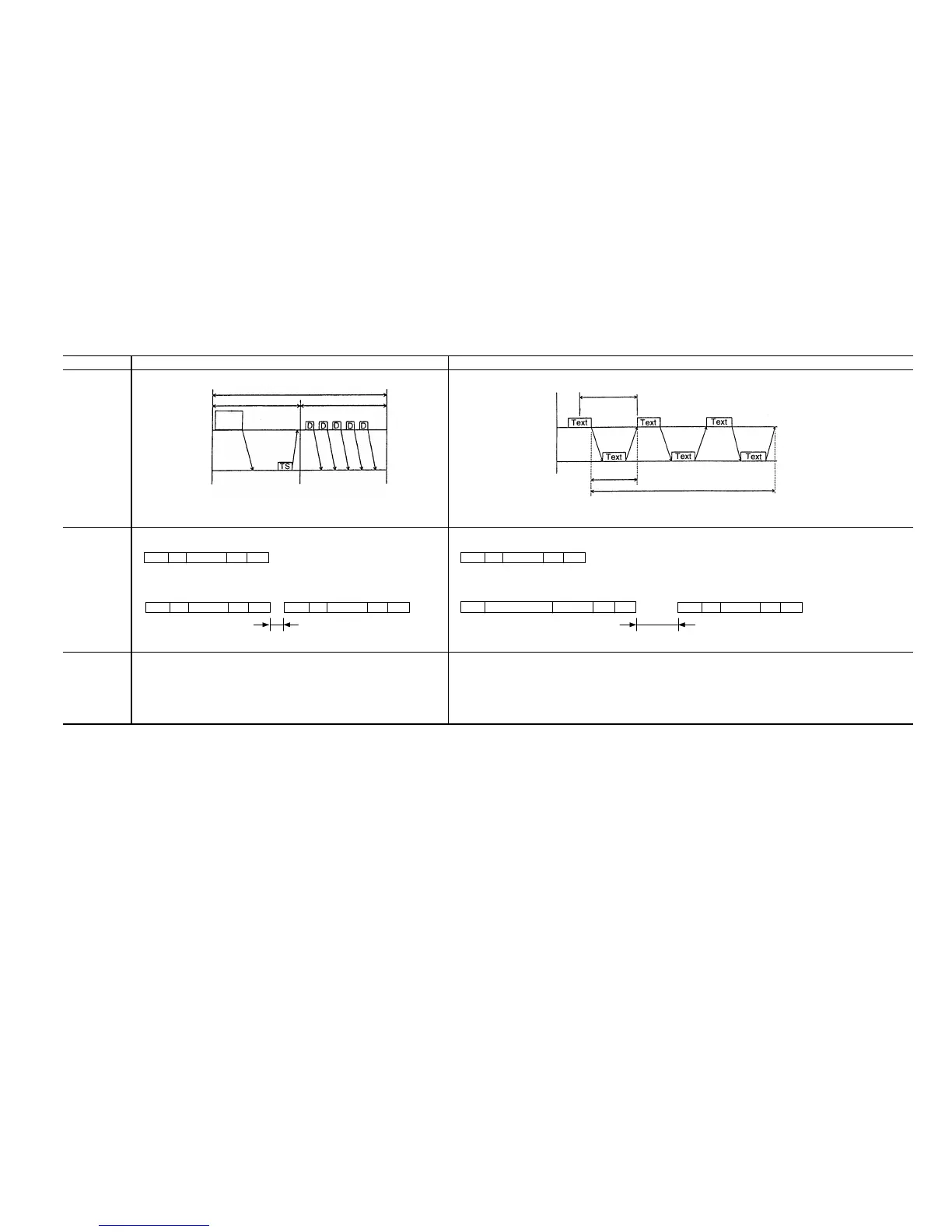
Conventional Analyzers (Model 7250, 7150, 7050, etc.) Host Manual Drive System (Model 7170/902)
Communication
timing chart
TS: Test selecting information
D : Analytical data
Composition of
message
(1) With less than 255 bytes (TS inquiry, analytical data transfer)
STX FN Data filed ETX BCC (FN: Function No.)
(2) With 255 bytes or more (analytical data transfer)
STX FN Data filed ETX BCC STX FN Data filed ETX BCC
(1) With less than 254 bytes (TS inquiry, analytical data transfer, other)
STX FN Data filed ETX BCC
(2) With 254 bytes or more (only transfer of analytical data)
STX Frame character Data filed ETX BCC STX : Data filed ETX BCC
Characteristics (1) A communication cycle is divided into the first and second halves where TS inquiry
and analytical data transfer are made, respectively.
(2) Function is simple due to discrimination with real-time transfer and batch transfer.
(1) As a rule, response is made to each request.
(2) Text has a frame No. corresponding to command No. and control code (ACK, NAK) in it for communication control.
(3) Applicable to multiple jobs because there is basically no discrimination between real-time communication (communication
under analysis) and batch communication (specified through screen).
(4) Because protocol need not be changed among instruments, a high maintainability is ensured.
(5) Reducing the burden of host can be expected.
Communication cycle (sec)


 To Next Page