A2537-002/01 February 2020 6-15 SEMCO Proprietary Information
Using the horizontal LEFT (4) and RIGHT (6) arrows, the operator can select <Ch2> and then use the UP
(2) and DOWN (8) arrows to scroll to either BIT SYNC LOOP BW, CARRIER LOOP BW, SWEEP RANGE
and/or SWEEP RATE in blue, and push ENTER or SELECT (5) to highlight the respective selection
window in bright magenta. The operator then uses the numerical keypad to enter the desired
BANDWIDTH, SWEEP RANGE and/or SWEEP RATE value and pushes ENTER or Select (5).
The operator repeats these steps for <Comb>.
With AUTO disabled, the selection range for Bit Sync and Carrier Loop Bandwidths, Sweep Range and
Sweep Rate are as follows:
A. Bit Sync Loop Bandwidth - 0.01 to 100%
B. Carrier Loop Bandwidth - 0.01 to 100%
C. Sweep Range - 1.0 kHz to 500 kHz
D. Sweep Rate - 1.0 Hz to 20 MHz
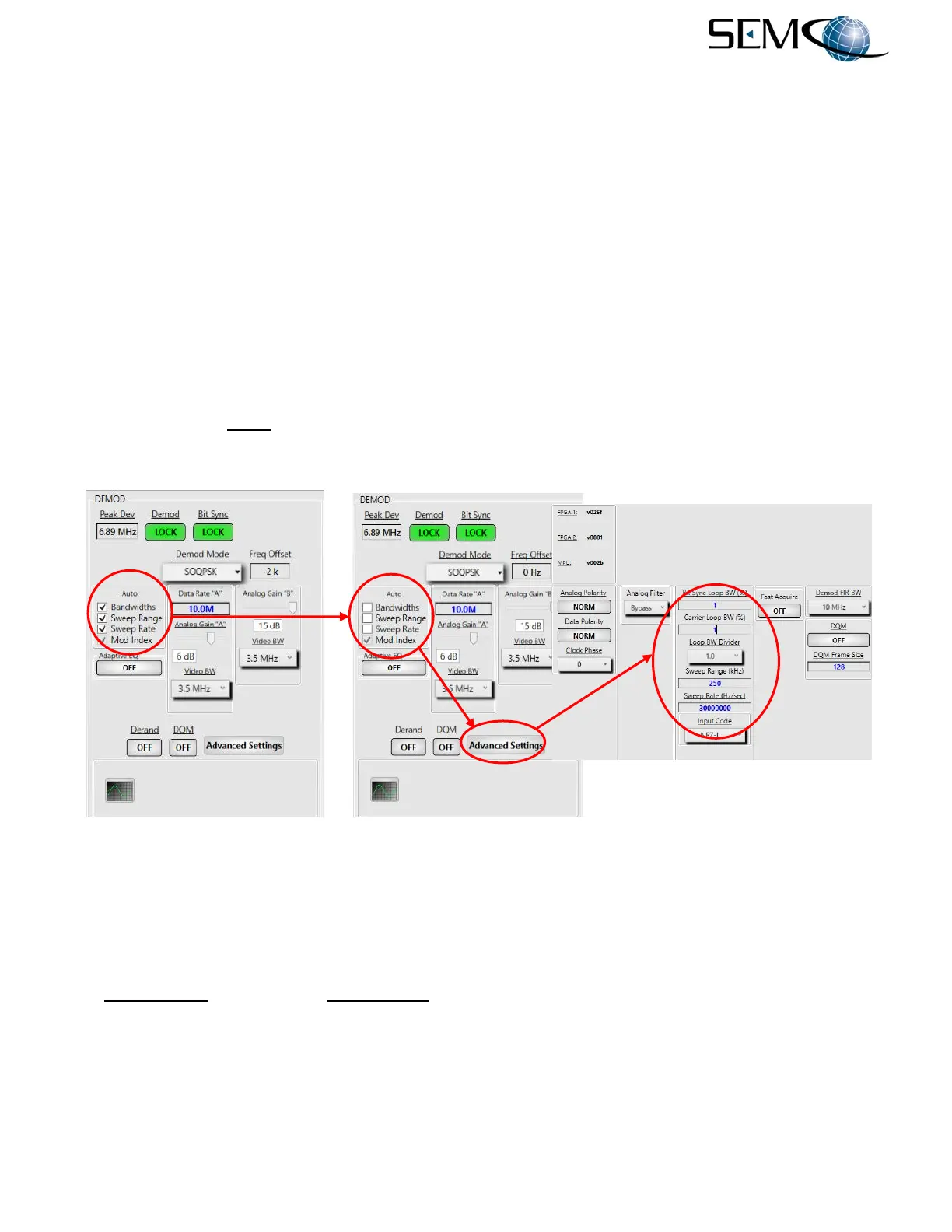
Figure 6-22 shows Auto Bandwidths, Sweep Range and Sweep Rate settings on the remote GUI. Clicking
on each box under Auto enables Auto Bandwidth (Bit Sync and Carrier Loop Bandwidth), Sweep Range
and Sweep Rate. Clearing the boxes and clicking on Advanced Settings provides for typing in values for
each Bandwidth and Sweep setting.
Figure 6-22
AUTO and Manual Bandwidth and Sweep on Remote GUI
6.8 Additional Advanced Demodulator Settings
Additional Advanced Settings include:
A. Fast Acquire – Enabling the Fast Acquire feature optimizes the demodulator to acquire the incoming
signal as fast as possible. This feature is applicable to FM, Trellis FM and SOQPSK-TG demodulator
formats. Selecting this mode may slightly degrade the lock threshold of the selected demodulator
mode but will provide for faster acquisition time and improve Trellis FM lock time to less than 250
average bits and SOQPSK-TG lock time to less than 350 average bits.


 To Next Page