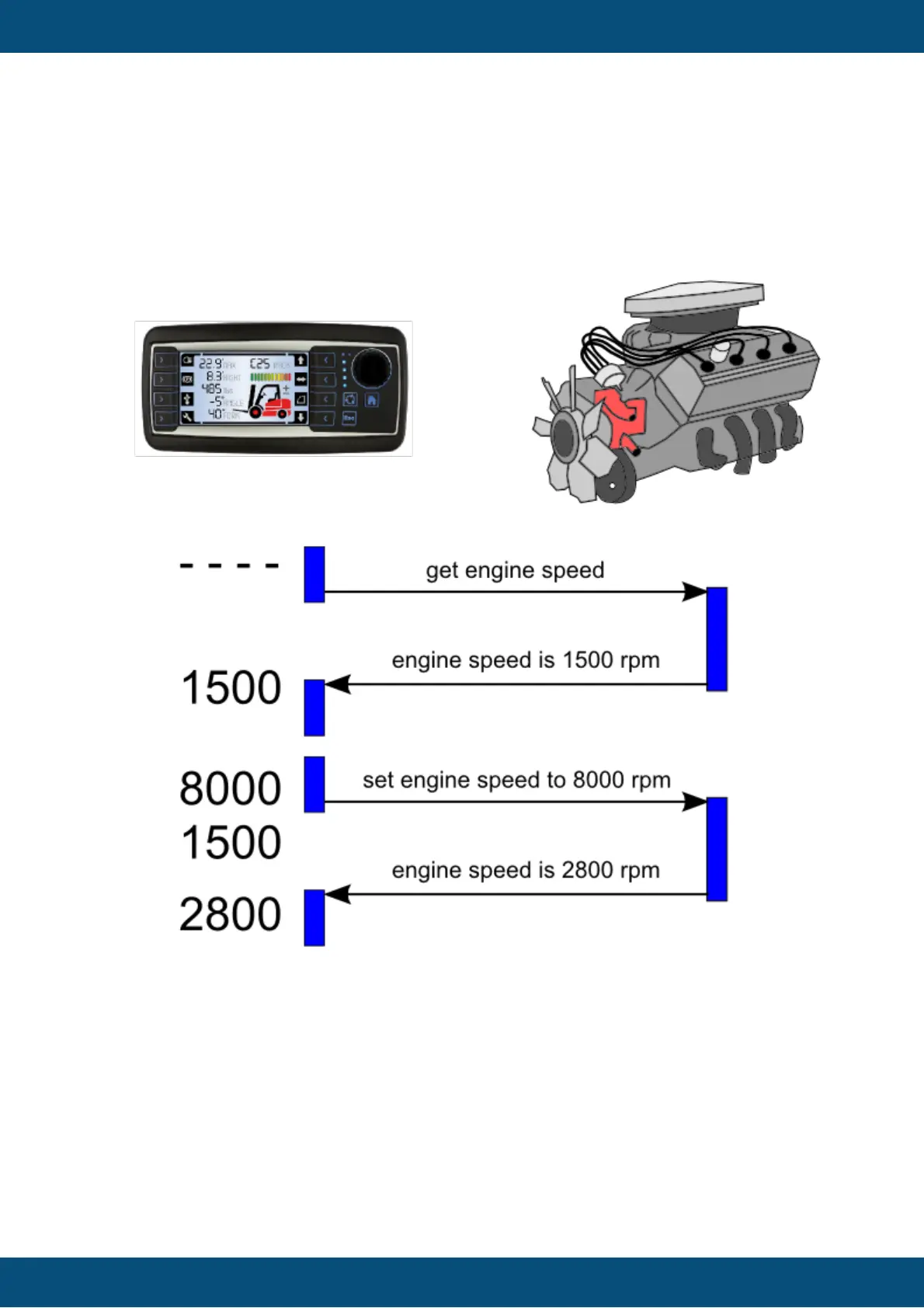
Assume engine speed is a measured value coming from engine ECU but at the same
time the operator can set a new desired engine speed by applying a new value to the
engine speed variable.
Then there are (at least) two different sources for new values of the same variable.
If engine ECU is the owner of engine speed in this example, then the following will
happen:
One can see three effects here:
1. Typically the value is invalid until the owner provides the first value - there is an
option though to avoid that.
2. After providing the new setpoint the value shown will switch back to the last value
provided by the owner.
3. Since the owner is in control it may limit the value provided in the write request to
something reasonable in current conditions.
If the display should e.g. forward the engine speed to another bus than the one where
engine ECU is connected then it will only forward values confirmed by the owner.



 To Next Page