3-3 Setting Frequency Parameters Spectrum Analyzer Measurements
3-4 PN: 10580-00447 Rev. H Spectrum Analyzer MG
Zero Span IF Output (Option 89)
Zero Span IF output effectively allows the spectrum analyzer to be used as a receiver front-end, converting the
input signal at the spectrum analyzer RF In connector to a signal centered at the IF output frequency. You can
then process the IF signal in a way that meets your needs. That may mean using an A-to-D converter or some
other signal processing method.
Zero Span IF Output provides an IF signal of 325 MHz with FFT capture bandwidth ≤ 32 MHz and 300 MHz
with FFT capture bandwidth = 100 MHz. The nominal RF output level is –4 dBm with a 10 MHz, –20 dBm
input, and with 0 dB input attenuation and preamp off. The spectrum can be inverted in certain RF input
bands. The IF output signal is present only when the spectrum analyzer span is set to ZERO SPAN and the
IF OUTPUT is toggled on (see “FREQ / SPAN Zero Span Menu” on page 3-7). You can select the IF output
bandwidth of 750 kHz, 7.5 MHz, 14 MHz, 30 MHz, or 100 MHz using the “IF OUTPUT Menu (Option 89)”
on page 3-7.
The normal IF BW uses analog bandpass filters in the normal RBW chain. By changing the RBW, different
filter bandwidths are selected. While the IF bandwidth is influenced by the selection of RBW filters, the digital
RBW filters themselves are not used.
Note The selectable bandwidth values may differ among instrument models and options.
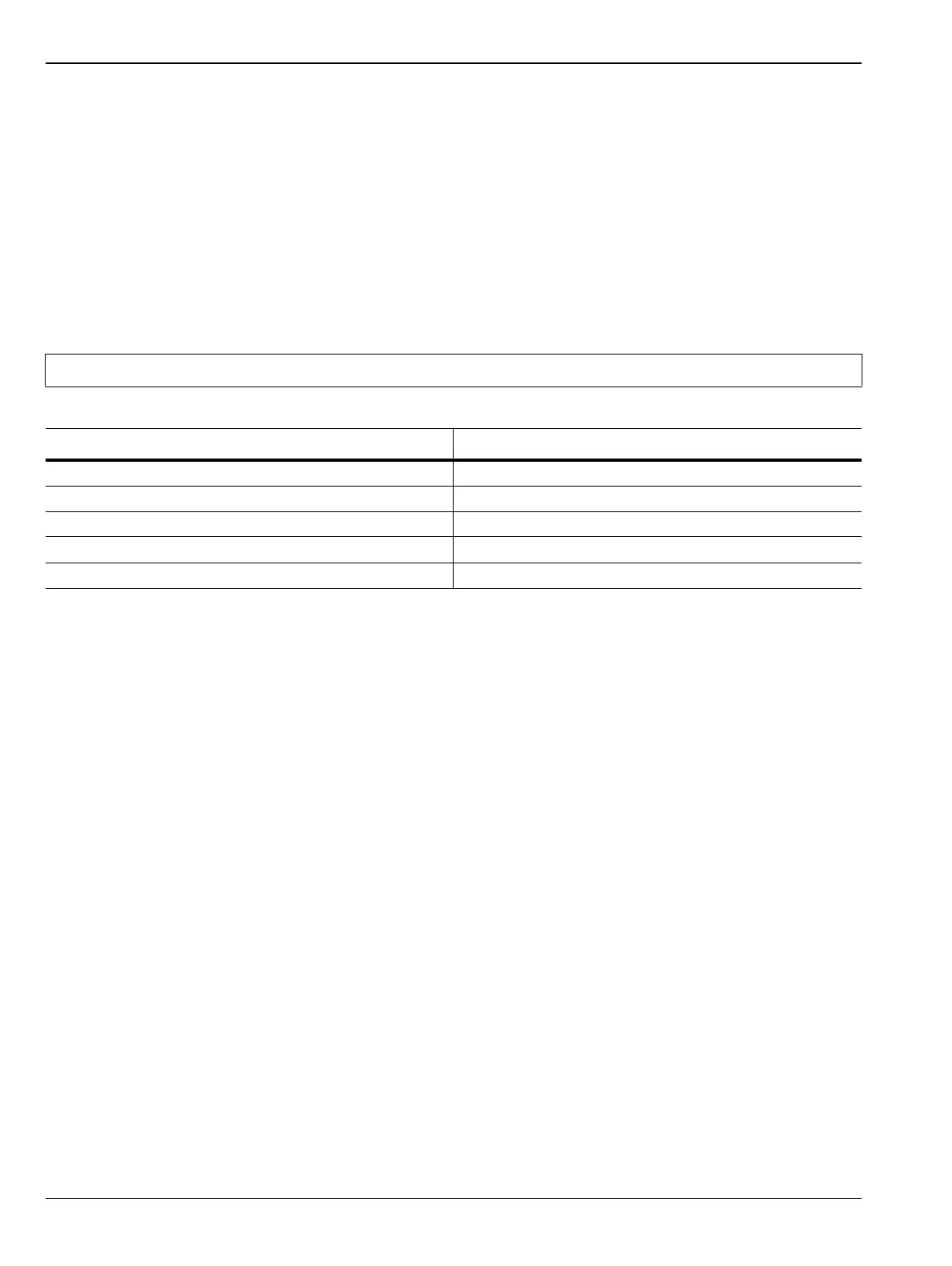
Table 3-1.
Selected IF Filter Bandwidth IF Output Frequency
100 MHz 300 MHz
30 MHz 325 MHz
14 MHz 325 MHz
7.5 MHz 325 MHz
750 kHz 325 MHz







 To Next Page