E-1
Appendix E
Video Band Width and Sweep Time
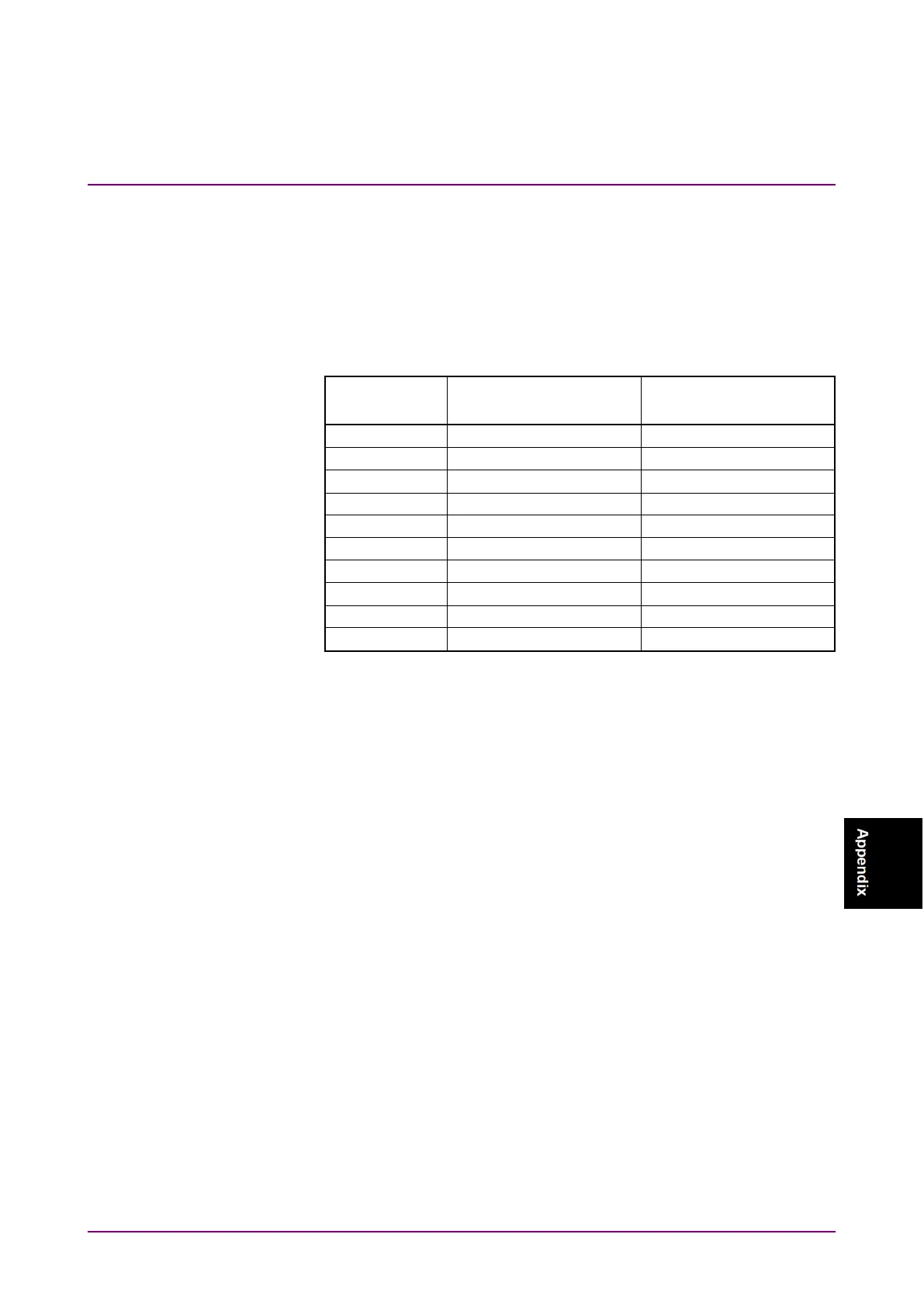
Table E-1 shows the relationship between VBW, sweep time and
minimum optical reception sensitivity.
Table E-1 shows the reference value. These values are not guaranteed in
the specification values.
Table E-1 Relationship between VBW, Sweep Time and Minimum
Optical Reception
VBW Sweep Time (typ.)*
1
Min. Optical Reception
Sensitivity*
2
*1: Wavelength range: Center 1200 nm, Span 200 nm
Sampling points: 501 pt
Dynamic range mode: Normal
Averaging processing: Point Average 1
Optical input: None
From starting to ending sweep (Measured using remote commands.)
*2: Wavelength range: 1250 nm to 1600 nm
Optical attenuation: Off
Averaging processing: Sweep Average 10
Ambient temperature: 5 to 30ºC
Resolution : 0.07 nm or more
When using a SM fiber
Setting VBW at 1 kHz Fast or 200 Hz Fast enables a faster sweep than
when setting VBW at 1 kHz or 200 Hz. However, when measuring a
signal of which spectral width is narrow, such as ITLA (Integrable
Tunable Laser Assembly) or DFB-LD (Distribution Feedback Laser
Diode), the accuracy of the wavelength and level measured at 1 kHz Fast
or 200 Hz Fast may be lower than when measured at 1 kHz or 200 Hz.
Therefore, before measuring a signal, confirm the waveform.





 To Next Page