154
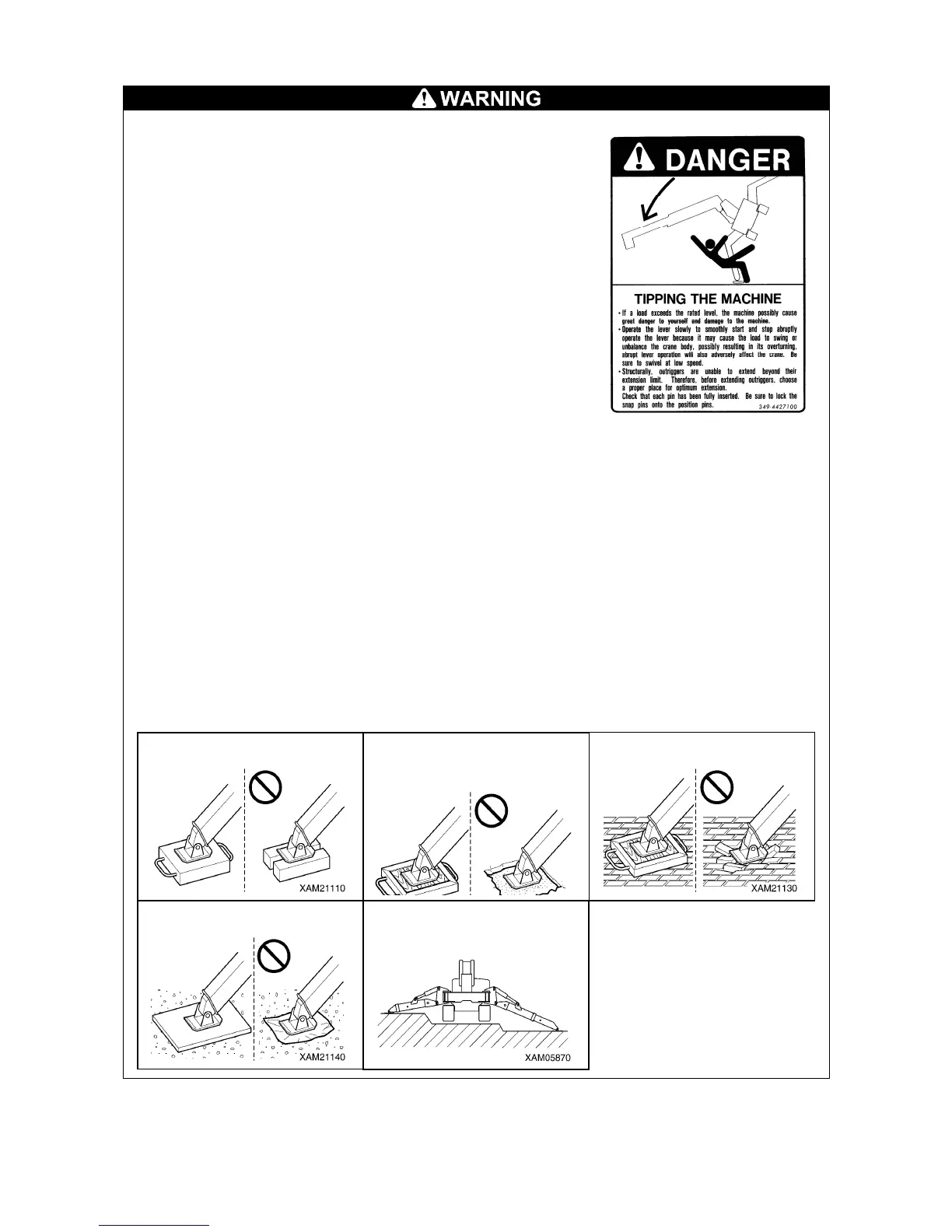
• SELECTING LOCATION TO SET OUTRIGGERS
• When setting the outriggers on the structural objects
such as construction site or concrete floor, verify in
advance that the surface where the outriggers will be
set has sufficient strength.
Insufficient strength in the setting surface will result in
machine overturning or falling due to the setting
surface collapsing.
• Outriggers may sink, leading to overturning hazard, if
set in soft ground such as:
• Road surface with low-cost pavement (Low-cost
asphalt or thin concrete)
• Surface with paving stones
• Area reclaimed after excavation work
• Landfill
• Road shoulders or area close to a hole of
excavation work
• Deteriorated pavement surface
• Areas where under the pavement surface is hollow
due to water erosion and the top soil appears to be
hard but soft in the ground
• Slope
• PROTECTING GROUND
• Place a sole plate of sufficient size with sufficient strength under the tray of all the
outriggers on the soft ground to protect the ground.
• If it is necessary to set the outriggers near the road shoulder, make sure to take
precautions to prevent the collapse of the road shoulder.
• Before operating the machine on a slope, level the ground of the working area so that the
outrigger adapters and the crawler belts can be securely placed.
Setting the outriggers with the tilted ground surface without leveling will cause the
outriggers to slip or overturn, causing serious accidents.
• If the ground can not be protected or if the outriggers sink even after protecting the
ground, do not operate the crane.
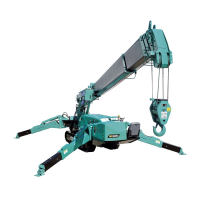
Road surface with low-cost
pavement
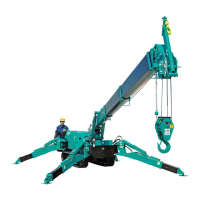
Landfill, etc.
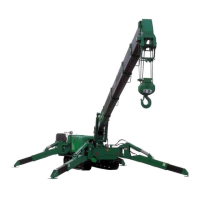
Surface with paving stones
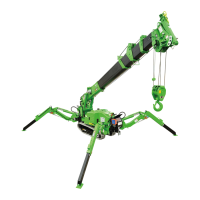
Use of stable sole plate
Site preparation of slopes


 To Next Page