11.1 Trip Report
•
You can now select the desired receipt printouts from the menu Detailed
report. The data that has been printed is not deleted afterwards.
•
The receipt memory is organized as a ring-buffer memory with a memory
depth of 192 records with a 128K card and 500 records in a 256K card.
When the memory is full, the oldest records are overwritten with the new
data. It is possible to reconstruct older procedures even after printing out
(provided they have not already been overwritten by new data).
•
To support this function, the type of printout is queried after initiating a
print function. A differentiation is made between report according to time
and report according to receipt.
For a report according to time:
You enter the time period which the report is to cover. Therefore the
report start time (date and time) and the report end time (also date
and time) are required.
All data occurred in this period is then printed out.
With a report according to receipt:
You enter the start receipt number first, followed by the receipt number
where the printout is to finish.
Thus it is possible to document individual receipts. The tedious
searching by date and time is no longer necessary.
11.1.1
Trip Reports on the Chip Card
An important task in the daily routine in the mineral oil business is the
checking of the supplied deliveries with the billing department. For this
purpose, usually duplicates of the delivery papers and of trip reports are
used.
•
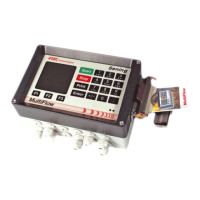
The MultiFlow in its current version also supports a data interface for
office EDP which is not dependent on the installation of electronics in
the tank truck.




 To Next Page