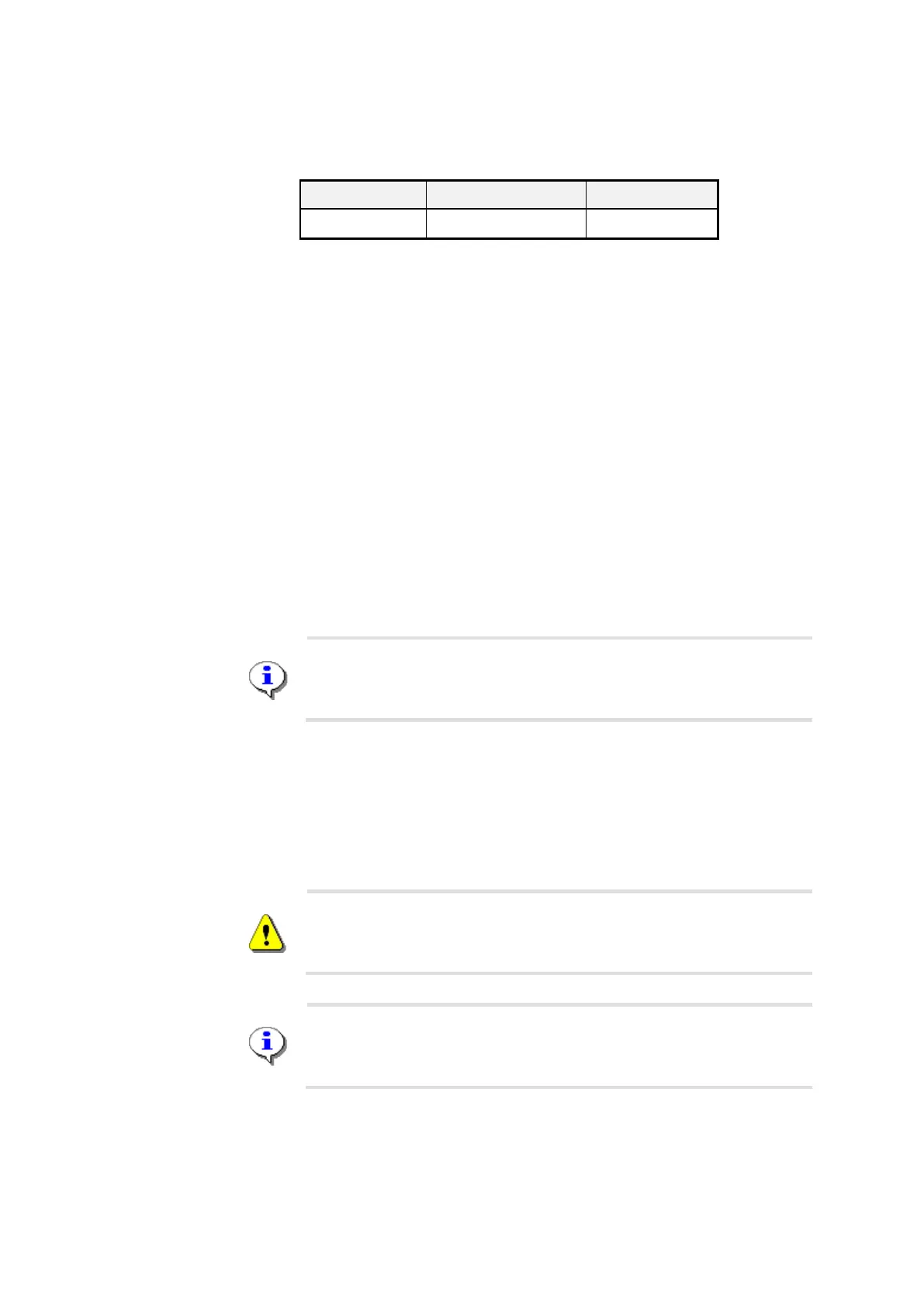
Example of a version number
•
The calibration version indicates which calibration-capable version is
installed in the MultiFlow control unit. This is the calibration version
number.
•
The service version indicates the version status of the program
section that is not relevant for calibration purposes. Calibration is not
mandatory for this part of the program. Until now, you could only
replace this in conjunction with the program section for which
calibration was mandatory (subsequent calibration required!).
From MID Version 5.00 onwards, this section, i.e. the one not
requiring calibration, can be replaced without making subsequent
calibration necessary.
•
The version numbers can occur in different combinations because,
for example, calibration version 1.00 can also be used with service
version 1.05 or possibly even 2.0 (reverse compatibility).
For approved version numbers, a unique test sum is defined that is then
shown on parameter lists and calibration seals. The permitted test sums
are notified in writing to the calibration authorities immediately after
approval.
5.2 Reading in New Program Versions (Update)
After reading in a new program version a loss of log book entries and
parameter settings may occur.
All reports not yet produced must be printed out before the system is
updated to the new program version. This also applies to the saving of
the delivery data on a chip card where this form of data interchange is
used.
The current device settings should always be saved on a parameter
chip card before a new program version is read in, so that they can be
read in again after the program has been updated. See chapter 9.12.1
"Saving the Parameters" / page 173.
If the parameters from another device or from an older card are to be
accepted, the following steps must be followed:






 To Next Page