Safety and handling 10-3
Safety and handling
Remember the following safety considerations when performing maintenance
procedures.
Cleanliness and care are very important whenever you remove internal
assemblies from the instrument.
• Always prepare a clear, clean area in which to work.
• Make sure that any tools or spare parts that may be required are close
at hand.
• Obtain some small containers in which screws, washers, spacers etc. can
be stored.
• Use tweezers and pliers whenever possible.
• Use only powder-free chemical-resistant gloves.
• Avoid touching sensitive parts with fingers.
• Before reassembling and replacing dismantled components, inspect
O-rings and other vacuum seals for damage. Replace with new ones if in
doubt.
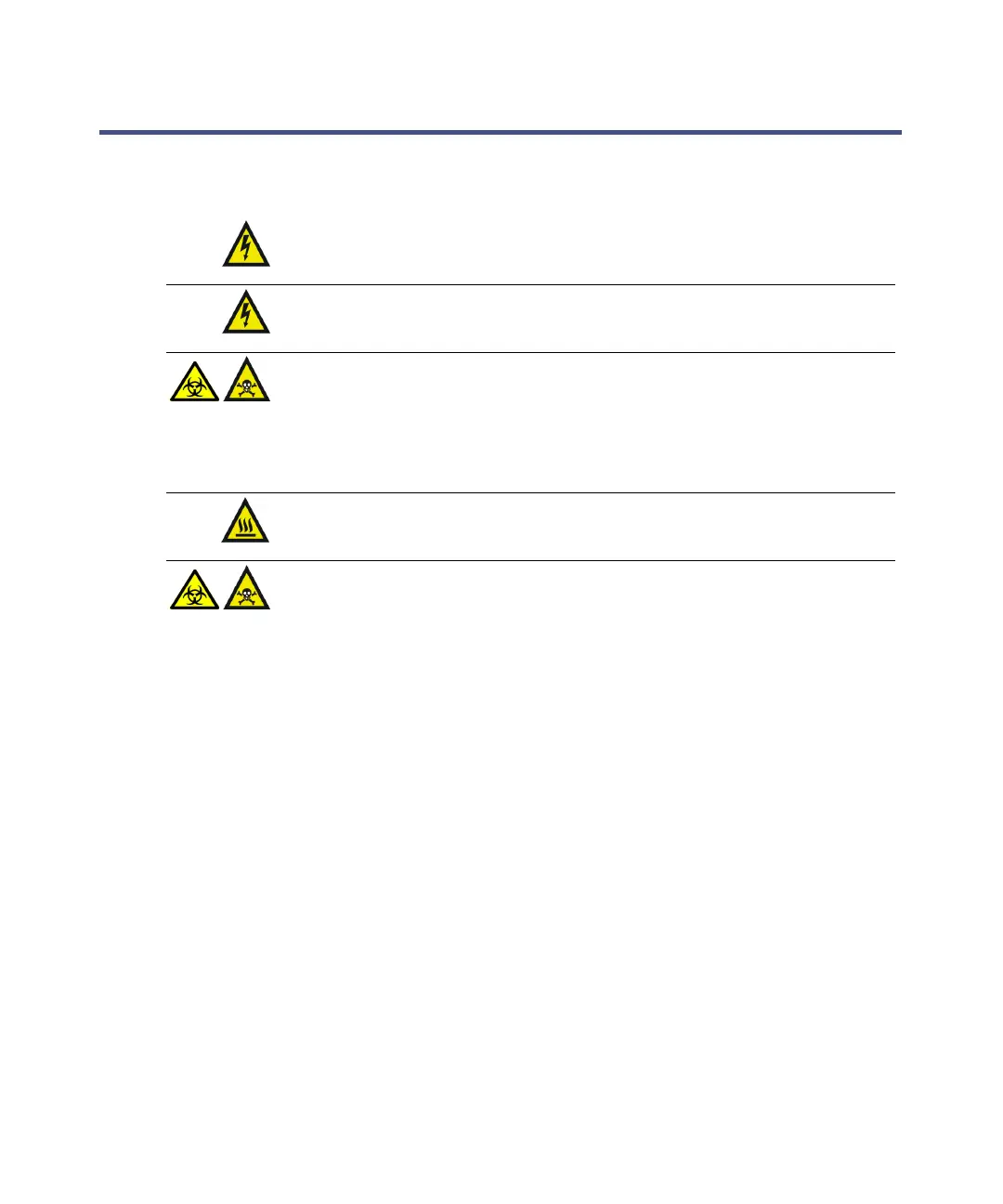
Warning: To avoid electric shock, do not remove the instrument
panels. There are no user-serviceable items inside.
Warning: To avoid electric shock, ensure that the instrument is in
standby mode before commencing any maintenance.
Warning: To prevent injury, always observe good laboratory
practices when handling solvents, changing tubing, or operating
the instrument. Know the physical, chemical and biohazardous
properties of the solvents used. See the Material Safety Data
Sheets for the solvents in use.
Warning: To avoid burn injuries, take great care while working
with the probe and source as they are liable to be hot.
Warning: The instrument components are liable to be
contaminated with toxic and biohazardous materials. Wear
chemical-resistant, powder-free gloves at all times while handling
the components.



 To Next Page