Inductive loads
Inductive loads have inductors, coils or transformers as part of the load or may be the
load. Relays, motors and mechanical actuators such as door latches, curtain controllers
and other such devices are all inductive loads. These devices store electromagnetic
energy to do work. When turned off, the energy stored within the device must be returned
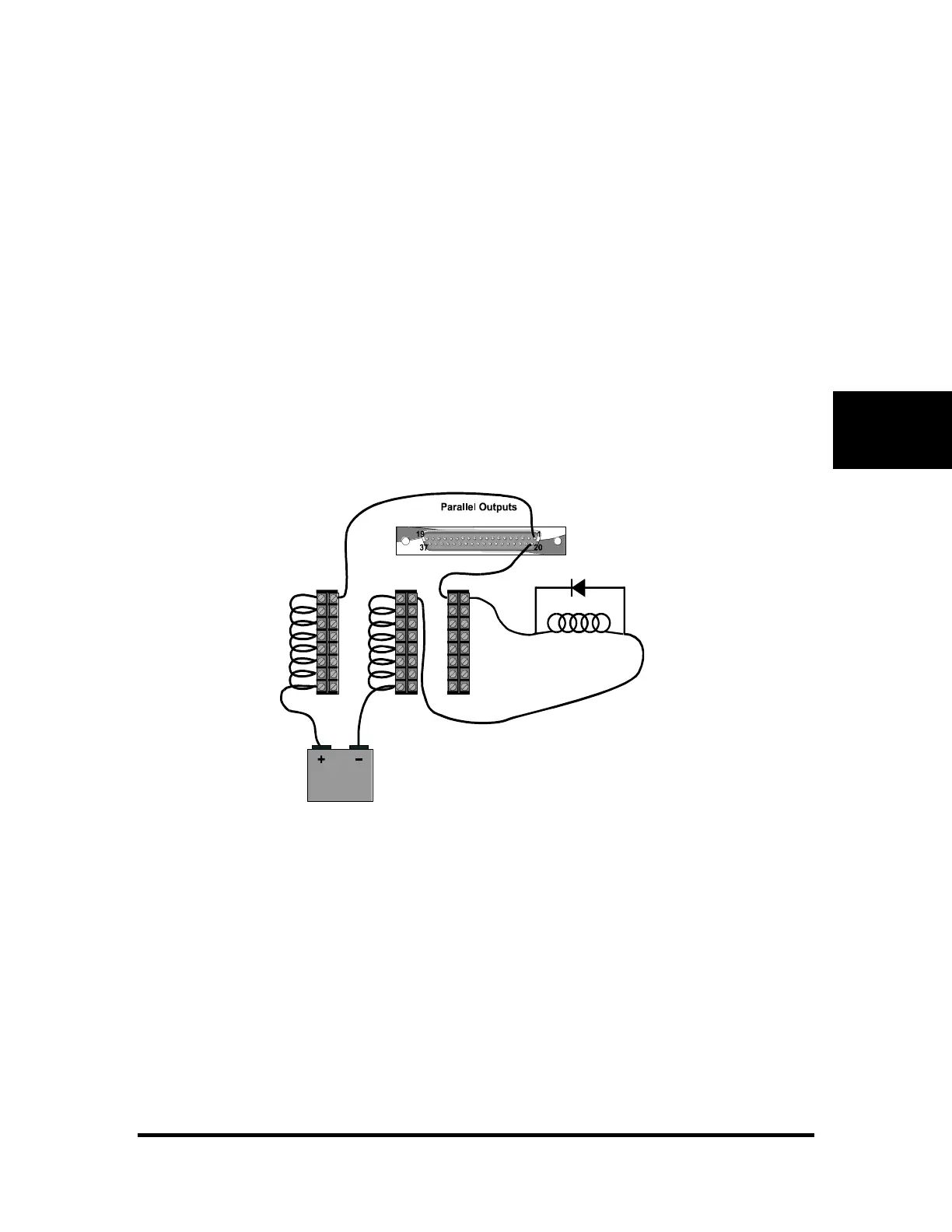
to a ground state or damage could occur to other devices in the system. Note the diode
across the load in figure 7 below.
1. Using a DB37 Male connector, connect the appropriate Output pin (pin 1 for
Output1, pin 2 for Output2, etc.) on the Parallel Outputs connector to the positive
terminal of the external power supply.
2. Using the same DB37 Male connector, connect the corresponding Output Return pin
(pin 20 for Output1, Pin 21 for Output2, etc.) to the positive terminal of the device
that is receiving the output signal.
3. Connect the negative terminal of the device that is receiving the output signal to the
negative terminal of the external power supply.
4. Connect an appropriate 1N4000-series (1N4001-1N4007) diode across the load.
Note the polarity of the diode in reference to the supply.
Figure 8 - A relay coil or solenoid is a common example of an inductive load and must
have a 1N4000-Series snubber diode placed across it. Be sure to observe proper
polarity (anode to negative side).


 To Next Page