SHOP MANUAL MT26/31 - 12.2004SHOP MANUAL MT26/31 - 12.2004
GENERAL
CH 0 PAGE 6 CH 0 PAGE 7
GENERAL
SHOP MANUAL MT26/31 - 12.2004SHOP MANUAL MT26/31 - 12.2004
GENERAL
CH 0 PAGE 6 CH 0 PAGE 7
GENERAL
Organic solvents are mixtures of organic liquids (different from
e.g. water) that dissolve grease, paint, varnish, wax, oil, glue,
rubber etc.
Examples:
• Petroleum spirit
• Toluene
• Trichlore ethylene
• Thinner
• Petrol
• Alcohols
• Xylen
• Plastics and appertaining glues
Risks
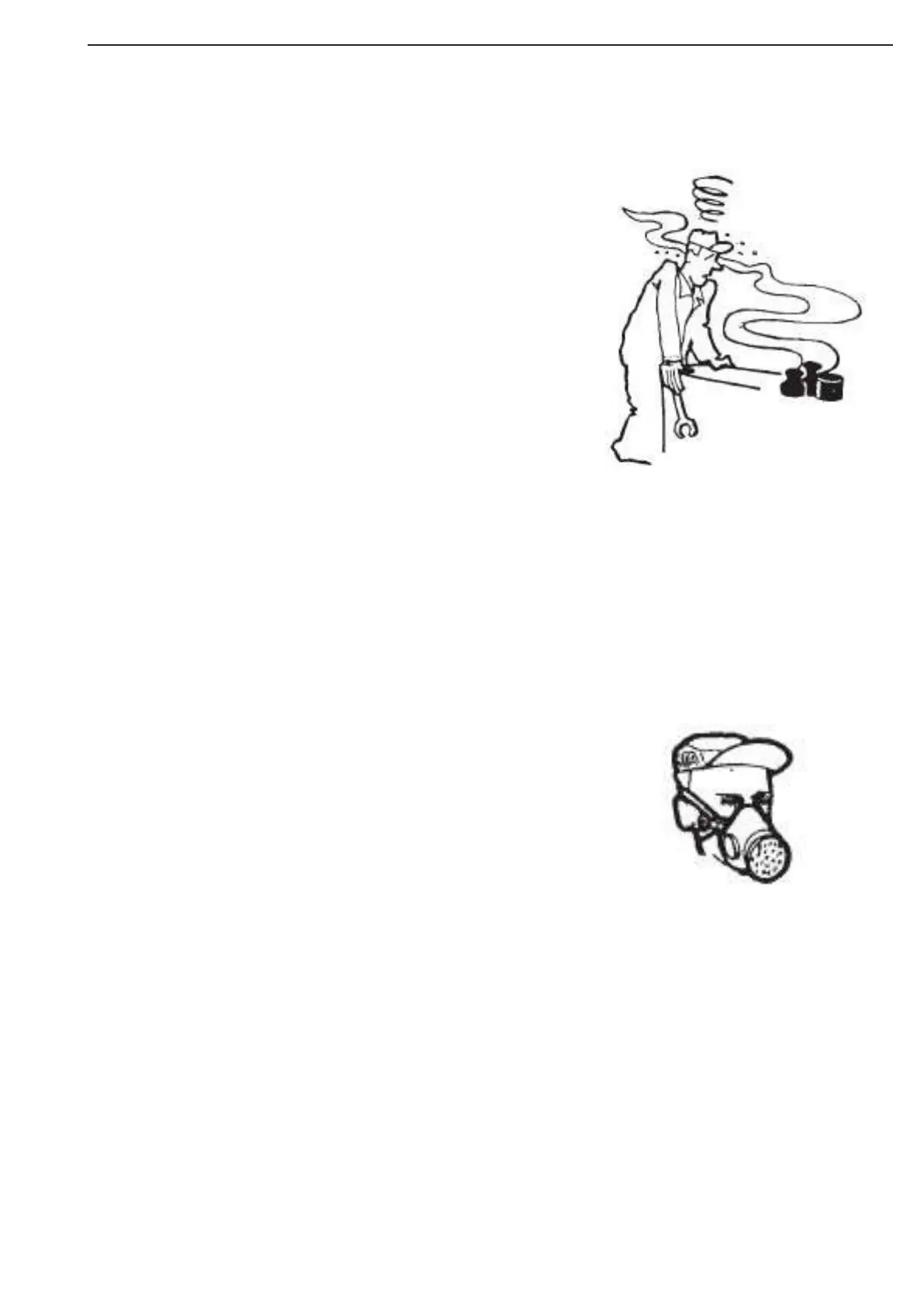
Solvents release fumes. Fumes may cause dizziness, loss of
balance, headache and nausea. Fumes may also irritate the
windpipe.
Solvent exposure may also lead to injury to the central nervous
system. This may result in insomnia, depressions, nervousness,
poor memory and a general sense of feeling tired.
When solvents come in direct contact with the skin, it will
become dry and cracked. The risk of skin allergies increases
and, additionally, there is a risk of a solvent causing dermatitis.
Many solvents are flammable.
Protective measures
As a first measure, arrange for ventilation that prevents fumes
from mixing with the air you breath. Note that the ventilation has
to be fire-proof if a solvent is flammable.
If a problem cannot be resolved with ventilation it is necessary to
wear either a face mask or breathing protector with filter against
dust and organic fumes.
Never leave tins with paint or solvent uncovered.
Use solvent with low content of aromatics. This reduces the risk.
Ensure that solvents do not come into contact with the skin and
do not use them as detergent.
Use gloves when working. Gloves of certain materials can be
penetrated by the solvent or even dissolved by such solvents.
Make certain that the gloves give sufficient protection.
Protection against organic solvents:
• Fireproof ventilation
• Face mask or breathing protection with filter
• Replace caps/lids
• Use as harmless solvents as possible
• Avoid contact with the skin
• Do not wash the skin with solvent
• Use gloves
0.2.4 Organic Solvents



 To Next Page