Optional software for the ANT-5
Acterna ANT-5 Page 89
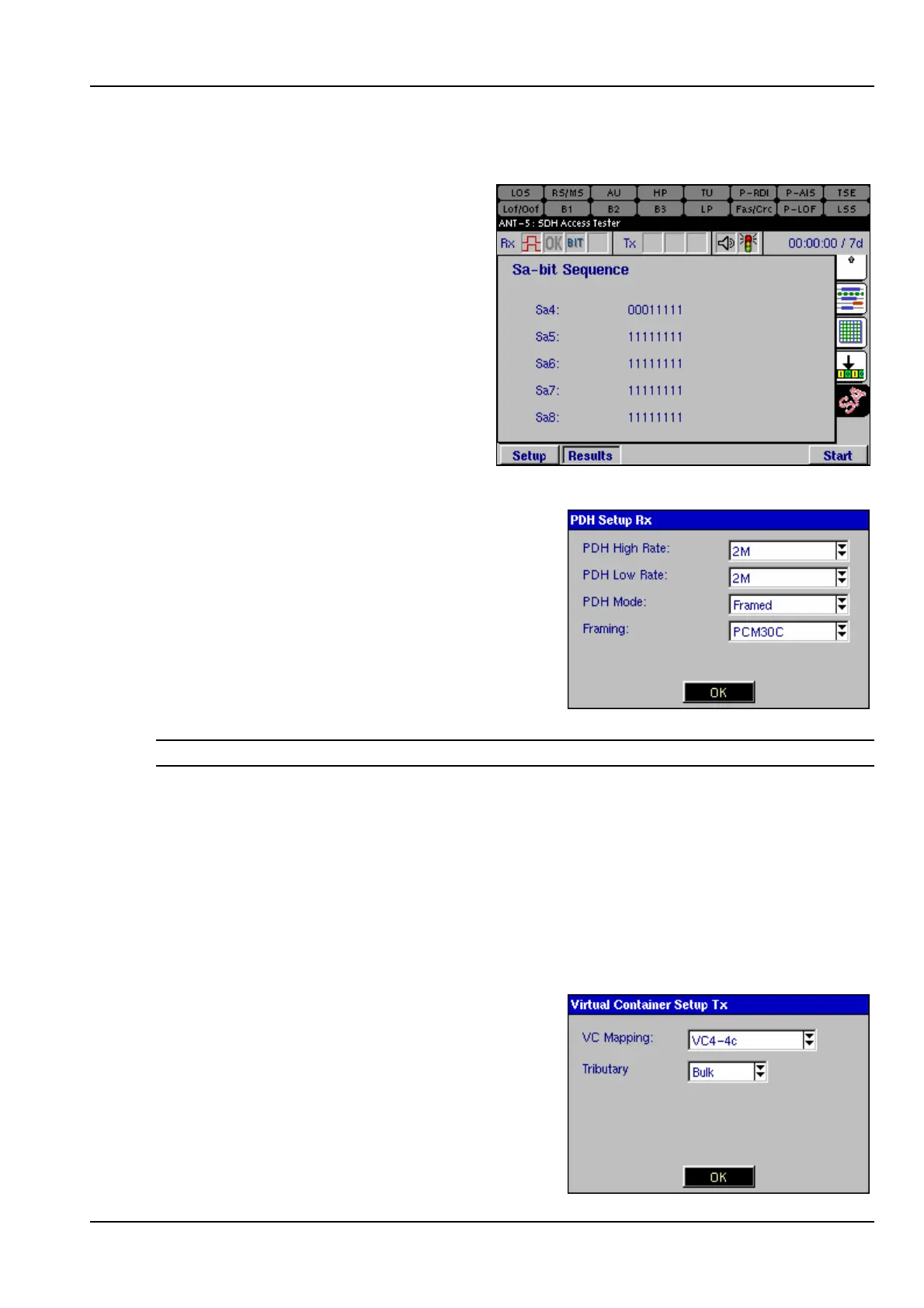
5.2.3 Sa-bit monitoring
Assuming the Rx signal structure is
configured to receive framed E1
signals, then Sa bits can also be
monitored by pressing the Results
firmkey and selecting the SA tab.
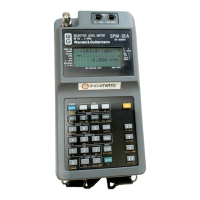
5.2.4 PDH DeMux Rx
The PDH DeMux feature allows the analysis of
ITU-T DeMux chains from E4 to E1 with the
exception of E2 (i.e. E3/E1, E4/E1, E4/E3).
The analysis feature allows detection of all the
alarms and errors generated. This enables in-
service monitoring of specific channels
contained in PDH signals.
Note: The Rx hierarchy type should be set to PDH to activate the PDH de-Mux.
5.3 Concatenated Mapping
Concatenated STM-4 is being used increasingly to carry high data rate services such
as, ATM, IP and multimedia.
Concatenated Mapping supports bulk contiguous concatenation, which treats the
STM-4 payload as a contiguous virtual container. The alternative (which is not
supported) is virtual concatenation (STM-4v); this uses 4 x VC4 containers to create a
virtual VC4-c container.
A test pattern can be injected throughout the
contiguous concatenated payload of the
Virtual Container in either transmit or receive
mode as required.
1. Set the Rate within the Hierarchy Setup
panel to STM-4 Optical.
2. Set VC Mapping within the Virtual

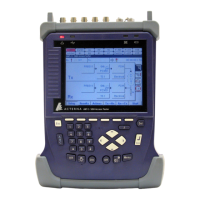

 To Next Page