Chapter 1: Getting Started
Page 1–3
DuRApulse GS4 AC Drive User Manual – 1st Ed, Rev A - 10/20/2017
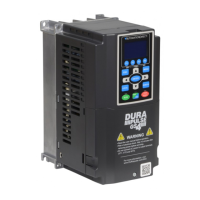
PUrPOse Of aC Drives
AC drives are generally known by many different names: Adjustable Frequency Drives (AFD),
Variable Frequency Drives (VFD), and Inverters. Drives are used primarily to vary the speed of
three phase AC induction motors, and they also provide non-emergency start and stop control,
acceleration and deceleration, and overload protection. By gradually accelerating the motor,
drives can reduce the amount of motor startup inrush current.
AC drives function by converting incoming AC power to DC, which is then synthesized back into
three phase output power. The voltage and frequency of this synthesized output power is directly
varied by the drive, where the frequency determines the speed of the three phase AC induction
motor.
seleCting the PrOPer Drive rating
deTermine moTor full-load amperage (fla)
Motor FLA is located on the nameplate of the motor.
NOTE: FLA of motors that have been rewound may be higher than stated.
deTermine moTor overload requiremenTs
Many applications experience temporary overload conditions due to starting requirements or
impact loading. Most AC drives are designed to operate at 150% overload for 60 seconds. If the
application requires an overload greater than 150% or longer than 60 seconds, the AC drive must
be oversized.
NOTE: Applications that require replacement of existing motor starters with AC drives may require
up to 600% overload.
deTermine appliCaTion Type; ConsTanT Torque or variable Torque
This torque requirement has a direct effect on which drive to select. Variable Torque applications
are generally easier to start; typically fans and pumps. Most other applications outside fans and
pumps fall into the Constant Torque category (machine control, conveyors, etc.). If you are unsure
of the application, assume Constant Torque. The specification, derating, and selection tables are
generally segregated by Constant Torque and Variable Torque.


 To Next Page
 Loading...