Part III: Background and Concepts
Chapter 26: Analog TV Baseband Signals
26-1 Understanding Composite Video Signal
A composite video signal is a signal containing all three main components required to generate video.
These components are:
•
The
luminance signal
contains the intensity (brightness) information of the video image.
•
The
chrominance signal
contains the color information of the video image.
•
The
synchronization signal
controls the scanning of the signal on a display such as a TV screen.
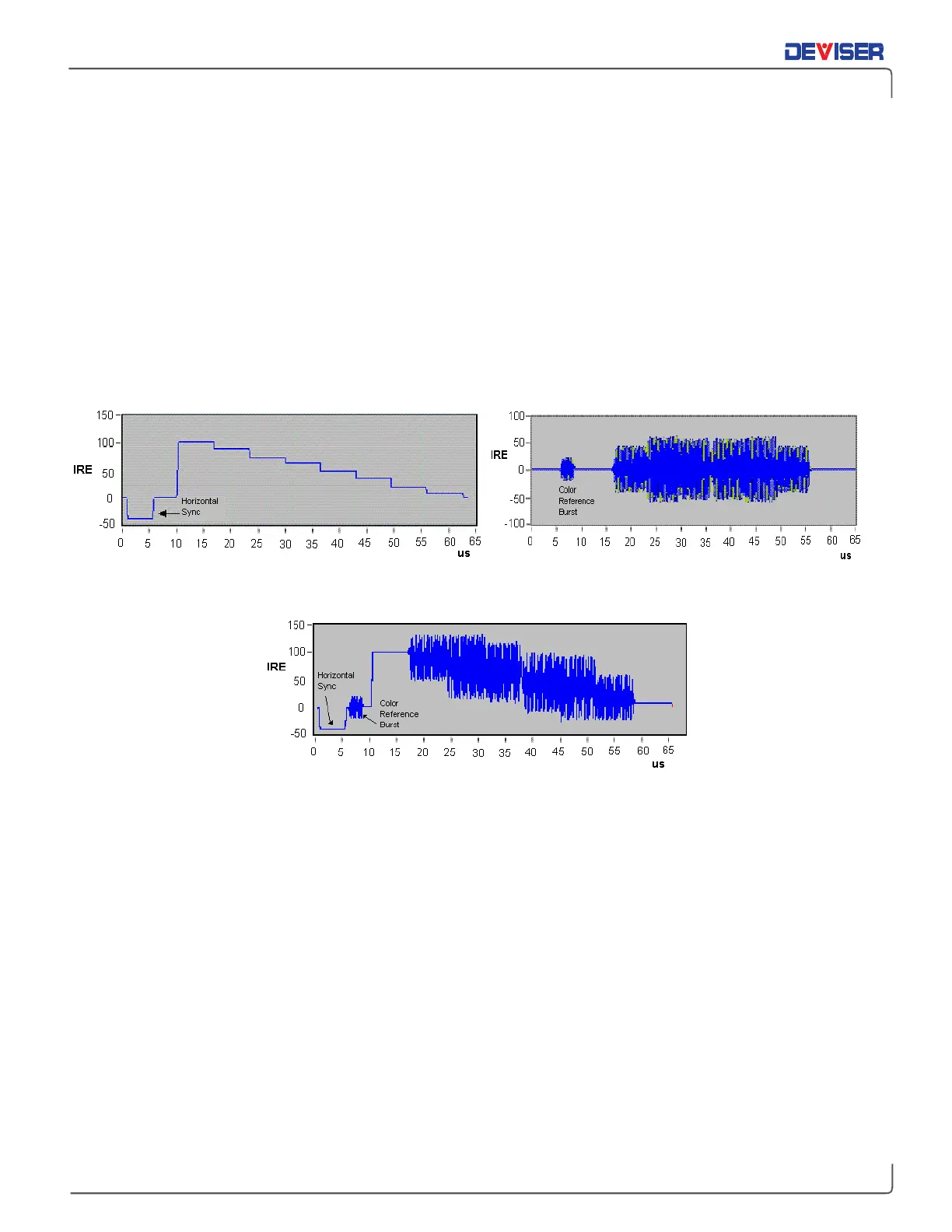
The monochrome composite signal (or “Y signal”) is constructed from two of these components: luminance
and synchronization.
Here, the luminance steps from white to black. The chrominance signal is also called the “C signal”.
Finally, the composite color video signal (or “Color Video, Blank, and Sync”
(CVBS) signal) is the sum of the Y and C signals. CVBS = Y + C.



 To Next Page