Part II: Settings and Measurements
Chapter 12: Reverse Path Sweep
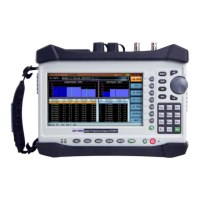
This chapter provides instructions and test principles, parameters, setup methods, to connect the DS2831
sweep function with the DS1610: Deviser’s HE return sweep receiver.
12-1 System Architecture
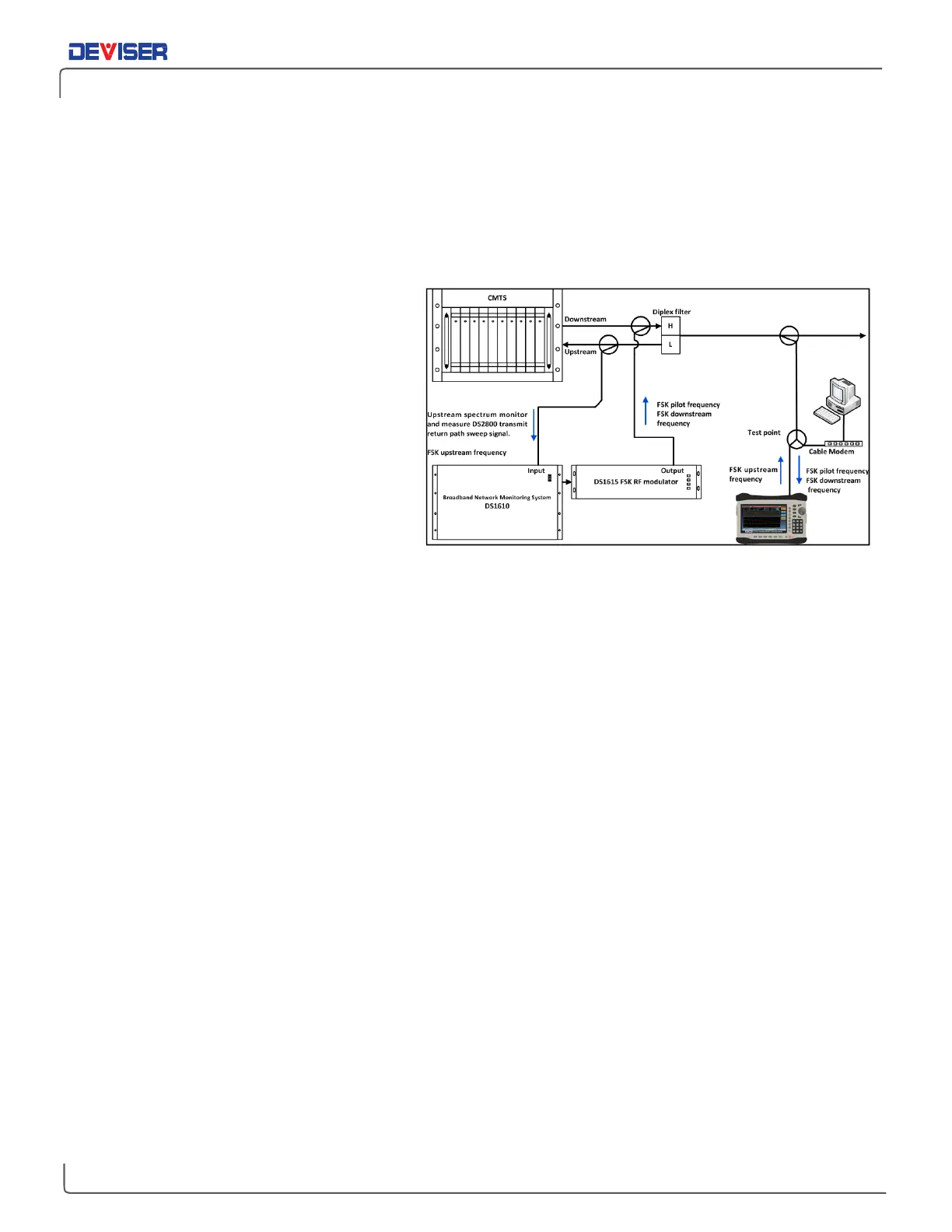
As shown (right), the DS1610-1D upstream
receiver at the headend (or hub) receives
FSK modulated communication data and
RF discrete frequency points, which are
transmitted upstream by the DS2831. In the
downstream direction, the DS1610 sends
data back to
up to 4 DS2831 units
deployed
to the field via the DS1615 FSK modulator –
broadcasting received DS2831 data back
upstream to the DS2831s in the field.
Each unit receives only its own data (IDed
by serial number). The RF and COM ports of
DS2831 are well identified as (COM) for
upstream USG transmission and FSK
communication, (RF IN) for the downstream spectrum receiver.
12-2 Operation Principle
The DS1610 uses TDMA and half-duplex communication methods to manage multiple DS2831 units. One
DS1610 will connect with up to four DS2831 field units in quasi-real-time at once, and communicates with
one of these units at a time.
The registration process is controlled by the DS1610. The two devices are synchronized with FSK pilot carriers.
When a new DS2831 sends a registration request (in the form of a pilot signal transmission) in the upstream
path to the DS1610, the DS1610 briefly interrupts communication with all other connected instruments and
processes the new DS2831's request. Once registered, the DS2831 will receive a confirmation from the
DS1610. If the DS2831 doesn’t receive this confirmation within a fixed period, it will automatically re-transmit
its request. The DS1610 listens for registration requests in real time at the pilot frequency, detecting received
signals whether or not the pilot carrier from DS2831s or DS2500Cs are at the preferred range level.
When a pilot signal is detected, the system automatically enters the registration process. A bi-directional
FSK communication is initiated to establish communication and allow data transmission at that frequency
channel. Note that the DS1610 and DS2831 must use the same FSK pilot frequency for US & DS
communication; otherwise, the registration process will fail.


 To Next Page