5-4 HUM Modulation
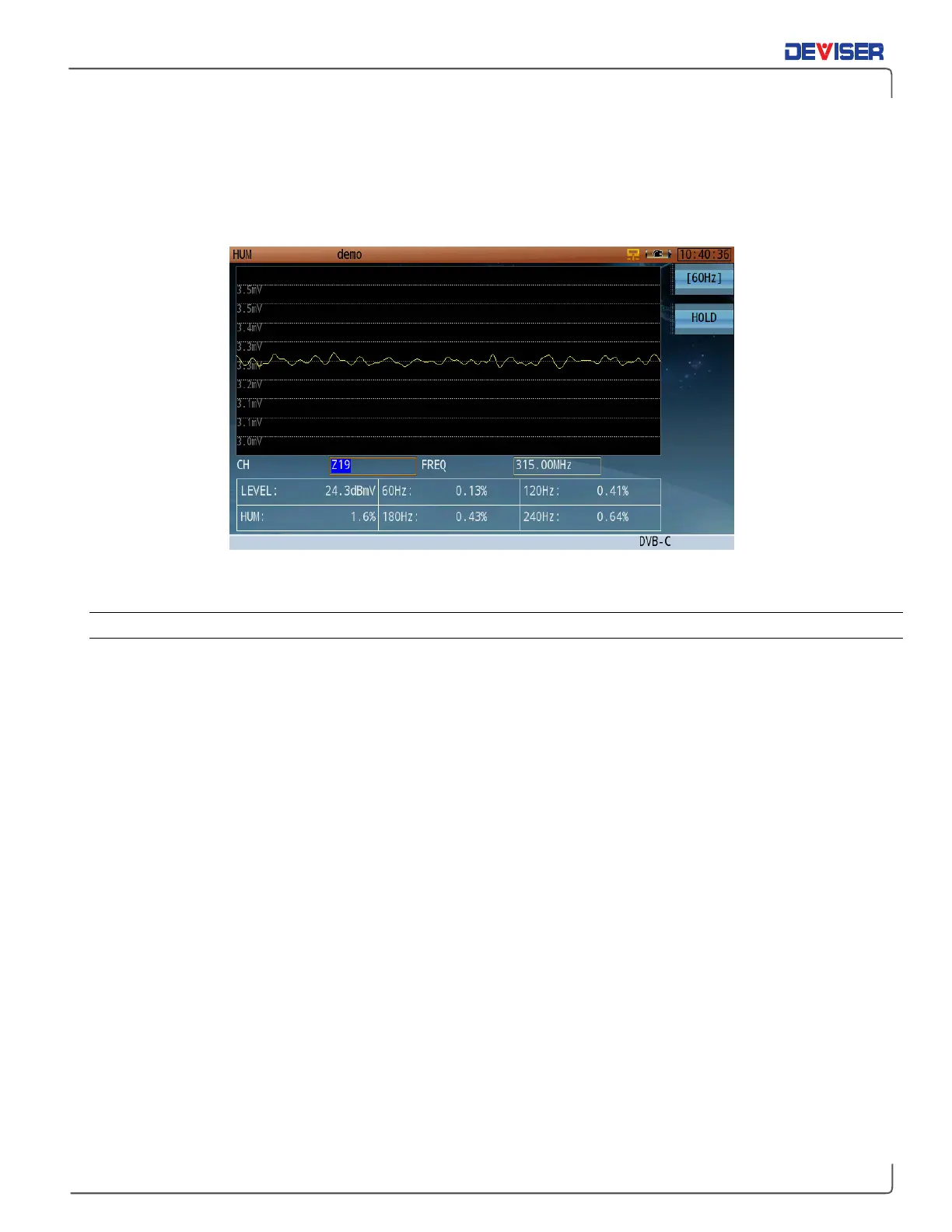
Hum is an interference type that generates harmonics following AC frequencies. This phenomenon creates
a visible distortion in television signals. With the Hum Modulation function, the DS2831 measures the effects
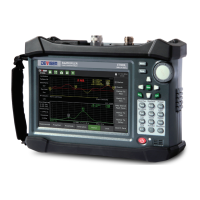
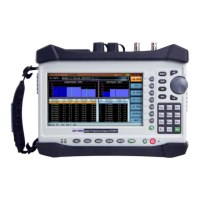
of this interference on analog and digital channels. The analog measurement screen is shown below.
Digital TV Hum Measurement
5-4.1 Settings
Channel: The channel to measure. Select any active analog or digital channel in the active
channel plan.
Frequency: Input range 5-1200 MHz.
Button Operation
[50Hz] / [60Hz]: Toggles the power frequency between 50Hz and 60Hz (depending on region).
Hold: Pauses the measurement. Press again to resume.
Test
Result
s
Video Level: Displays the level of the current analog video signal.
Hum Modulation: Degree of hum modulation interference, as measured on the analog video carrier.
Freq Component: Displays the percentage of each frequency component.
Low-frequency interference and interference harmonic will cause disruptions in an analog TV signal.
On the DS2831, the highest measurable fourth harmonic is:
•
50Hz:
50Hz, 100Hz, 150Hz and 200Hz
•
60Hz:
60Hz, 120Hz, 180Hz and 240Hz


 To Next Page