L-Gate User Manual 108 LOYTEC
Version 3.2 LOYTEC electronics GmbH
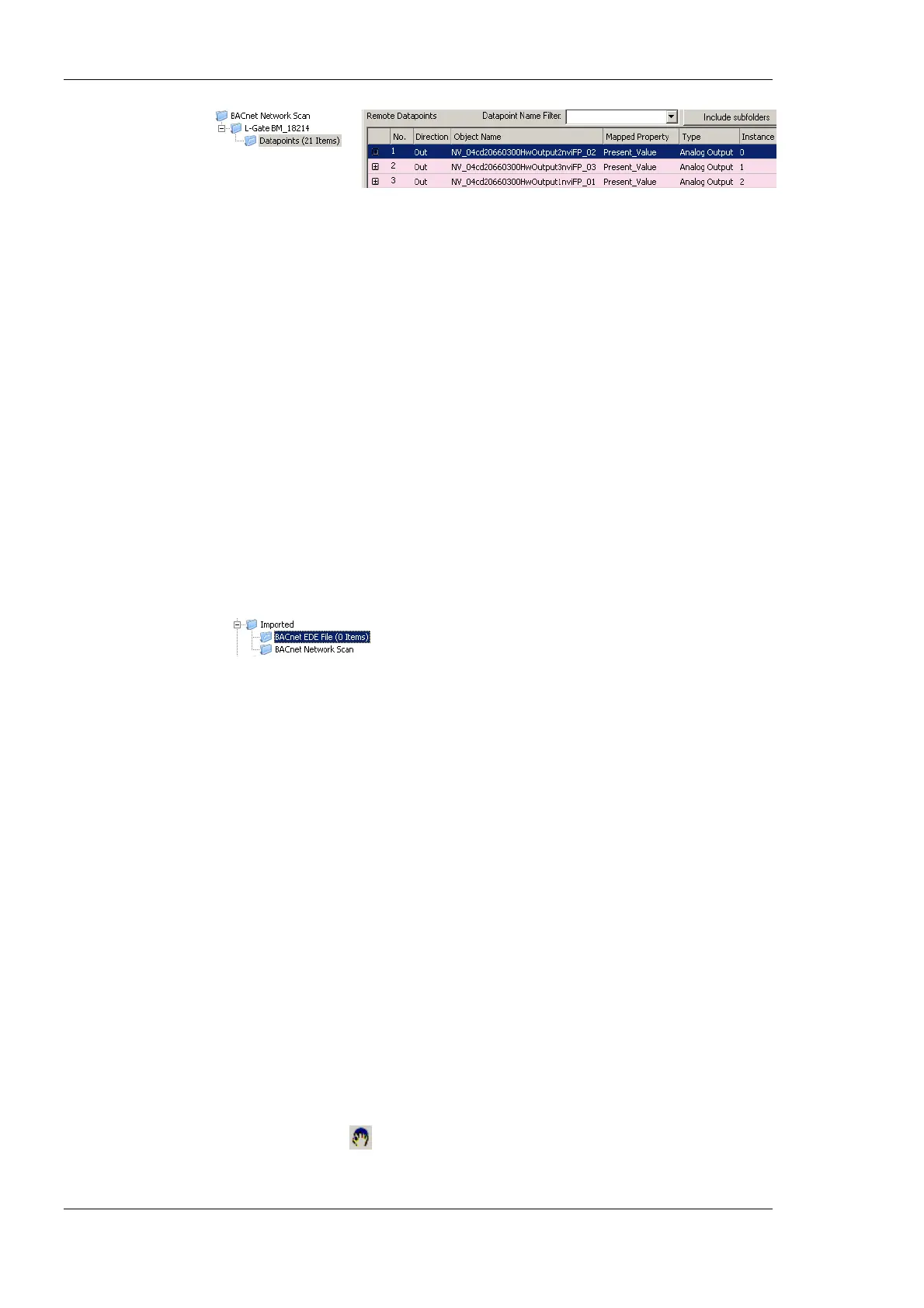
Figure 96: BACnet network scan results.
6. Click Close when all devices needed have been scanned.
6.10.2 Import from EDE File
If the device is engineered offline or some of the required BACnet devices are not yet
online in the network, the engineering process can be done by importing a device and
object list from a set of EDE files. These objects also appear in the import folder and can
be later used on the device.
There are a set of EDE files. Select the main EDE file, e.g. device.csv. The EDE import
will also search for the other components, which must be named device-states.csv. Which
components are expected, please refer to Section 7.3.3. Example EDE files can be found in
the ‘examples’ directory of the LOYTEC Gateway Configuration software installation
directory.
To Import BACnet Objects from an EDE File
1. Go to the Datapoints tab.
2. Select the folder BACnet EDE File
3. Right-click and select Import File. In the following file selector dialog, choose the
EDE import file and click Ok.
4. Now the BACnet EDE File folder is populated with the imported BACnet objects.
6.10.3 Use Imported BACnet Objects
After BACnet objects have been imported (with a network scan or by importing from an
EDE file) the user can select the BACnet objects that the L-Gate shall access. When
executing the Use on device the configuration software allocates client mappings on the
device. These client mappings will read or write values from the BACnet objects in the
network.
In an additional step, there can be also server objects allocated on the device. These server
objects can be created automatically from converting a client mapping to a server object.
This is usually done, if the imported BACnet objects shall also be directly modified over
the BACnet network on the device itself.
To Use Imported BACnet Objects on the Device
1. Go to the Datapoints tab and select the desired BACnet objects in one of the import
folders.
2. Use the multi-select feature by holding the Shift or Ctrl keys pressed.
3. Click on the button
Use on Device in the tool bar.



 To Next Page