OPERATION
Axio Scope.A1 Illumination and Contrasting Method Carl Zeiss
M60-2-0007 e 05/08 79
4.1.6 Adjusting Transmitted Light/Polarization
4.1.6.1 How to show birefringence
(1) Application
The transmitted light/polarization method is used for samples which change the polarization of the light.
Such samples are called birefringent. Examples are crystals, minerals or polymers. If such birefringent
substances are observed between crossed polarizers, the birefringent portion of the sample appears
bright while it’s surrounding remains dark.
A birefringent substance can be recognized by turning the sample by 360° between crossed polarizers.
The sample should show four bright and four dark appearances during the turning procedure. During the
turning procedure, interference colors appear that range from grey (mostly for biological samples)
through white, yellow and red until blue, depending on birefringence, thickness as well as sample
orientation. The interference colors may be of first or higher order.
(2) Instrumentation
− Tension-free objectives
− Rotary stage Pol
− Polarizer D (rotatable or fixed), if no polarizer
is already integrated in the condenser.
− Analyzer module ACR P&C for transmitted
light in the reflector turret/slider or analyzer
slider D fixed or with Lambda-plate.
(3) Adjusting the microscope
• Adjust the microscope as described in chapter
645H645H4.1.1 (3) for transmitted light/bright-field
according to KÖHLER.
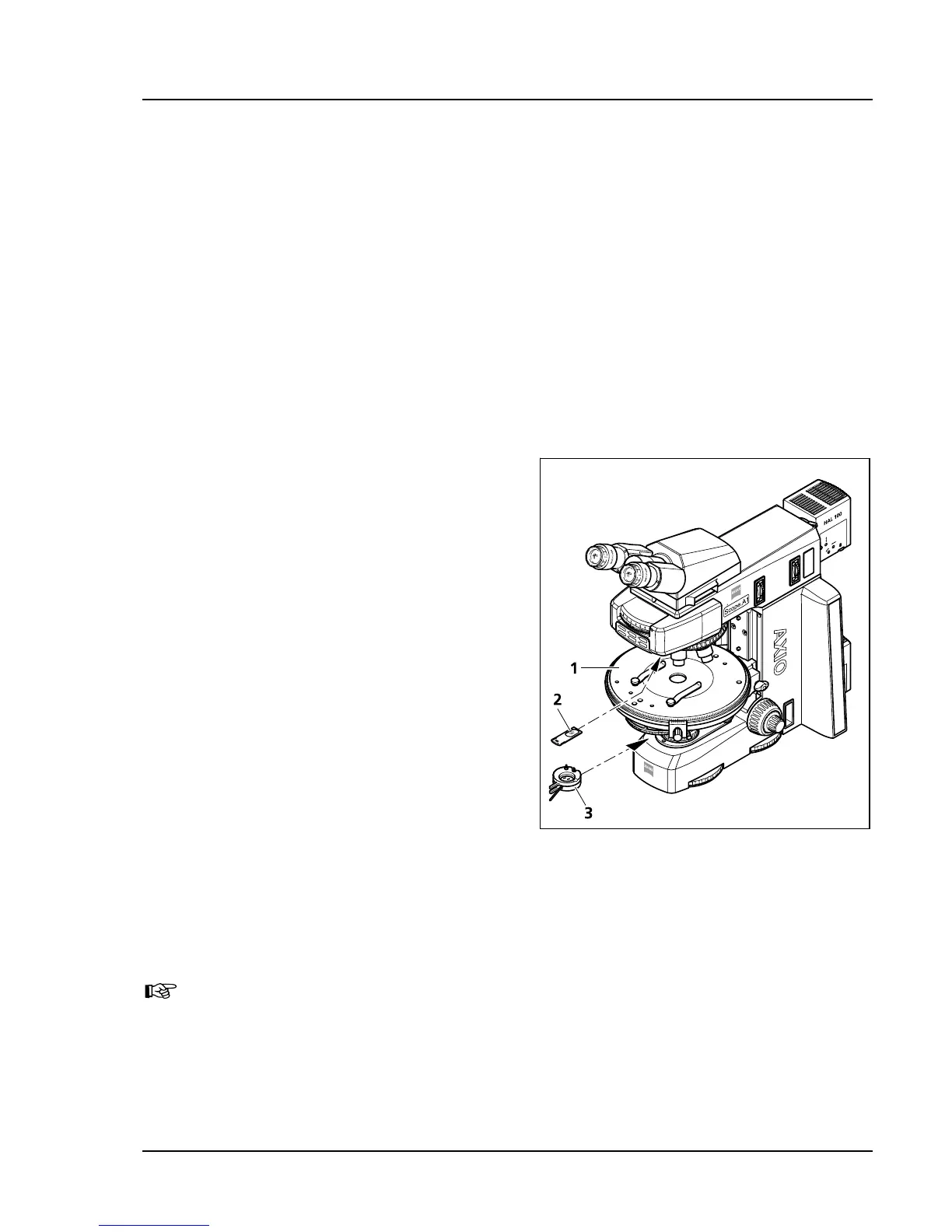
• Center the rotary stage Pol (
646H646HFig. 4-7/1).
• Swing the polarizer (
647H647HFig. 4-7/3) into the beam
path and position it to 0° if you are using a
rotatable polarizer.
• Put analyzer slider (
648H648HFig. 4-7/2) into the slit for the compensator or swing analyzer module in on the
reflector turret/slider. Because of the crossed polarizers the field of view now appears dark.
If an analyzer slider is going to be used for working with the Axio Scope.A1, either the reflector
module H P&C or an empty position must be swung in on the reflector turret/slider.
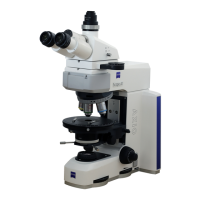
Fig. 4-7 Components for transmitted light
polarization



 To Next Page