Section 2 — Installation
Part No. 750-363 2-7
Typically, ethylene glycol is used for freeze protection, but other alternatives exist, such as propylene glycol.
Glycol reduces the water-side heat capacity (lower specific heat than 100% water) and can reduce the
effective heat transfer to the system. Because of this, design flow rates and pump selections should be sized
with this in mind.
Generally, corrosion inhibitors are added to glycol systems. However, all glycols tend to oxidize over time in
the presence of oxygen, and when heated, form aldehydes, acids, and other oxidation products. Whenever
inadequate levels of water treatment buffers and corrosion inhibitors are used, the resulting water glycol
mixture pH may be reduced to below 7.0 (frequently reaching 5) and acid corrosion results. Thus, when
pH levels drop below 7.0 due to glycol degradation the only alternative is to drain, flush, repassivate, and
refill with a new inhibited glycol solution.
The following recommendations should be adhered to in applying ClearFire model CFLC boilers to hydronic
systems using glycol:
1) Maximum allowable antifreeze proportion (% volume):
50% antifreeze (glycol)
50% water
2) Glycol minimum temperature rating 300 deg F (149 deg C).
3) Maximum allowable boiler outlet/supply temperature: 200 deg F (93 deg C).
4) Minimum water circulation through the boiler:
a) The minimum water circulation must be defined in such a way that the temperature difference between the boiler
outlet/supply and inlet/return is a maximum of 40 deg F (22 deg C), defined as DT (Delta T). A DT Limit algorithm
should be enabled in the boiler controller.
b) Independent from the hydraulics of the heating system, regular water circulation through each boiler is required
while the boiler is operating (requires a dedicated boiler pump if in a primary/secondary loop arrangement). Refer
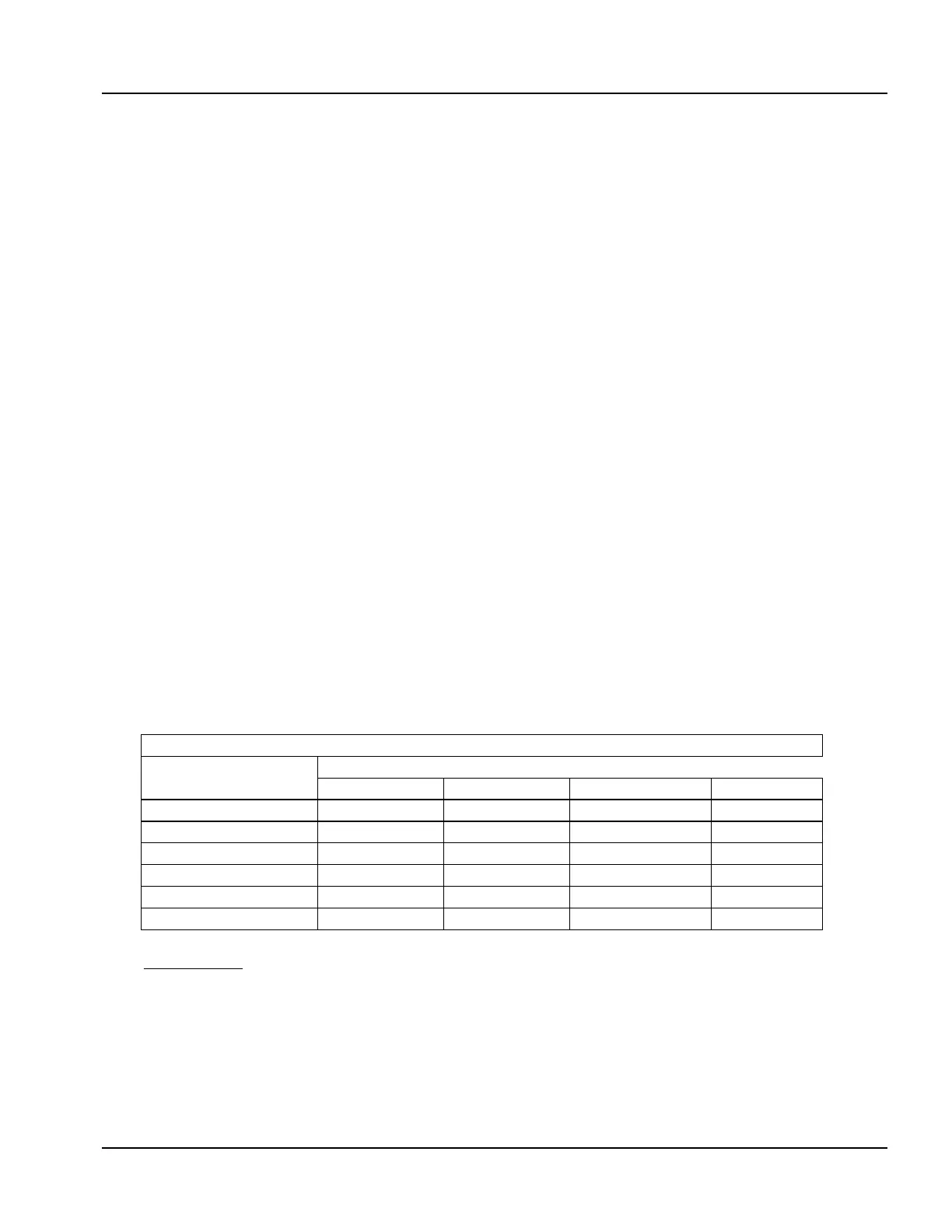
to table below for minimum boiler circulation rates.
5) Minimum over-pressure at the boiler:
For outlet temperatures up to the maximum of 200 deg F (93 deg C), a minimum operating pressure of 30 psig (2.1 bar) is
required.
6) pH level should be maintained between 8.3 and 10.5
Table 2-4 Glycol Application Guidelines — ClearFire Model CFLC
Minimum required boiler circulation rate (gpm) at maximum firing rate
ClearFire
Model-Size
System ΔT (˚F)
ΔT = 10˚ ΔT = 20˚ ΔT = 30˚ ΔT = 40˚
CFLC-4000
813 407 271 203
CFLC-5000
1016 508 339 254
CFLC-6000
1220 610 374 281
CFLC-8000
1626 813 499 368
CFLC-10000
2033 1016 624 468
CFLC-12000
2439 1220 749 562
Notes/Limitations:
1. Glycol concentration limit of 25%-50%. Minimum required system operating pressure is 30 psig.
2. Maximum system operating temperature of 200 ˚F. Maximum ΔT of 40˚.
3. Circulation rates correlate with boiler output based on 92% nominal efficiency.
4. Standard altitude (<2000' ASL). Contact C-B for high altitude applications.
5. Pumps should be sized based on system design ΔT and minimum required flow rates.
6. At minimum firing rate, the minimum circulation rate should correspond to the boiler's turndown.


 To Next Page