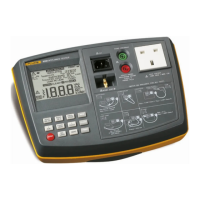
Setting Up and Operating the CopperPro
Configuring the Tester
3
3-17
Configuring the Serial Port
If you want to print, download and upload files, or operate the CopperPro
remotely, you need to enable communications between the tester and an
external PC or printer.
To configure the tester’s serial port for communications with a PC application
or serial printer, complete the following:
1. Press > then O to display the
USER OPTIONS menu (Figure 3-4).
2. Select
RS232 Port Setup. Press L.
3. The
RS-232 Port Setup screen is displayed. The cursor is positioned on
the
Baud Rate parameter.
Note
The baud rate is pre-configured at 38.4 kb/s for PC uploading and
downloading operations. Printer baud rates are internally preset for
the Seiko DPU-414 and DPU-411 printer choices.
4. To change the information on this screen, complete the following for each
parameter:
a) Position the cursor on the parameter, then press A(
Edit).
b) Press G until you display the desired choice.
c) Press L to save your selection.
Creating a Custom Header for Test Result Files
You can create a custom header for your test result files. The purpose of the
header is to identify the operator, company name, test site, and job number.
When you view or print a test report, the information that you supply in the
following procedure can be selected to appear in the header of the file. This
information applies to all of your saved result files until you change it.
To create a header, follow these steps:
1. Press > then O to display the
USER OPTIONS menu (Figure 3-4).


 To Next Page