SECTION 4 - HYDRAULICS
4-2 – JLG Lift – 3121642
Cylinders With Single Counterbalance Valve
OPERATE ALL FUNCTIONS FROM GROUND CONTROL STATION ONLY.
1. Using all applicable safety precautions, activate hydrau-
lic system.
2. Shut down hydraulic system and allow machine to sit for
10-15 minutes. If machine is equipped with bang-bang
or proportional control valves, turn ignition switch to
on, move control switch or lever for applicable cylinder
in each direction, then turn ignition switch to off. If
machine is equipped with hydraulic control valves,
move control lever for applicable cylinder in each direc-
tion. This is done to relieve pressure in the hydraulic
lines.
Carefully remove hydraulic hoses from appropriate cyl-
inder port block.
3. There will be initial weeping of hydraulic fluid, which
can be caught in a suitable container. After the initial
discharge, there should be no further leakage from the
ports. If leakage continues at a rate of 6-8 drops per min-
ute or more, the counterbalance valve is defective and
must be replaced.
4. To check piston seals, carefully remove the counterbal-
ance valve from the retract port. After initial discharge,
there should be no further leakage from the ports. If
leakage occurs at a rate of 6-8 drops per minute or more,
the piston seals are defective and must be replaced.
5. If no repairs are necessary or when repairs have been
made, replace counterbalance valve and carefully con-
nect hydraulic hoses to cylinder port block.
6. If used, remove lifting device from upright or remove
prop from below main boom, activate hydraulic system
and run cylinder through one complete cycle to check
for leaks.
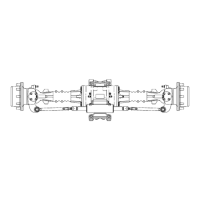
4.4 OSCILLATING AXLE - LOCKOUT CYLINDER TEST
(IF EQUIPPED)
LOCKOUT CYLINDER SYSTEM TEST MUST BE PERFORMED QUARTERLY, ANY
TIME A SYSTEM COMPONENT IS REPLACED, OR WHEN IMPROPER SYSTEM
OPERATION IS SUSPECTED.
NOTE: Ensure platform is fully lowered prior to beginning lockout
cylinder test, and that the surface used to approach the
ramp is flat and level.
Left Side Wheel Test
1. Place a 4 inch (10.16 cm) high block with ascension
ramp in front of left wheel of the oscillating axle.
2. From platform control station, select LOW drive speed.
3. Set the DRIVE control switch into position and carefully
drive the machine up ascension ramp until left oscillat-
ing axle wheel is on top of block.
4. Verify the axle oscillates to maintain contact with the
ground/ramp. (All four wheels on the ground).
5. Raise machine platform above stowed position approxi-
mately 9 ft (2.7 m) on the 3394RT or 10 ft (3.1 m) on the
4394RT.
6. Carefully drive the machine back off the block and ramp.
7. Have an assistant check to see that the left oscillating
axle wheel that was on the block is in position on the
ground. The axle should oscillate so that all four wheels
maintain contact with the ground.
8. In the current position (platform raised and all four tires
on flat and level surface), carefully drive machine up the
ramp block again.
9. Have an assistant check to verify that the axle did not
oscillate and remained locked (one wheel is off of the
ground).
10. Carefully drive the machine back off the block and ramp.
11. Lower the machine platform; the lockout cylinder
should then release and allow wheel to rest on the
ground. It may be necessary to activate DRIVE to release
cylinders.
12. If the lockout cylinders do not function properly, have
qualified personnel correct the malfunction prior to any
further operation.


 To Next Page