Roche Diagnostics
196 Operator’s Manual · Version 3.0
8 Troubleshooting Multiplate® analyzer
Dealing with exceptional situations
The result of the measurement is not plausible
Situation Description Cause Remedy
The result of the
measurement is not
plausible.
Unexpectedly low result without
the influence of platelet inhibiting
drugs and without suspicion of
platelet dysfunction.
1. Clotted blood?
2. Incorrect handling of reagents
and/or test cells (storage and
stability criteria)?
3. Correct diluent solution
applied (fresh NaCl without
additives such as methyl
ester)?
For 1.: Inspect the blood sample
For 2.: Review the package inserts
of reagents and test cells, check
the reagent using a blood sample
from a healthy donor.
For 3.: Examine the diluent
solution.
Repeat the measurement. If the
problem persists, low aggregation
in this patient might be due to co-
medication, morbidities or an
intra-individual variability of
platelet function. If a failure is
suspected however, contact your
Roche Service representative.
The following message is
displayed:
QC checks failed. R epeat this
measurement.
Deviation from mean is
24,253%. This is outside the
allowe d range (max. 20,000%).
Correlation coefficient is 0,999.
This is within the allowed range
(min. 0,980).
Delete this measurement?
Measurements of platelet function
may show deviations. Therefore a
duplicate sensor measurement is
performed. If the irregularity is
greater than expected, the
operator gets a warning and can
decide whether to reject the
measurement and repeat, or to
keep the measurement (e.g. if both
curves point to the same medical
diagnosis despite the anomaly).
Repeat the measurement using a
new test cell.
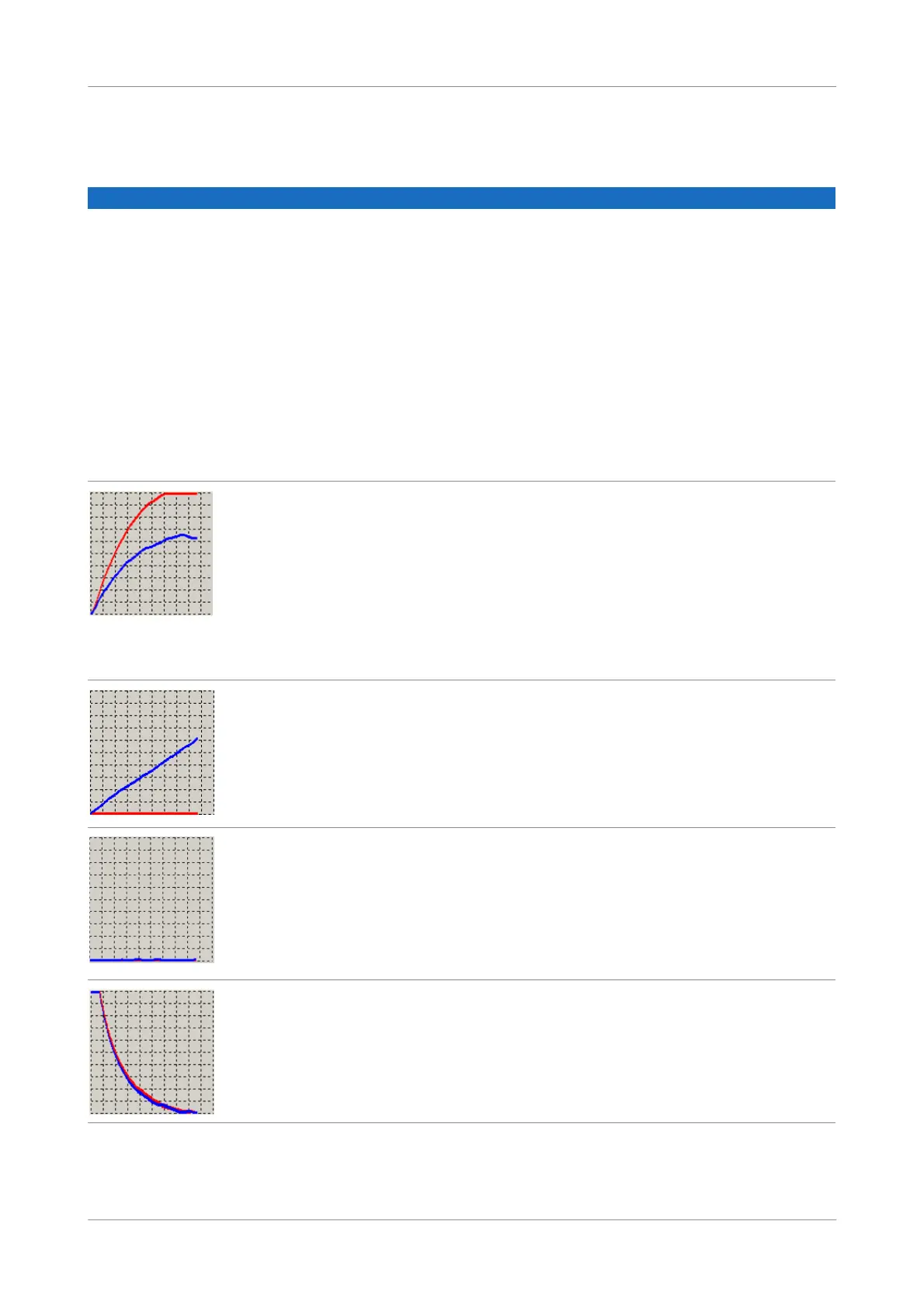
Strongly deviating curves 1. One pair of sensors has a short
circuit.
2. The analyzer was developed to
measure resistances in liquids.
If there is no solution in the
test cell, irregular signals
occur and such curves might
arise.
For 1.: Repeat the measurement.
For 2: Comply with the intended
analyzer use. To conduct an
“empty measurement”, use the
LQC solution 1. It contains a
protein solution that provides
stable resistance after the
incubation time.
Flat line in both curves 1. Sensor cable still in parking
position?
2. No stirrer in test cell?
3. Aqua dist. instead of NaCl as
diluent solution?
Check the cause and repeat the
measurement after eliminating
any mistakes.
If the problem persists maybe the
sensor cable is defective and must
be replaced.
If the error persists, contact your
Roche Service representative.
Strongly decreasing curve
(Data alarm: Decreasing curve)
1. Difference in temperature, the
used NaCl was too cold / not
preheated to 37 °C?
2. Incubation time was skipped?
For 1.: Preheat the NaCl solution
and repeat the measurement.
For 2.: Repeat the measurement
including the incubation time
Table 8-7 Not plausible results (including data alarms)



 To Next Page