COMMAND RANGING & TELEMETRY UNIT CORTEX
CRT QUANTUM USER'S MANUAL
Ref. DTU 100042
Is.Rev. 5.17
Date: Dec.
03, 2021Sept. 30, 2021
This document is the property of Safran Data Systems.
It cannot be duplicated or distributed without expressed written consent.
3.6.9. ESA-like and USB Tone Standards
The ESA-like and USB standards differ from the ESA one in that the following parameters are programmable:
Major and minor tone frequencies (P and Q factors),
Number of minor tones (up to 6 for the ESA-like and up to 8 for the USB standard),
Tone transmission rank,
In the USB mode only, the lowest minor tone integration time is the programmed integration time
multiplied by 4, allowing for higher ratio between the two last minor tones (see example in section
3.6.9.4: the ratio between virtual tones # 1 and # 2 is 16) and a higher ambiguity distance due to the
very low frequency of the lowest minor tone.
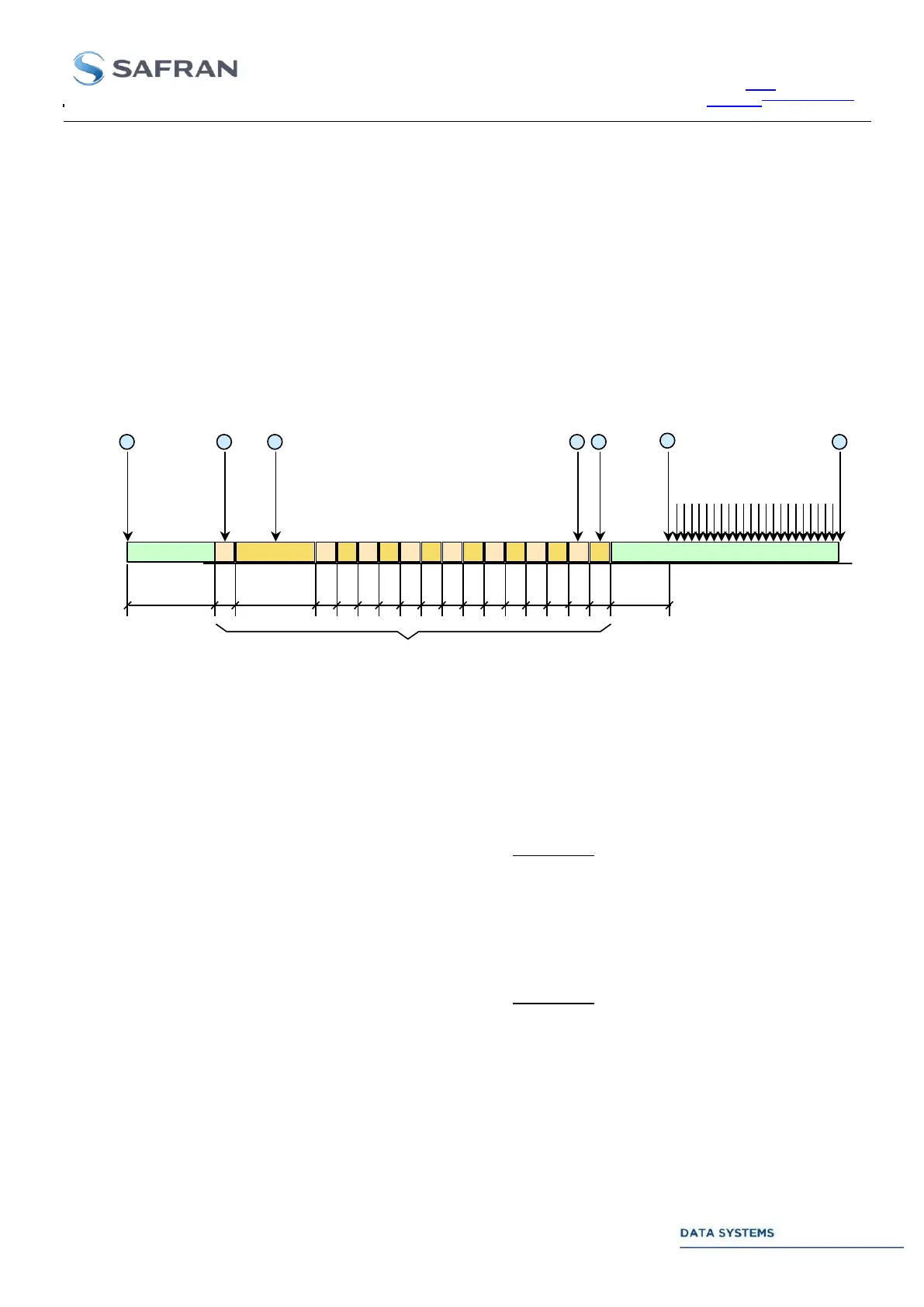
Next figure illustrates a USB ranging sequence with the lowest minor tone being transmitted first):
3
IT = Integration Time
Major tone
21
Ta T
4IT
T
Major tone + minor tones
ITT
Major tone
4 5
6
7
IT
Ts
N measurements on the major tone
One measurement every 250 ms
Figure 80: Ranging Sequence (USB Standard)
3.6.9.1. Frequency Programming
The major tone frequency is programmable according to the following rule (in kHz):
with the restrictions described in § 3.6.2.1.
The minor tone frequencies are programmable according to the following rule (in kHz):
with the restrictions described in § 3.6.2.2.


 To Next Page