Operation steps of open correction function:
Open correction includes full frequency open correction using interpolation calculation method and
single frequency open correction for the set frequency point. Carry out the following steps to
perform open correction for full frequency using the insertion calculation method. For details about
single-frequency open correction, please refer to the "Load Correction" operating instructions.
Move the cursor to the Open setting field, and the following soft keys are displayed in the soft key
area of the screen.
Turn off the open correction function. The calculation of open
correction will no longer be carried out in the subsequent
measurement process.
Make the open correction valid and the open correction
calculation will be performed in the subsequent test process. If
the frequency settings are all OFF, the open correction
calculation uses the open correction data of the current
frequency calculated by the interpolation method. If the
frequency is set to ON, and the current test frequency is equal to
the corresponding frequency, the open correction data of the
corresponding frequency will be used for the calculation of
open correction.
The open admittance (capacitance and inductance) at the above
fixed frequency point will be measured. It takes about 75
seconds for open-circuit full-frequency correction. During
open-circuit full-frequency correction, the following soft keys
are displayed.
The open circuit resistance measurement under the DC
resistance function will be performed.
Note: Connect the test fixture to the test terminal of the instrument. The fixture is
open and not connected to any component under test.
3.8.2 Short
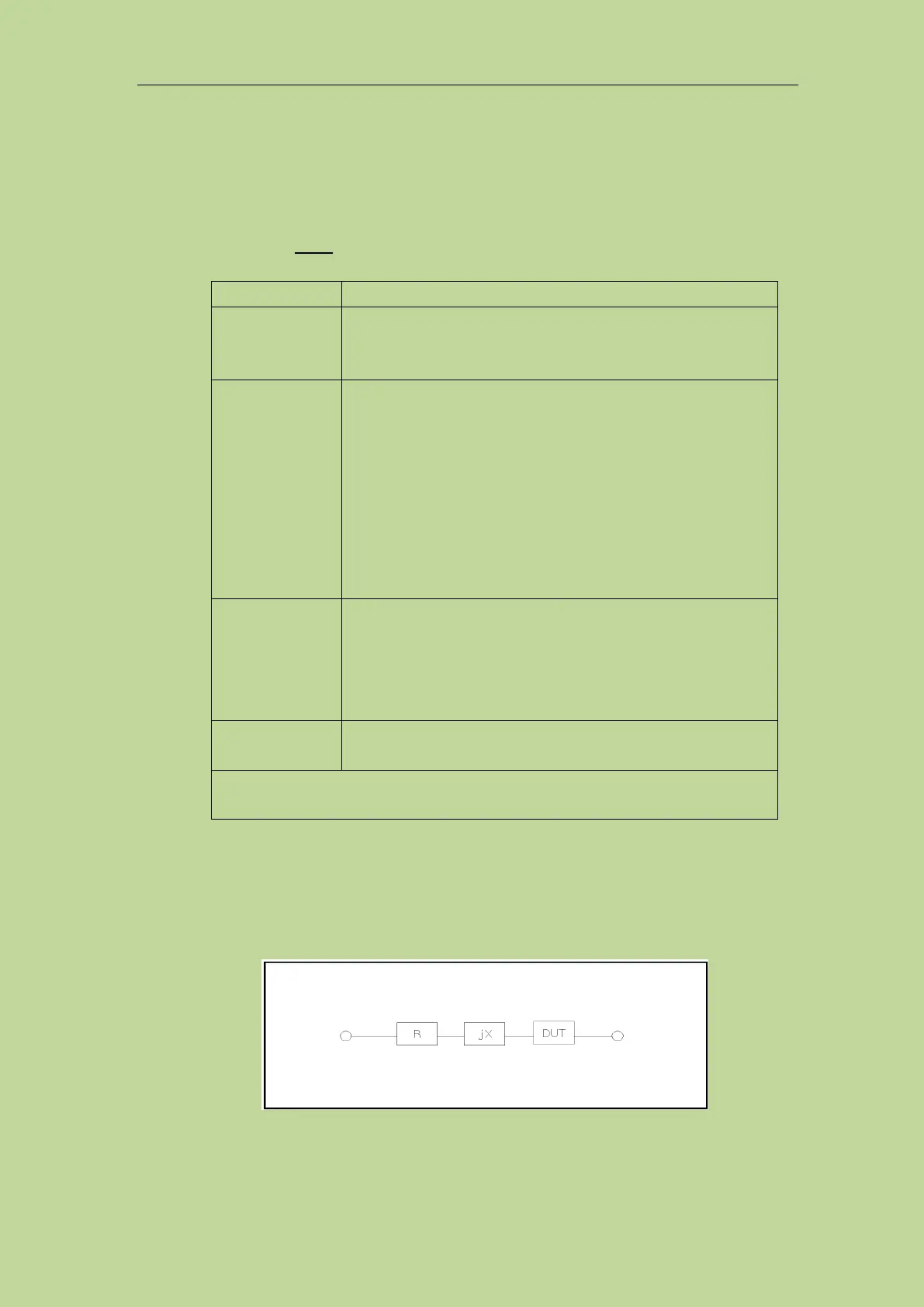
The short correction function of TH2829X can eliminate the error caused by spurious inductance (R,
X) in serial with DUT as shown in figure 3-8-3.
Figure 3-8-3 Spurious Inductance
The following two short-circuit correction data are used:
Regardless of the frequency you currently set, perform an short-circuit correction test on all the


 To Next Page