Principles of Operaon
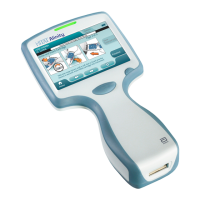
The i‑STAT Alinity instrument is an analycal, in vitro diagnosc device. The design enables it to be taken
to the paent’s bedside (point of care), a convenient locaon near the point of care or clinical laboratory
seng. The instrument requires i‑STAT single-use cartridges containing sensors to perform quantave
diagnosc tesng. Aer the inseron of a lled test cartridge, the instrument carefully monitors and
controls the tesng process. The only user intervenon is in the form of data entry. Data entry is
performed via the touchscreen or by barcode capture. Throughout the cycle, the instrument performs a
series of quality checks. These checks are designed to monitor the status of the instrument and the
quality of the cartridge. The instrument and cartridge together allow the user to perform clinical tesng
and administrave tasks related to in vitro quancaon of various analytes in a sample.
The i‑STAT Alinity instrument includes the following subsystems:
• analycal measurement module: interfaces with the i‑STAT single-use test cartridges and controls
execuon of the measurement test cycle
• user module: a central compung unit with embedded rmware that controls the user interacon
with the device and supports communicaon with outside peripherals
• user interface: allows data input, display of informaon, audio and visual alerts
• rechargeable baery
Analycal Measurement Module
The core measurement technology of the i‑STAT Alinity system is in the micro-fabricated electro-
chemical sensors located in the i‑STAT single-use disposable cartridges. As a result, the measurement
technology used by the instrument and the principles governing operaons associated with the
generaon of test results remain unchanged from the exisng on-market i‑STAT instruments.
These fully automated dedicated microprocessor controlled operaons include:
• Moon control of the uid via mechanical actuators
• Thermal control of the sensors during the test cycle
• Acquision of sensor electrical signals (voltage, current or resistance) throughout the test cycle, as
well as environmental parameters like temperature and pressure
• Timing and sequence of measurement events
• Signal processing and conversion of sensor and environmental signals into analycal test results
• Instrument self-tests and cartridge quality checks to prevent the delivery of an incorrect result in case
of an instrument malfuncon or if a cartridge or pre-analycal error is detected
User Module
The i‑STAT Alinity instrument is equipped with a dedicated microprocessor to control user interacon
with the device, synchronizaon of the test cycle with the user interface, and communicaon. The
combinaon of the hardware microprocessor with peripherals and RTOS (Real Time Operang System)
oer essenal features for control of the instrument.
Operaons controlled by the combinaon of the microprocessor and RTOS include:
• low power audio processor with built-in speakers
• display and navigaon of instrument screens
• networking applicaons
• CMOS-based area array with LED aiming and illuminaon barcode module:
8
i-STAT Alinity — System Operaons Manual Art: 745527-01 Rev. N Rev. Date: 13-Oct-2022





 To Next Page